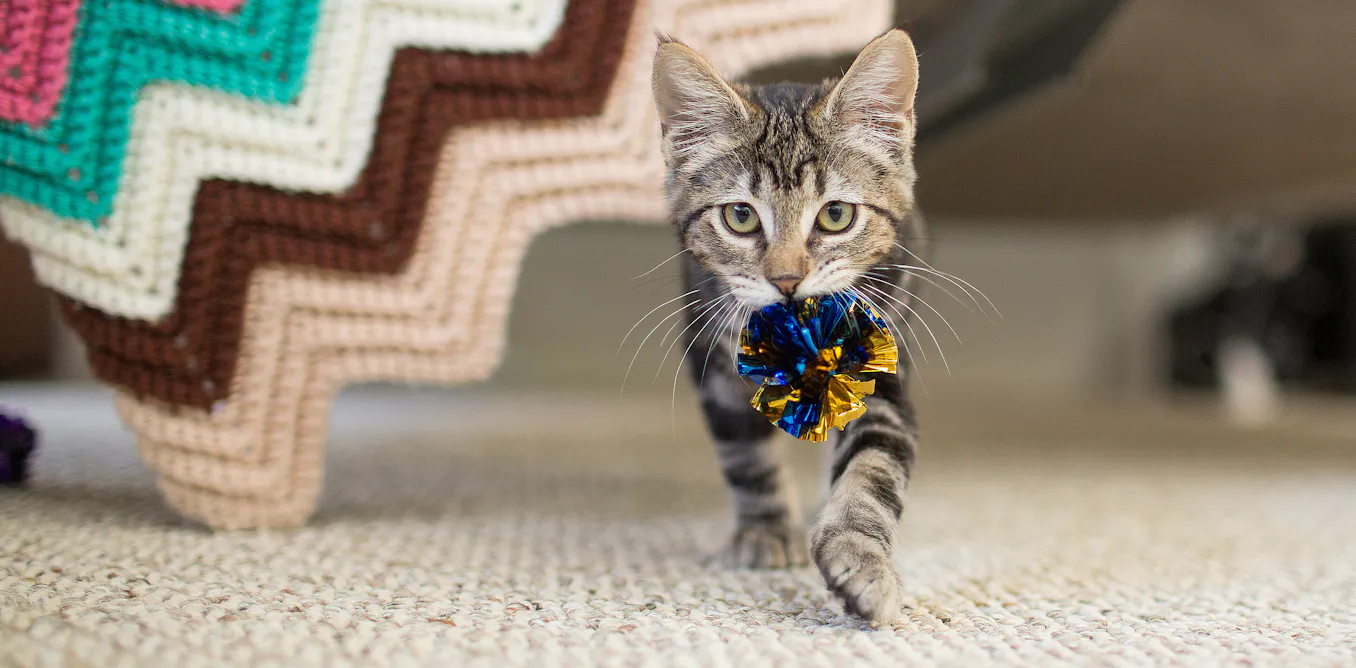
Recent research has shown that both cats and dogs engage in fetching, a behavior rooted in their hunting instincts. While dogs are more commonly associated with the game, around 40% of cats also participate, according to a survey conducted by researchers.
Read More
Dogs, which have been domesticated for hunting purposes, have fetching as a prominent form of play with humans. Nearly 80% of dogs surveyed reported fetching behavior. Conversely, a 2023 study by British scientists found that many cats also retrieve various objects, often without prior training.
The researchers surveyed 924 cat owners and discovered that cats willingly fetched items such as toys, paper balls, and even household objects. Interestingly, cats often initiated the game by bringing toys to their owners rather than waiting for the human to throw them.
Previous studies on fetching in cats have been limited, as early research did not compare fetching cats with those that do not exhibit this behavior. The current study aimed to fill this gap. Researchers collaborated with University of Pennsylvania’s James Serpell to create comprehensive surveys assessing the behavior of both species.
The surveys examined factors like breed, age, living environment, and various behaviors related to fetching. Analysis of the collected data indicated that nearly 78% of dogs fetched, while over 40% of cats exhibited similar behavior.
Factors influencing fetching behavior included gender and health. Male cats and dogs showed a higher likelihood of fetching, while older pets or those with health issues were less likely to engage in the activity. Dog breeds with a keen interest in toys, such as Labrador Retrievers and Golden Retrievers, were the most enthusiastic fetchers, while hound breeds tended to be less inclined.
In cats, breeds like Siamese and Bengals were found to be more likely to fetch. Active cats that engaged with their environment were also more prone to this behavior, suggesting a link between playfulness and fetching tendencies.
The study highlights that the roots of this behavior may connect to the predatory instincts of both species. While cats typically follow a stalk-and-rush hunting technique, dogs are known as pursuit predators. Breeding has influenced the fetching behavior in dogs, particularly in breeds designed for retrieval tasks.
This study adds to our understanding of the social dynamics between humans and pets, showing that both cats and dogs are capable of forming strong bonds and engaging in playful interactions. The findings encourage a broader appreciation for the relationships humans have with their feline companions, especially in play settings like fetching.