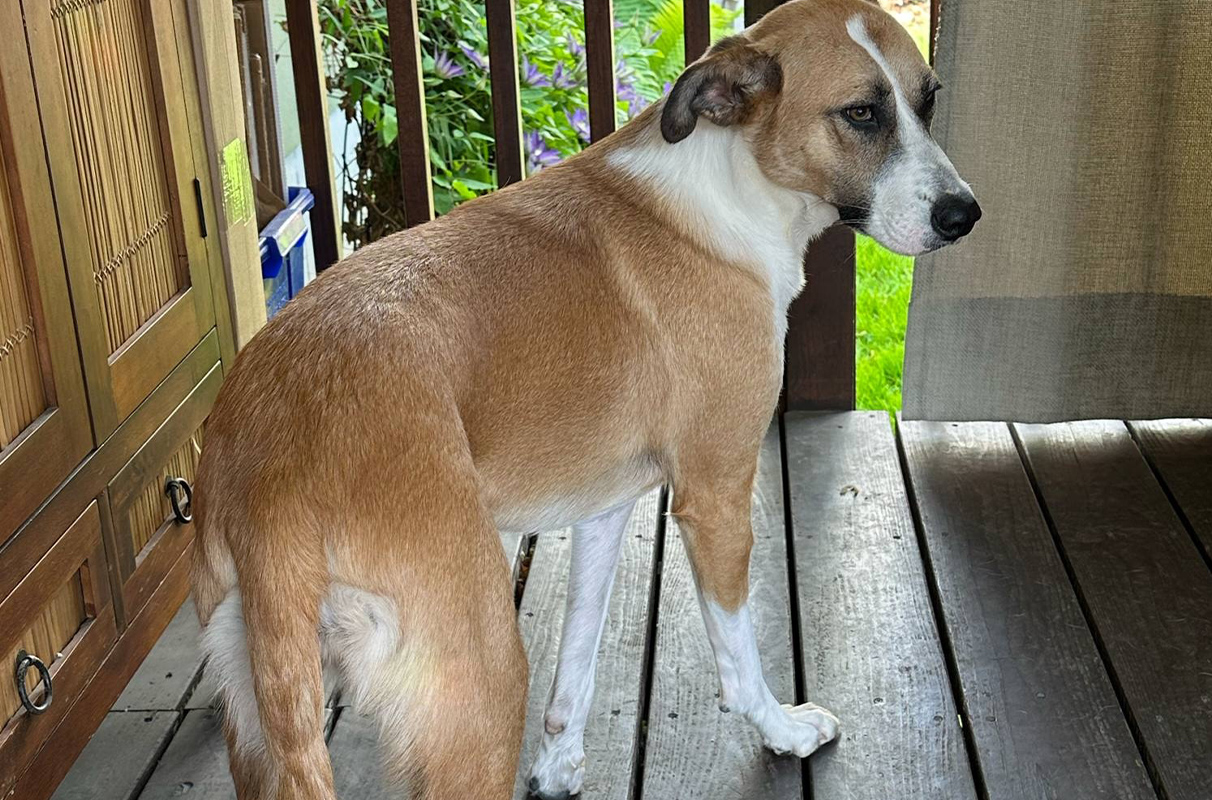
Anjali Barretto of Spokane is uncertain about her dog Sofie's early life on the streets of Loreto, Mexico, where she was found at just a month old. Sofie had already endured a traumatic head injury that left her blind and caused severe neurological issues, resulting in ongoing behavioral challenges and uncontrollable seizures.
Read More
Although these seizures cannot be completely eliminated, they are being effectively managed through the collective efforts of Washington State University alumna Dr. Claudia LaBianca (’23 DVM) at Lincoln Heights Veterinary Clinic in Spokane and specialists at WSU’s Veterinary Teaching Hospital. Their support has enabled Sofie to maintain a happy, active lifestyle despite her challenges.
Barretto expressed gratitude for the care provided, stating, "I can't say enough good things about WSU and Lincoln Heights. Every single vet, even the vet techs and students, have been phenomenal. I just feel really blessed to have all these people on my side, on Sofie’s side."
Initially, Barretto was drawn to Sofie's profile through Rompin Paws Rescue in Arlington, Washington, despite knowing the young mixed-breed dog would come with difficulties. After thinking about Sofie throughout the day, Barretto decided to adopt her, and Sofie became part of the family.
The adjustment proved challenging for Barretto and her three other rescue dogs, as Sofie’s behaviors left her feeling overwhelmed and questioning her decision. "For the first eight months or so, I kept thinking, ‘what did I get myself into?’" Barretto recalled, admitting that there were days she was in tears but determined not to give up on Sofie.
Progress was slow, but Barretto faced a new hurdle when Sofie began having seizures a year after her adoption. After initially finding Sofie fine for her first year, Barretto sought help from Lincoln Heights Veterinary Clinic, where LaBianca prescribed medication and referred Sofie to WSU’s neurology service for specialized care.
Barretto was initially concerned about the potential costs of recommended MRIs, as Sofie’s brain injury was classified as a pre-existing condition, leaving her insurance unable to cover advanced diagnostics. Additionally, Barretto was frequently traveling to India to assist her aging parents.
At WSU, after consulting with the neurology team, including Dr. Amanda Lamarca, Barretto learned that an MRI was not necessary for changing Sofie’s treatment plan. The focus was shifted to managing her seizures and helping Barretto understand Sofie's condition more deeply.
Barretto also discovered she was eligible for financial assistance through WSU’s Good Samaritan Fund, which supports clients facing financial difficulty in obtaining veterinary care. "I felt really guilty even thinking about the cost," she said, noting the fund alleviated her financial anxiety.
Above all, Barretto valued the compassionate and thorough care provided by the WSU team, emphasizing that the most significant reassurance was knowing Sofie was not in pain and was receiving the necessary treatment.