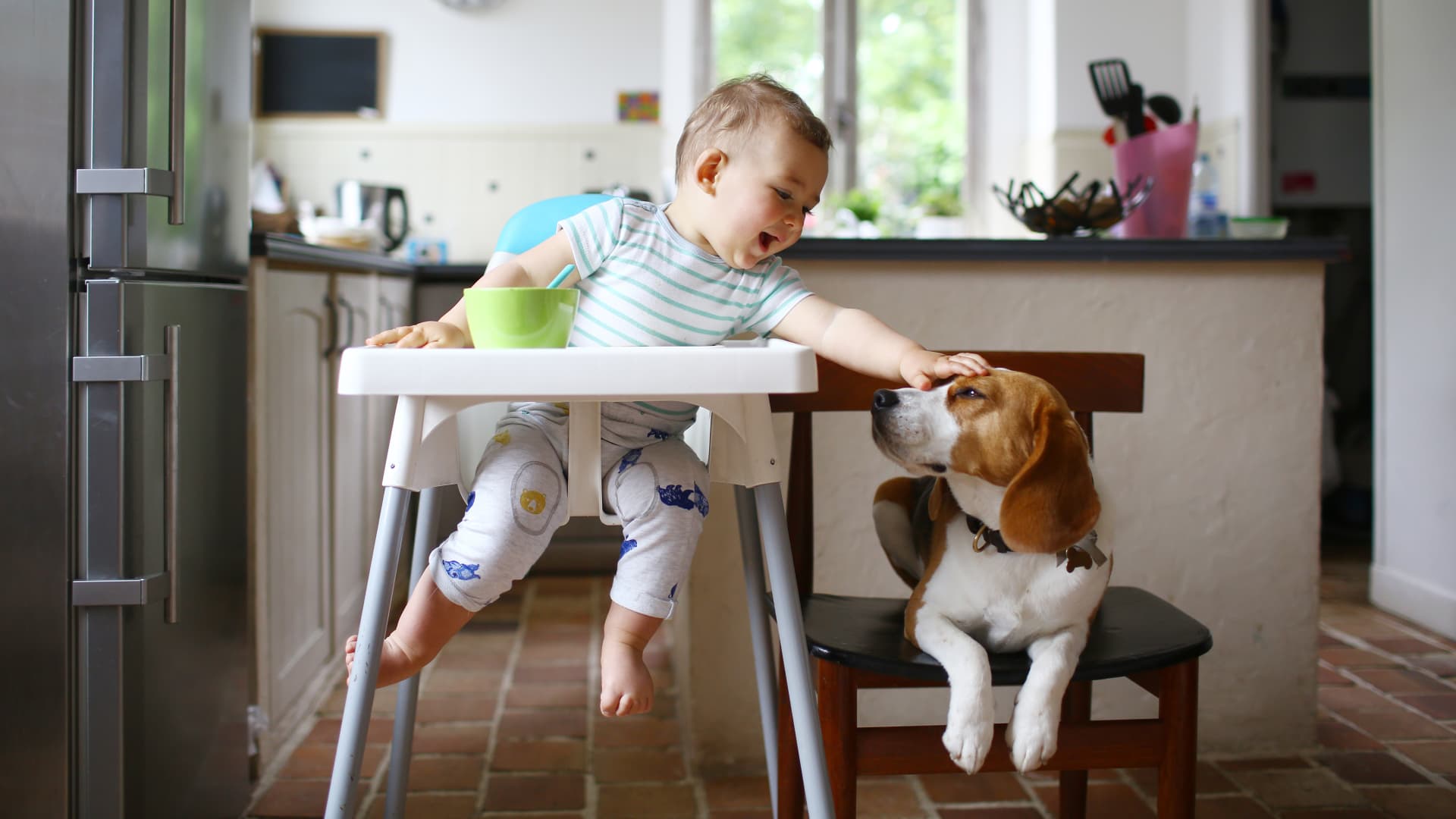
A recent study published in PLOS One in March indicates that exposure to pets during pregnancy and early infancy may decrease the likelihood of developing food allergies in children. The research, conducted in Japan, found that children who were in contact with cats and dogs while in utero or in the first few months of life had about a 14% lower risk of developing food allergies later. The most significant benefits were observed in children living with dogs kept indoors, particularly among families with pets during both fetal development and early infancy.
Read More
Dr. Carolyn Kwiat, an allergist and immunologist at Mount Sinai Hospital, noted a possible explanation: early exposure to dander from furred animals might shift the immune system towards tolerance rather than an allergic response. The study also linked dog ownership to a reduced risk of milk, egg, and nut allergies, while cat ownership was associated with fewer cases of wheat, egg, and soybean allergies. However, no significant connections were found regarding other pets like birds, turtles, or hamsters.
Kwiat highlighted the conflicting nature of past studies on this topic. "Some studies show that early exposure helps protect against food allergies, while others do not," she said. While the current study involves a substantial sample size of 66,000 children, its observational design means the findings should be interpreted cautiously. Child allergy diagnoses relied solely on parental questionnaires, rather than medical tests.
Kwiat remarked on the need for randomized controlled trials to better establish a causal relationship between pet ownership and food allergy risk. She cautioned against recommending pet adoption during pregnancy solely for allergy prevention, given the historical inconsistency of the data. More reliably, she advocates for the early introduction of highly allergenic foods to children, which has been shown to promote tolerance and reduce allergy development.