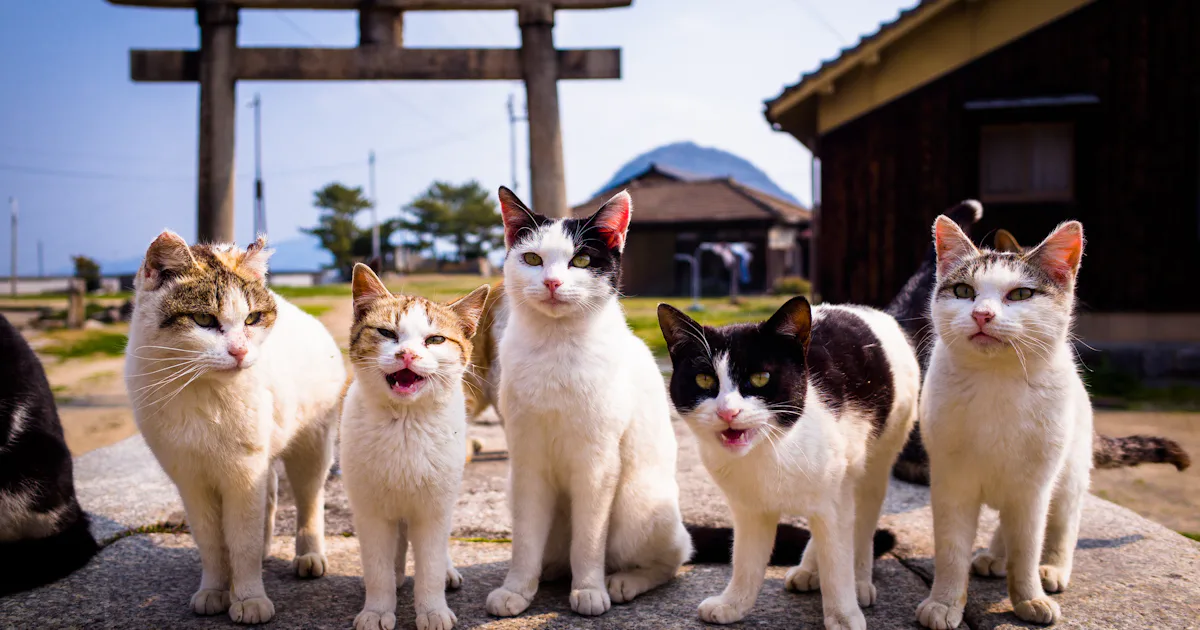
Despite their reputation for being solitary, many domesticated cats live together in households, shelters, and the streets. A recent study published in PLOS ONE explores why these cats have developed a social tendency to coexist, a contrast to their wild relatives, who typically prefer solitude. Researchers suggest that the gut microbiome, combined with specific hormones, may significantly influence this behavior.
Read More
Hikari Koyasu, the lead author and a researcher at Azabu University, explains that while cats are inherently solitary and territorial, they have evolved the skills necessary for group living. By investigating the interplay between hormones, the gut microbiome, and social behavior, the study aims to uncover why some cats are more sociable than others.
The team focused on three hormones: testosterone, oxytocin, and cortisol. Cortisol and testosterone are primarily linked to aggressive behaviors, while oxytocin is associated with bonding and affection. The researchers hypothesized that higher oxytocin levels would promote social interactions among felines, but their findings contradicted this expectation.
Cats with elevated cortisol and testosterone levels showed less interaction with other animals, and those with higher testosterone were more inclined to withdraw from the group. Conversely, cats with lower levels of these hormones interacted better with group members. In a surprising twist, cats with elevated oxytocin levels exhibited decreased sociability, contradicting trends seen in other social animals. According to Koyasu, this indicates that cats with high oxytocin are less likely to engage positively with others in their group.
Interestingly, the study found that cats sharing similar gut microbiomes interacted more frequently with each other. The gut microbiome can influence hormone release and brain function, suggesting that it may play a crucial role in shaping behavior. The researchers concluded that gut microbes likely impact both hormonal secretions and social behavior.
Understanding these biological mechanisms raises questions about what sets domesticated cat behavior apart from other social animals. The study challenges the notion that cats are akin to other group-living mammals. Instead, the behavior observed suggests that while cats can coexist, their social dynamics differ significantly from more traditionally social species.
The evolution of domestic cats may have been influenced by urban life, pushing them to live in closer quarters in search of abundant food resources, like rats. This adaptation could necessitate the development of social behaviors such as grooming and sleeping together.
In conducting the study, researchers selected 15 neutered cats from a Kanagawa, Japan shelter to observe over two weeks. Daily fecal and urine samples were collected, and their behavior was monitored. This allowed scientists to measure hormone levels and analyze gut microbiomes, linking these factors to social behaviors within the group.
While the findings offer valuable insights, Koyasu notes limitations due to the diverse backgrounds of the shelter cats and the short duration of the study. Therefore, further research is needed to fully understand feline social dynamics. Pet owners with multiple cats may need to be patient to uncover the complexities of their pets' interactions.