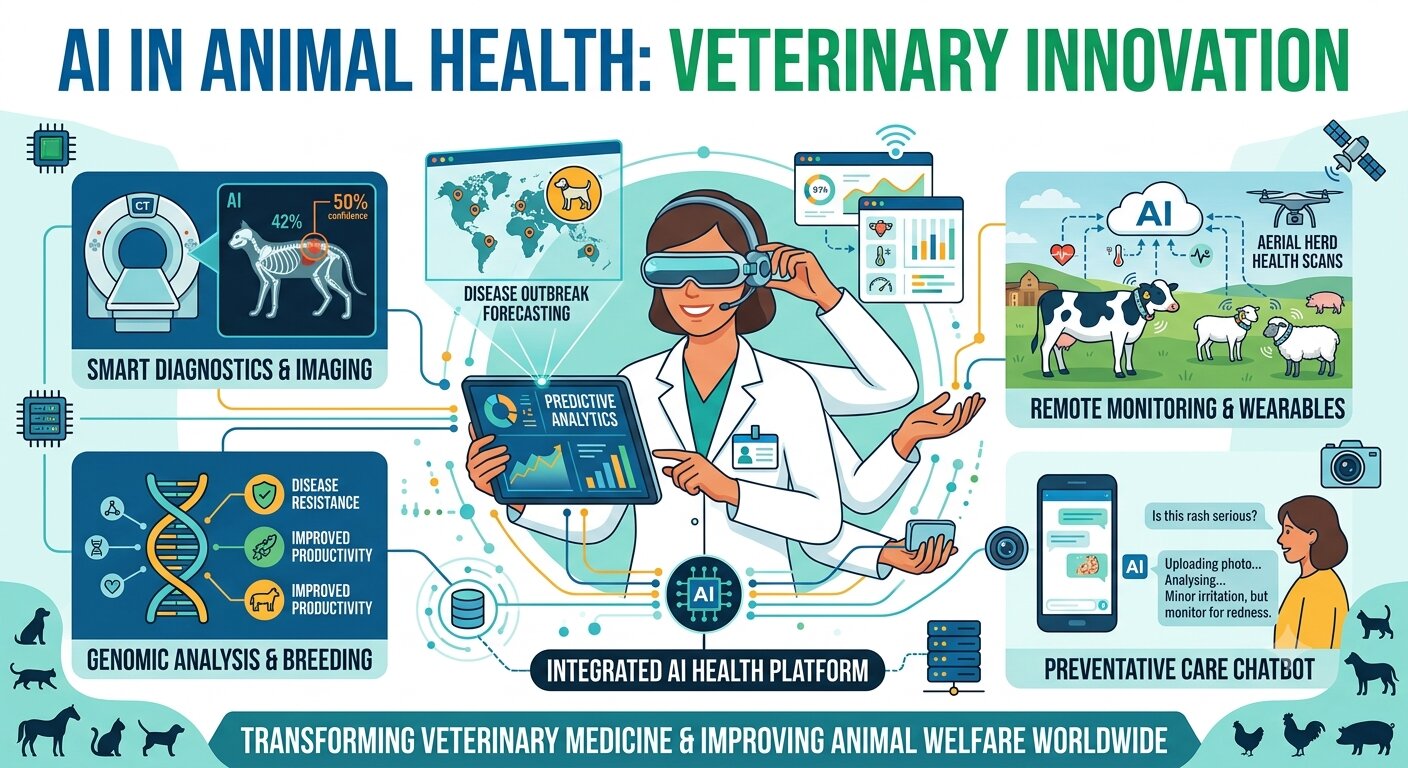
The global AI in animal health market is projected to grow significantly, increasing from a valuation of $1,197.7 million in 2023 to approximately $7,477.9 million by 2033, with a compound annual growth rate (CAGR) of 20.1%. Artificial intelligence is transforming the industry by enhancing disease detection, optimizing veterinary decision-making, and improving livestock monitoring and animal welfare.
Read More
AI technologies facilitate the analysis of large data sets related to animal health, enabling quicker diagnoses and continuous health monitoring. This advancement supports the One Health approach, which emphasizes the interconnectedness of human, animal, and environmental health. The rise in concerns regarding infectious diseases in animals, antimicrobial resistance, and food security is driving the adoption of digital solutions in veterinary care and livestock management.
Integrations of AI with smart sensors, wearable devices, and predictive analytics are allowing earlier identification of health risks and improved treatment outcomes. The World Organisation for Animal Health (WOAH) underscores the need for stronger surveillance systems and digital reporting to enhance global animal health resilience.
WOAH reports that roughly 60% of known human infectious diseases originate in animals, and 75% of emerging infectious diseases are animal-borne, highlighting the critical role of technology in early detection and prevention.
Despite its vital importance, animal health receives only 0.6% of global health expenditures, underscoring the need for further investment and innovation in AI solutions across the sector.
The market is categorized based on solutions into hardware, software, and services, with hardware dominating at a 65.6% market share in 2023. In terms of application, diagnostics led with a 52.4% share, while the companion animals segment captured 73.9% of the market, propelled by increased spending and the adoption of AI-driven pet healthcare.
Regionally, North America holds the largest market share, accounting for 37.8% in 2023, due to its advanced veterinary healthcare infrastructure and robust investments in disease surveillance. The USDA’s National Animal Health Laboratory Network enhances disease detection and response capabilities across the U.S.
The Asia Pacific region is expected to experience the fastest growth, driven by rising livestock populations and pet ownership, alongside government initiatives focusing on animal health surveillance.
Emerging trends in the sector indicate a shift toward AI-enhanced disease surveillance, with digital platforms enabling rapid detection and reporting of disease outbreaks. AI is also improving data integration within veterinary services. Furthermore, intelligent monitoring is becoming more prevalent, aiding in the identification of animal health issues before they escalate.
AI applications are demonstrating effectiveness in various areas, including veterinary imaging, livestock monitoring, automated identification, outbreak prediction, and behavior analysis to support animal welfare.
The AI in animal health market remains challenged by high implementation costs and a need for standardized data. However, ongoing investments in digital veterinary infrastructure and technology are forecasted to enhance market growth and adoption over the long term.