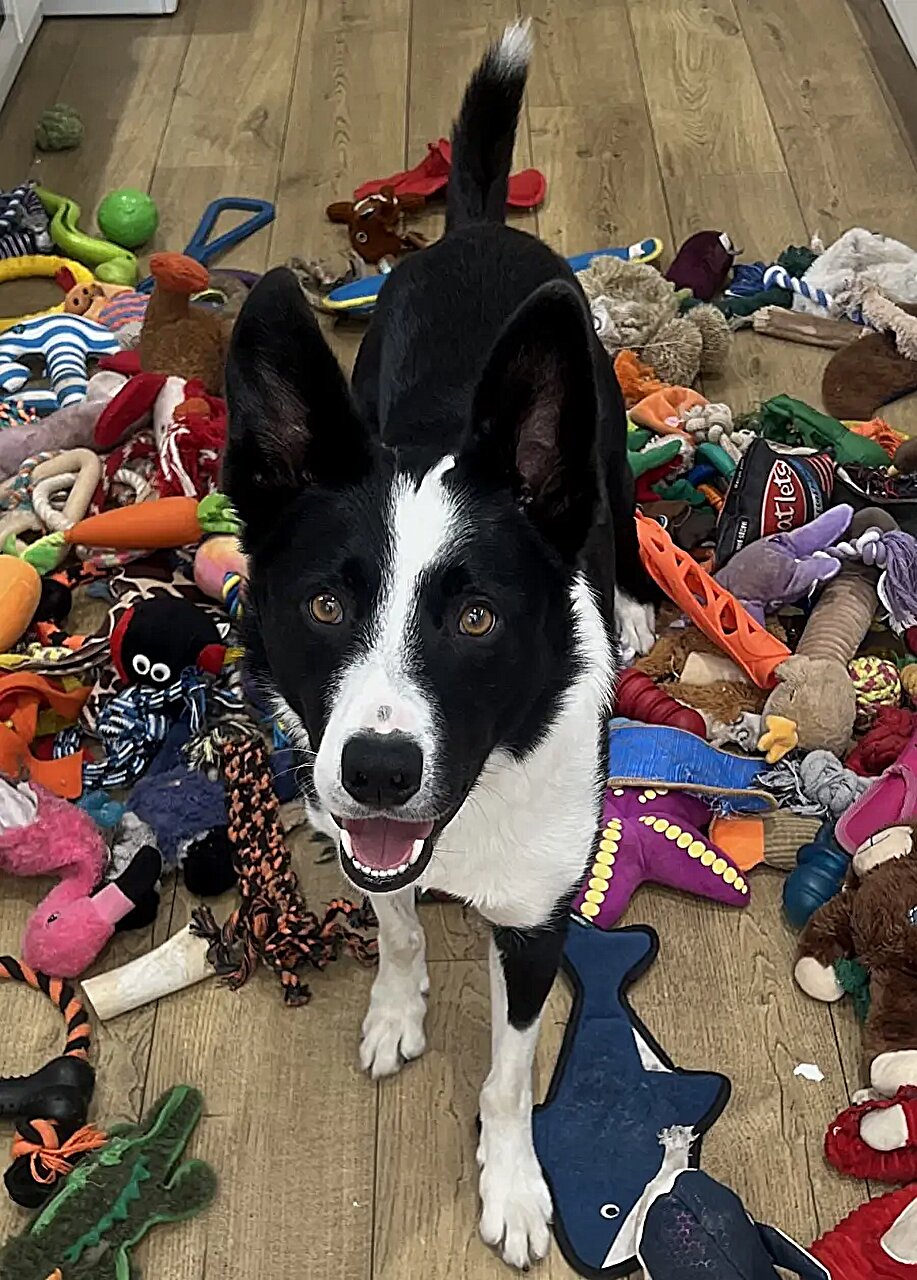
A recent study by the University of Portsmouth's Dog Cognition Center in England and the Friedrich Schiller University of Jena's DogStudies Unit in Germany highlights curiosity and focus as critical cognitive traits in dogs that excel at object recognition. Published in Scientific Reports, this research is the first to demonstrate that these characteristics significantly contribute to the unique abilities of certain "label-learning dogs" to identify numerous objects by name.
Read More
Label-learning dogs are capable of recognizing hundreds of items solely by being told their names, without additional cues. Associate Professor Dr. Juliane Kaminski, from the University of Portsmouth's School of Psychology, Sport and Health Sciences, noted that this skill is extremely rare and appears to be an innate ability found in only a select few dogs.
In the study, Dr. Kaminski and colleague Dr. Juliane Bräuer investigated dogs identified by their owners as label learners, ultimately selecting 11 dogs from the U.K., U.S., Switzerland, the Netherlands, and Germany. The selecting process required these dogs to demonstrate their label-learning capability by correctly fetching objects after hearing their names while isolated from their owners.
Conducted as a citizen science project, the research involved dog owners administering a series of eight cognitive tests designed to evaluate learning, interest, and communication skills. The tests were recorded to ensure accurate analysis by the research team. Included in the study were various breeds, such as border collies, crossbreeds, and even a pug.
A control group of dogs without label-learning skills, matched in age, sex, and breed, underwent the same tests. Dr. Bräuer expressed surprise at the clear cognitive differences found between the label learners and average dogs, noting the rarity of label learners as a significant factor in their selection.
The study identified three key traits that distinguished label-learning dogs: heightened curiosity about new objects, focused interest in specific items, and inhibition, or the ability to control their reactions to objects of preference. Dr. Bräuer remarked on the importance of inhibition, relating it to her own dog's challenges in problem-solving due to strong preferences.
Future research aims to determine whether these traits are innate or developed over time, potentially leading to a "Puppy IQ Test" to assess young dogs' potential for naming and retrieving household objects. One participant, Harvey, known as one of Britain’s smartest dogs for memorizing 203 toy names, exemplifies the findings. His owner, Irene, highlighted the role of curiosity in his success and noted their collection of over 220 toys.
Dr. Kaminski's exploration of dog cognition began after witnessing an exceptionally talented border collie named Rico, who could label 200 items. This ongoing research has since revealed various ways dogs communicate and interact with humans, including the evolution of specialized muscles around their eyes.
The study, titled "What makes a dog a label-learner? Individual cognitive differences underlying label-learning abilities in domestic dogs," was published on November 28, 2025.