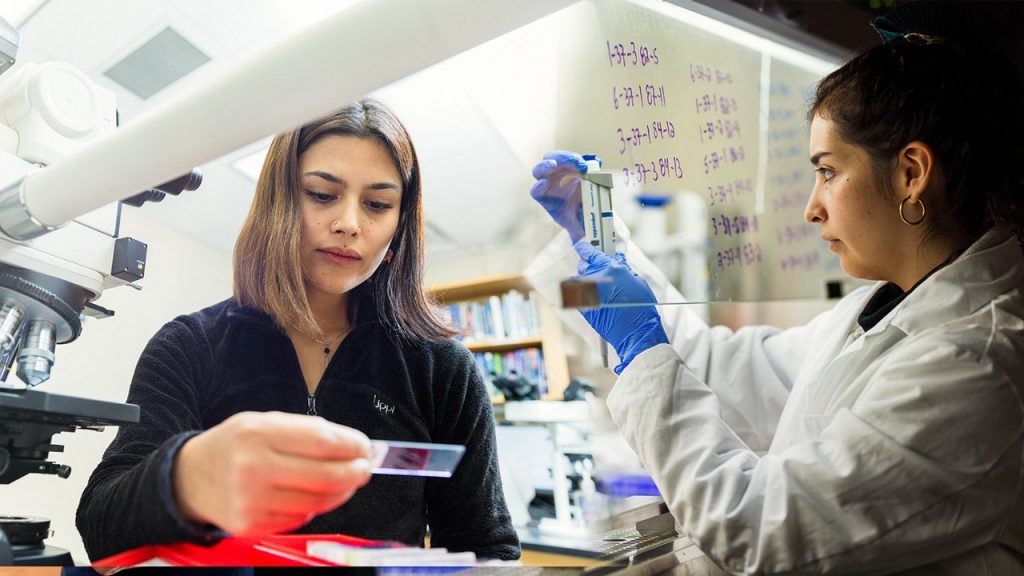
Maria Francisca Valdés and Stefanie Guevara, two veterinary students from Universidad Austral de Chile, traveled from Valdivia to Virginia Tech to participate in an exchange program focusing on veterinary research. Their three-month stay involved collaborative research aimed at improving global animal health despite the challenges of adapting to winter conditions during what would normally be summer in their home country.
Read More
Francisco Carvallo, a clinical associate professor at the Virginia-Maryland College of Veterinary Medicine, highlighted the program's significance, stating it offers Chilean students access to advanced techniques while enriching the educational environment at Virginia Tech. The partnership traces back to 1996, facilitated by Professor Emeritus Gerhardt Schurig, who helped expand the collaboration across various departments, solidifying a continuous exchange of knowledge and skills.
Valdés worked under Jessica Gilbertie, investigating the recurring ear infections in dogs caused by bacteria that form protective biofilms. She found that about 25 percent of dogs experience recurrent infections due to these biofilms, particularly involving bacteria such as Pseudomonas aeruginosa. Her research indicated that the most effective treatment reduced the biofilm by only 36 percent, underscoring the need for improved therapeutic options. Valdés expressed that the experience cultivated her research skills and confirmed her passion for pursuing a career in this field.
Guevara's research was conducted with Natalia Strandberg in the clinical pathology department, focusing on canine lymphoma, one of the most frequently diagnosed cancers in dogs. She analyzed 34 cases, comparing standard microscopy with advanced testing methods, and found that microscopy accurately identified lymphoma types in 29 out of 31 cases, supporting the use of needle sampling as a cost-effective diagnostic tool. Guevara reported gaining valuable experience in clinical practice and intensive training in cytopathology.
Both students faced language barriers initially but spoke highly of the supportive atmosphere at Virginia Tech, which helped them adapt and thrive. They acquired technical skills not commonly available in Chile, such as using a spectrophotometer and conducting in-depth analyses of lymphoma.
The exchange program exemplifies a One Health approach, linking veterinary medicine, human health, and environmental science while preparing students to face global challenges in veterinary care. Following their time at Virginia Tech, both Valdés and Guevara intend to pursue advanced degrees in their fields, with Valdés focusing on microbiology or genetics and Guevara seeking further training in clinical pathology.
The students encouraged future participants to embrace the experience despite any fears regarding language or knowledge gaps, highlighting the personal and professional growth that comes from such opportunities.