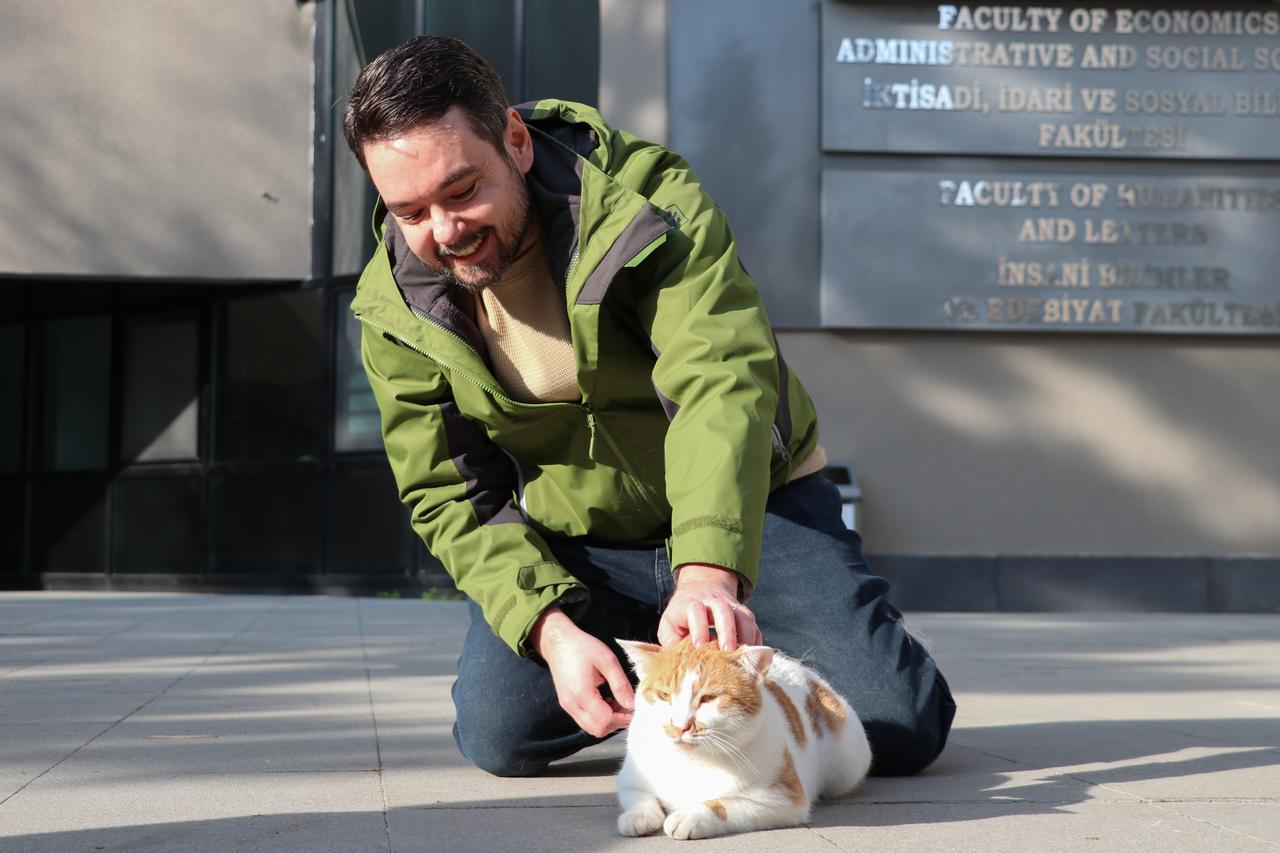
A study conducted in Türkiye has revealed that cats may meow more to male owners than to female owners. The research analyzed home video recordings from 31 households, suggesting that cats exhibit noticeable vocalization differences based on the owner's gender during greetings at the door.
Read More
Led by Assistant Professor Kaan Kerman from Bilkent University, the study involved collaboration with Ankara University. Instead of traditional laboratory methods, the researchers asked volunteers to record their interactions with cats at home in natural settings. Participants attached cameras to themselves before entering their homes, capturing the first five minutes of greeting their cats. This data was collected between 2022 and 2024.
Focusing on the initial 100 seconds of each recorded greeting, the researchers identified 22 behaviors associated with how cats welcome their owners. The findings indicated that cats vocalized more frequently when greeting male owners, with an average of 4.3 meows compared to 1.8 meows directed at female owners. Kerman emphasized that this observation pertains to the frequency of meowing, not the volume of the sounds.
He noted that this vocal behavior appears specifically related to greetings at the door, as similar patterns were not observed when cats approached their food bowls. This suggests that the difference in meowing frequency is particular to how cats welcome their owners home.
Kerman proposed a potential explanation for these findings, suggesting that male owners might be less attuned to their cats' needs during initial greetings compared to female owners, requiring what he termed a gentle 'nudge'. However, he clarified that this does not imply that men are generally unresponsive or poor communicators with their pets.
The study highlights that its conclusions may not apply universally across different cultures or regions, and more research is needed to determine whether similar patterns occur in various social contexts.
Additional demographic data was also collected, including the sex of both the cats and owners, the number of cats per household, whether the pets were adopted or purchased, and their breeds. This information was examined alongside the recorded behaviors to understand how different household dynamics may influence greeting patterns between cats and their owners.