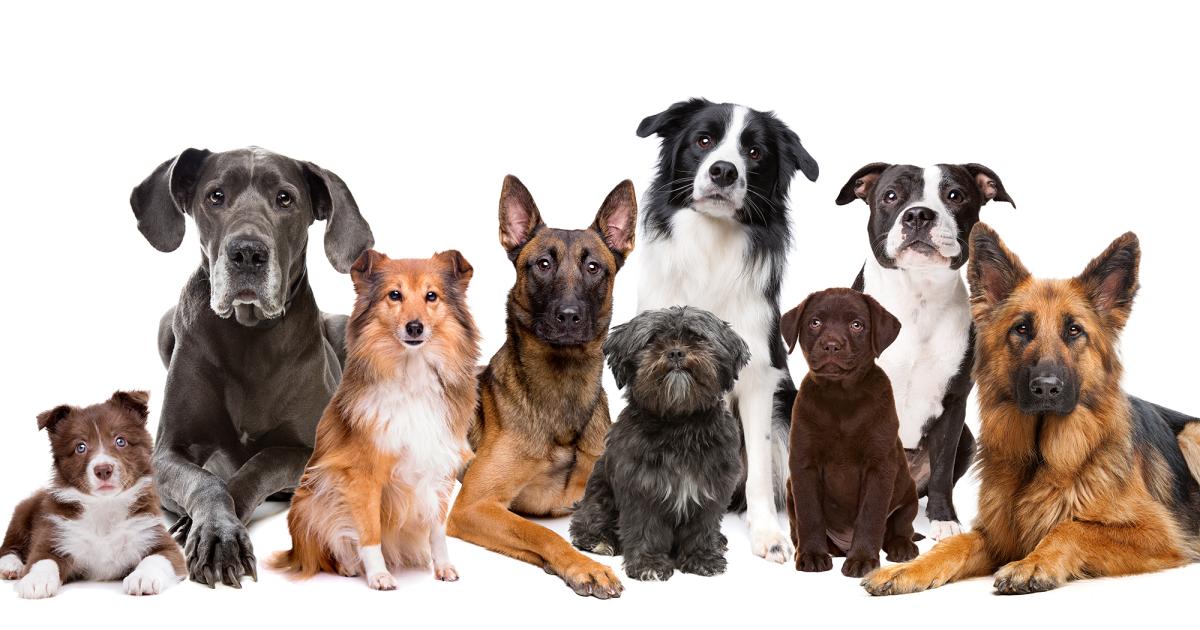
Researchers at the University of Helsinki conducted a study to evaluate the cognitive abilities of 13 dog breeds using a sample of over 1,000 Finnish dogs. The study examined traits such as social cognition, problem-solving skills, and inhibitory control.
Read More
Previous studies have indicated that dog breeds may influence personality and behavior, yet little research has focused on cognitive traits. This study aimed to identify breed-specific differences in cognitive abilities, including problem-solving, memory, and social cognition.
Saara Junttila, a doctoral researcher and author of the study, stated, “The results suggest that different cognitive traits may have been favoured in different breeds.”
The analysis included 1,002 dogs participating in the smartDOG cognitive test battery, which is designed to help owners better understand their dogs. Only breeds with at least 40 tested individuals were included, resulting in a total of 13 breeds.
The dogs underwent seven cognitive tests and three behavioral assessments. Researchers identified significant breed differences in tasks assessing inhibitory control, understanding of human gestures, spatial problem-solving, activity levels, and behavior in novel environments. However, no significant breed differences were found in logical reasoning or short-term memory, suggesting these traits may be influenced more by environmental factors than by breed characteristics.
Junttila explained that the findings offer insights into traits valued in different breeds. For example, modern golden retrievers are primarily seen as family pets where high levels of inhibitory control and human dependence may be more beneficial than problem-solving abilities. Low performance in inhibitory control could indicate high motivation and quick reactions, advantageous in working roles and dog sports, which may explain the lower scores of breeds like the Malinois and German shepherd in that area.
The study revealed that the Hovawart breed exhibited independence, often attempting to solve problems without human assistance, while golden retrievers sought help more frequently. The Malinois showed a strong ability to interpret human gestures, followed closely by the Labrador retriever. In spatial problem-solving tasks, the Malinois and border collie performed the fastest, with the border collie also excelling in inhibitory control.
Junttila cautioned that the study's results are specific to the tested scenarios and should not overly generalize dog behavior, emphasizing the individuality of each dog.