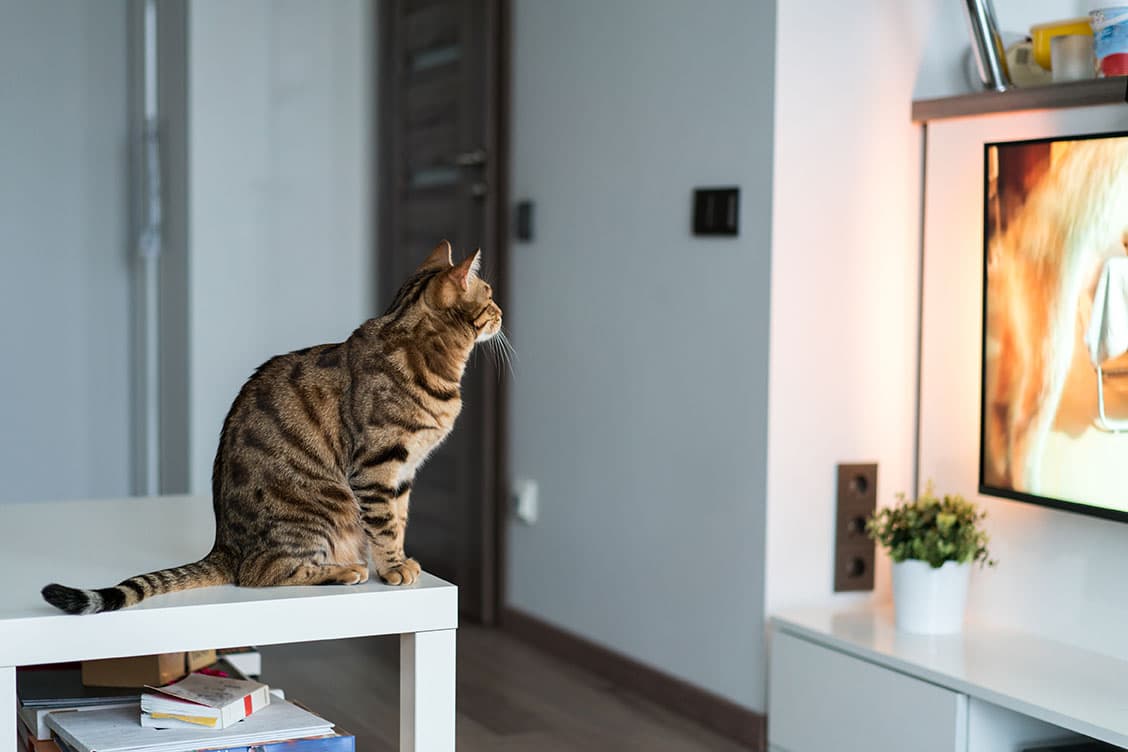
Cats sometimes watch TV, intrigued by movement or sounds of animals on screen. Their vision differs from humans; they might perceive the images differently depending on the TV's refresh rate. While humans typically see a continuous image at refresh rates around 50 or 60 Hz, cats may see flickering images. Modern TVs, with refresh rates over 100 Hz, are more likely to hold a cat’s attention.
Read More
Cats generally have less color and clarity in their view than humans. They are particularly captivated by animal sounds, often following moving objects across the screen and checking behind it when an image disappears.
Interest in TV varies among cats. Those with a more predatory instinct tend to show more fascination, especially when viewing footage of birds, fish, or rodents. Some cats may even enjoy watching videos of other cats. While no studies specifically examine the effects of video calls on cats, reactions can vary, with some appearing confused by seeing their owners without the ability to interact physically.
Watching TV can provide stimulation and enrichment for cats; a study from 2008 found that shelter cats enjoyed programs featuring prey. However, this engagement typically lasts about an hour. TV should not replace other forms of environmental enrichment, such as play, interactive toys, and human interaction, which are vital for a cat's mental health.
Safety is also a concern; cats can injure themselves if they try to attack a TV. It's essential to secure the television and supervise their viewing. If they become overly excited, it may be wise to turn off the TV. Overall, if viewing is safe and stimulating, television can offer enjoyment for cats, and cat owners can explore ‘cat TV’ channels or animal videos online for entertainment.