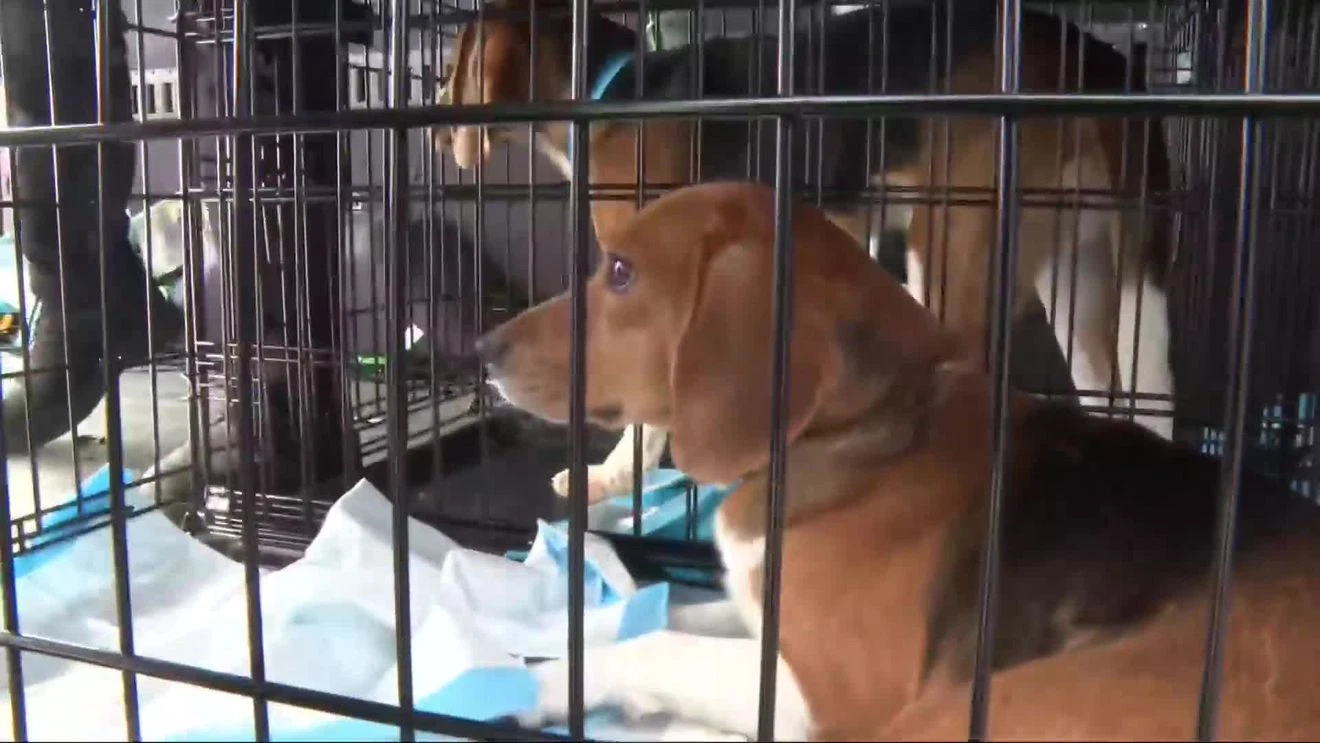
Hundreds of beagles are being relocated from Ridglan Farms, a breeding facility in Wisconsin known for supplying dogs for scientific research amid allegations of animal mistreatment. The Southern Nevada Beagle Rescue Foundation is set to retrieve between 20 and 50 beagles from the site.
Read More
Julie Thorn, operations manager for the Southern Nevada Beagle Rescue Foundation, described the facility’s operations, stating, "They bring these dogs in, they breed them specifically to do research on, which could be a number of different ways that they research, which is injecting things, doing certain surgeries without anesthesia.”
On Thursday, it was announced that a deal had been made to remove about 1,500 dogs from Ridglan Farms following an agreement between the facility, Big Dog Ranch Rescue, and the Center for a Humane Economy. Wayne Pacelle, president of the Center for Humane Economy, criticized the current testing system, stating, "This system of testing is broken. It’s been broken for a very long time." He highlighted that over 90% of drugs that pass animal tests fail in human trials.
In October, Ridglan Farms agreed to relinquish its state breeding license effective July 1, as part of an arrangement to avoid prosecution for felony animal mistreatment charges. While the facility denies any allegations of abuse and claims compliance with regulations, a special prosecutor found that certain eye procedures conducted at the facility violated veterinary standards.
Thorn mentioned the ongoing efforts to assess the condition of the beagles, stating, "So far, what we've seen, they're anywhere between 10 months to about four to five years of age. We don't know the condition. We can only hope for the best, but we’re expecting the worst. So, some of these dogs have never seen daylight.”
The rescue organization has previous experience with research dogs and anticipates rehabilitating the newly rescued beagles, helping them adapt to a life outside the lab. Thorn remarked on the psychological impact of lab life on dogs, noting that some exhibit repetitive behaviors due to confinement.
While research labs are legal in the U.S. under the Animal Welfare Act, Thorn questions their legitimacy, urging for greater advocacy against their continued existence. She expressed optimism about the future of the rescued beagles, stating, "So they'll just learn to get this and learn to be spoiled and just like I said, learn to be a dog, be on a leash, go for walks, enjoy being around other dogs and around people.”
The organization is preparing for the arrival of the beagles later this week and will incur costs for medical treatment, spaying, neutering, and vaccinations. Donations can be made through the rescue’s website to assist with these expenses.