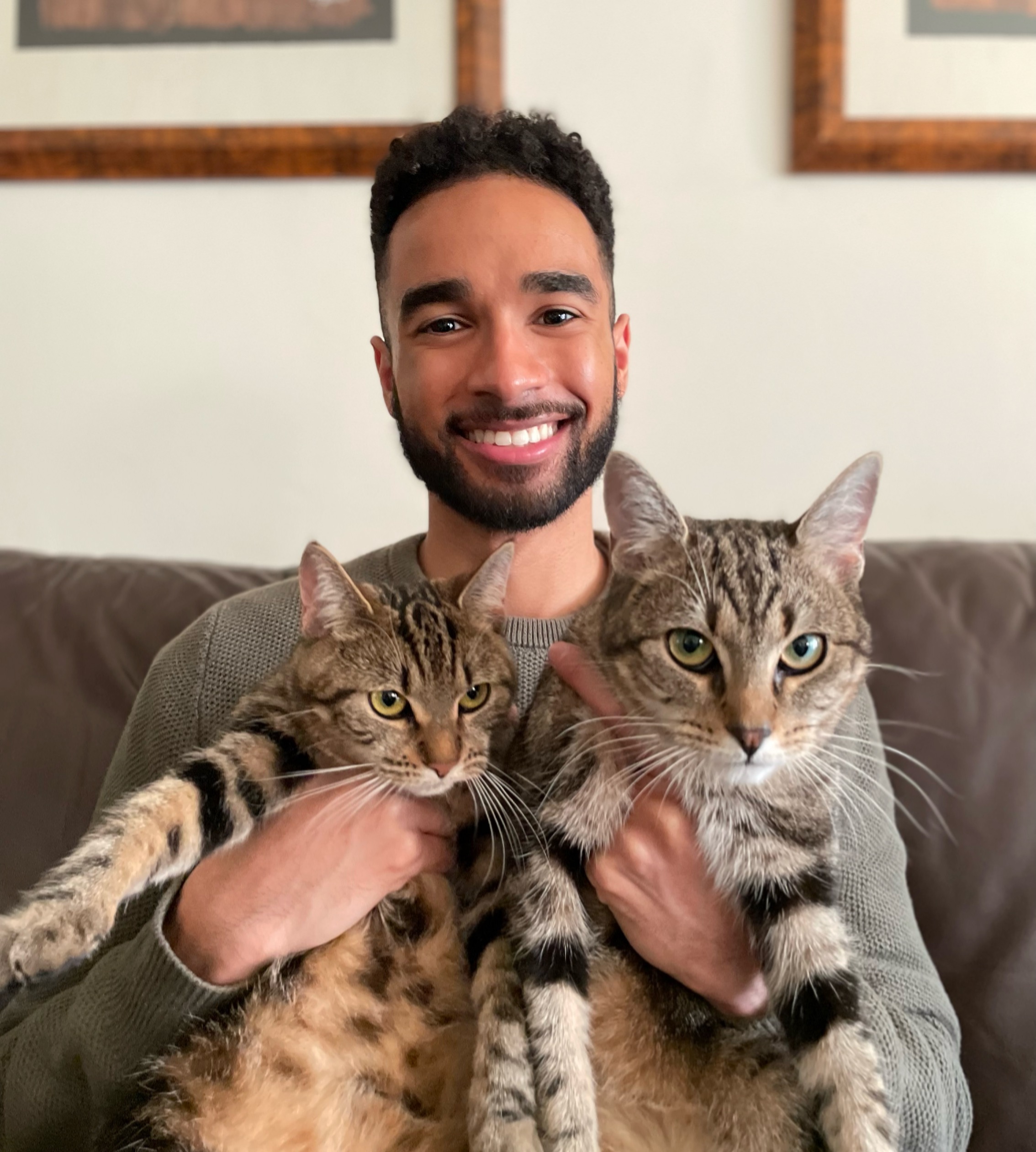
Rhasaan Bovell, a doctoral student from Silver Spring, Maryland, is studying feline reproduction at Cornell University. With a background in ecological field research from Yale University, Bovell is now focusing on the intersection of biomedical sciences and wildlife conservation.
Read More
His interest in wildlife reproductive success has evolved from field research to molecular biology, particularly following a two-year tenure at the National Institutes of Health (NIH), where he engaged in clinical labs and reproductive hormone research. This experience laid the foundation for his current Ph.D. studies at Cornell, which offer a unique Biomedical and Biological Sciences program in collaboration with the Smithsonian National Zoo.
Bovell's research is centered on assisted reproductive technologies (ARTs) essential for conserving endangered species, such as artificial insemination and embryo transfer. While these technologies are commonly used in facilities like the Smithsonian National Zoo, they often encounter limitations in feline species. Thus, Bovell aims to understand the reasons behind these failures, particularly in domestic cats, and to apply this understanding to endangered feline species like lions, tigers, and cheetahs. He is taking a systematic approach by examining the feline uterus to determine if issues arise during procedures that hinder embryo implantation.
After pitching his research idea to Dr. Ned Place, Director of the Diagnostic Endocrinology Laboratory at Cornell, the project gained approval with support from Bruce Kornreich, D.V.M. '92, Ph.D. '05, DACVIM, Director of the Cornell Feline Health Center, among others. Bovell is collaborating with Cornell to gather a cohort of cats for his study, aiming to enhance the reproductive success of endangered cat species.
Despite initially identifying as a 'dog person,' Bovell's interactions with the study cats shifted his perspective. He expressed surprise at the cats' social and playful nature, stating, "I realized that cats are incredibly social, affectionate, and intelligent."
Throughout the research, Bovell has been involved in finding homes for the 20 cats used in the project. Initially resistant to adopting a cat, he ultimately adopted two, named Rose and Riot, after developing a bond with them during the study. He brought them home on Halloween and described the experience as a roller coaster, noting the joy of watching their personalities flourish in their new environment.
As he transitions to lab work following the live animal segment of his research, Bovell will analyze the data over the next few years as part of his dissertation. Now at the midpoint of his Ph.D. program, he has moved from Ithaca to the Smithsonian National Zoo and remains committed to advancing reproductive science in wildlife conservation. Bovell aspires to contribute to combating extinction through innovative research and hopes to continue working with the Smithsonian post-graduation.
His collaboration with the Cornell Feline Health Center exemplifies how scientific exploration can lead to personal growth and aligns with the mission to enhance cat welfare.
Written by John Enright/Cornell Feline Health Center