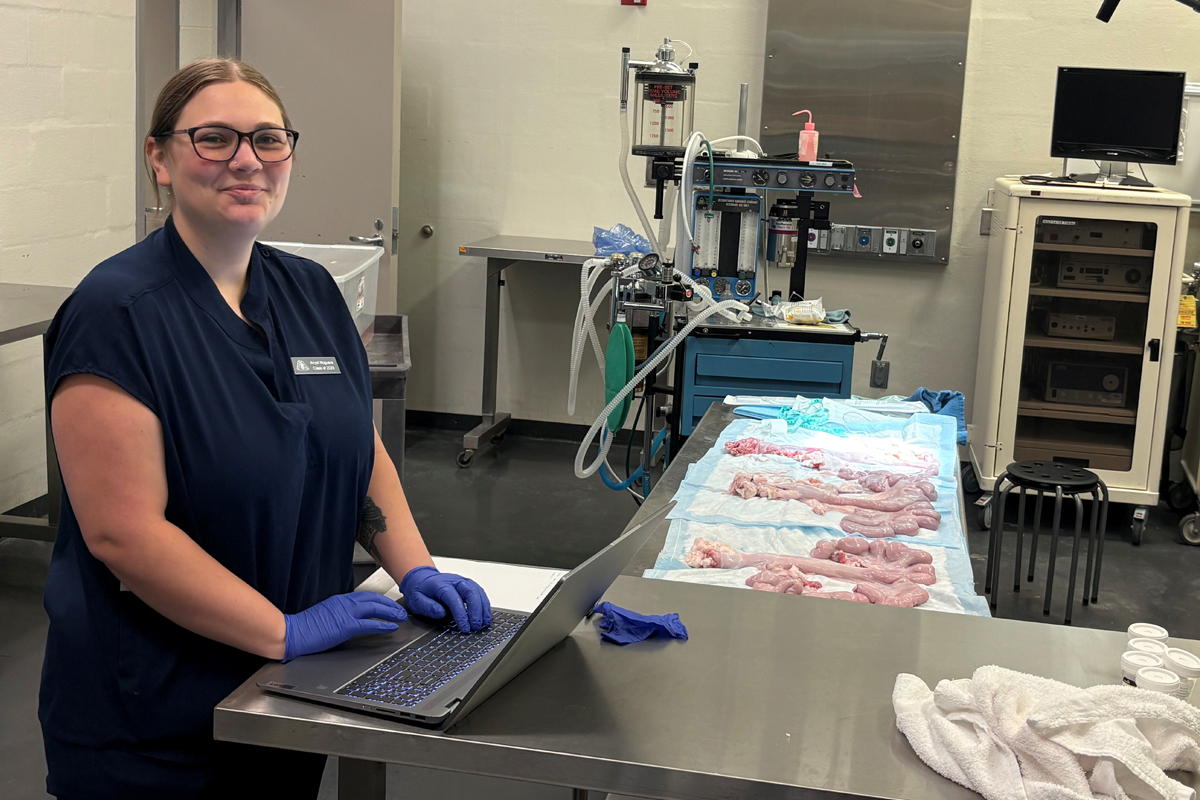
Airyel Noguera, a Doctor of Veterinary Medicine (DVM) student in the Class of 2029 from Fort Lauderdale, FL, is utilizing her summer research fellowship to enhance the efficiency of producing genetically engineered pigs for biomedical research. Working under the guidance of Dr. Michela Ciccarelli, Noguera is conducting a systematic review and meta-analysis aimed at identifying key factors that enhance reproductive success in creating these important animal models.
Read More
Genetically engineered pigs are crucial in the study of human diseases due to their anatomical and physiological similarities to humans. However, the process of producing these models is complex and often results in low success rates.
Noguera's research synthesizes findings from various studies published over the last decade to evaluate reproductive outcomes such as embryo production, embryo transfer, establishing pregnancies, and the birth of live piglets. By analyzing different production methods and determining factors linked to improved outcomes, her work aims to establish best practices in this field.
In addition to her review, Noguera is involved in a complementary project that assesses embryo transfer techniques. This project examines reproductive tissues from female slaughter pigs to see if new embryo transfer instruments can minimize damage to the oviduct, which could refine the transfer procedures.
The goal of Noguera’s research is to enhance the efficiency of producing genetically engineered pigs for translational research, while also promoting standardized methods and reducing the number of animals needed in the process.
Noguera expressed that this project aligns closely with her aspirations in surgery and translational research, stating, "This mentored experience represents a unique intersection of my clinical interests and my career goal to become a veterinary scientist capable of bridging the gap between innovation and clinical application."