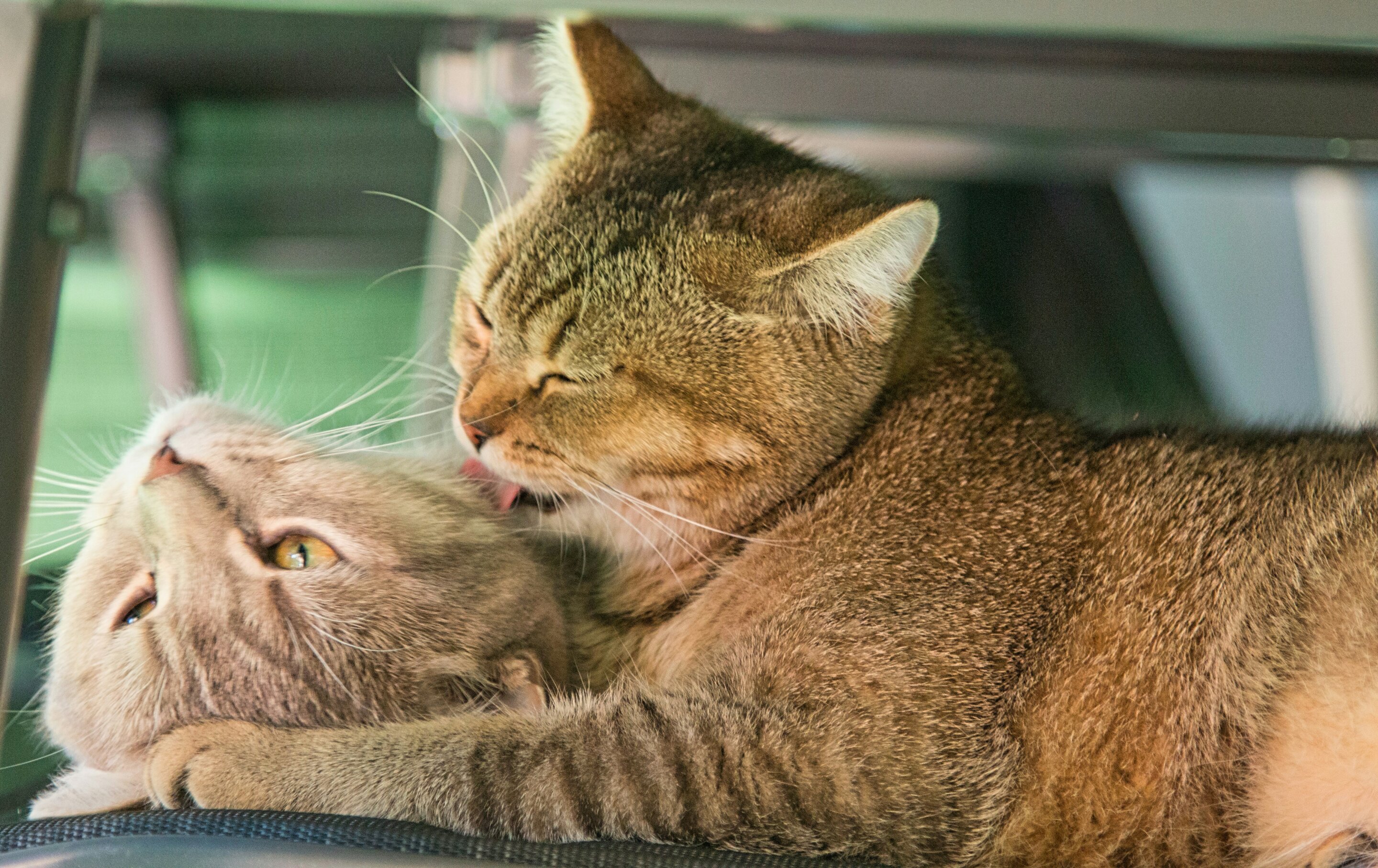
Researchers from Ghent University and the University of Lincoln have uncovered that the grooming behavior among cats, known as allogrooming, is not just an expression of friendship as previously thought. The study, published in Applied Animal Behaviour Science, involved a citizen science project where cat caregivers filmed their pets in 53 households to analyze their interactions during grooming.
Read More
The findings indicate that allogrooming can serve different purposes depending on the context. While it can help strengthen social bonds, maintain hygiene, or aid relaxation, it can also signal tension or conflict. For instance, in 41% of observed cases, cats that were physically close, such as cuddling in a basket, would engage in allogrooming as a way to reinforce their connection. Grooming was often focused on sensitive areas like the head and ears, which are linked to positive reinforcement among cats.
Additionally, allogrooming was noted to occasionally act as a precursor to play. The researchers found that during playful interactions, grooming could initiate wrestling, particularly around the neck area where cats also might engage in gentle biting.
Conversely, the study revealed that allogrooming could reflect underlying tension. Cats might groom each other to prevent direct conflict or to communicate discomfort subtly. For example, if one cat tries to assert dominance over a sunny resting spot, the other may flatten its ears in response to unwanted grooming. Subtle stress cues, such as head shaking or lip licking, emerged especially when cats were in differing postures.
This research enhances understanding of feline social dynamics and suggests that the behavior of allogrooming should be interpreted within a broader context of cat interactions.