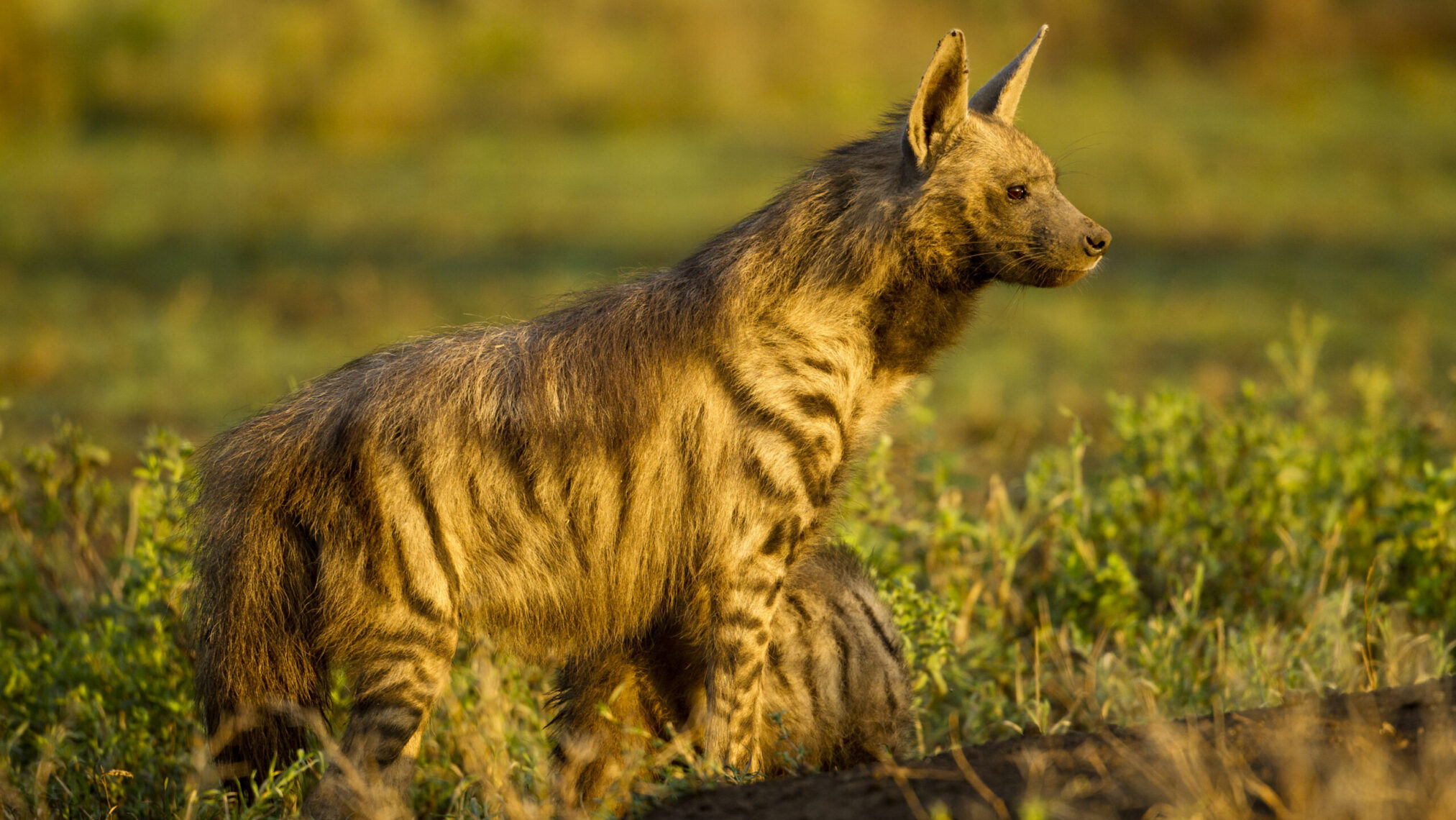
Researchers at Texas A&M University have uncovered significant chromosome similarities between aardwolves and domestic cats, despite millions of years of separate evolution. This study, the first comprehensive chromosome map of the aardwolf, enhances understanding of mammalian evolution.
Read More
The aardwolf, a termite-eating mammal native to Africa, is the least studied member of the hyena family. Previously, its only chromosome information was a count of 40, identified in the 1960s. The research, published in the Journal of Heredity, was led by Dr. Terje Raudsepp from the Texas A&M College of Veterinary Medicine and Biomedical Sciences in collaboration with Twin Pine Conservation Institute (TPCI).
The study provided insights into the aardwolf's chromosomes, also known as its karyotype, contributing to ongoing efforts to create chromosome-level references for mammals. To date, detailed chromosome maps exist for only about 1,200 of the roughly 6,000 mammal species.
Raudsepp emphasized the importance of adding diverse mammalian species to research efforts, noting that extinction can occur unexpectedly. While previous genome sequencing had divided the aardwolf’s DNA into about 5,600 fragments, mapping the chromosomes helps organize these pieces. Mayra Mendoza, a doctoral student in Raudsepp's lab and co-first author of the study, stated that comparing the aardwolf's chromosomes with those of spotted hyenas allowed researchers to identify specific differences to look for in future genome sequences.
To obtain the aardwolf's chromosomes, the team cultivated cells from a skin sample provided by TPCI, examining them during cell division when chromosomes are visible. By employing a staining technique that highlights chromosomes with distinct patterns, the researchers compared aardwolf chromosomes to those of spotted hyenas, finding them nearly identical except for three different pairs.
The study also yielded surprising results when comparing aardwolves to domestic cats, which diverged from their common ancestor roughly three times earlier than the aardwolves and spotted hyenas. Despite this evolutionary distance, the chromosome patterns showed remarkable stability, with 12 of the 19 cat chromosomes aligning one-to-one with aardwolf chromosomes.
Raudsepp noted that the study indicated the absence of significant chromosome shuffling throughout the evolutionary process. Although many believe hyenas are more closely related to dogs, they are, in fact, more closely related to cats. Cats were chosen as a comparison subject partly because Dr. Roscoe Stanyon, a collaborator on the study, had already developed specialized DNA markers for cat chromosomes, facilitating the comparison.
Researchers also evaluated two specific features on the aardwolf's chromosomes: the nucleolus organizer region (NOR), critical for cell protein production, and telomeres, protective caps at the ends of chromosomes. They found consistency in the NOR across aardwolves, hyenas, and cats, which is typically highly variable among species. Furthermore, no telomeric sequences were found within the body of the aardwolf's chromosomes, indicating a lack of major structural changes through evolution.
The research initiated from a small skin sample provided by TPCI has evolved into a living collection of aardwolf cells that can be utilized for further genetic testing. Raudsepp mentioned that this single good cell line opens up various avenues for future research. Mendoza remarked on the collaborative effort in driving the project, which provided both personal and academic growth.