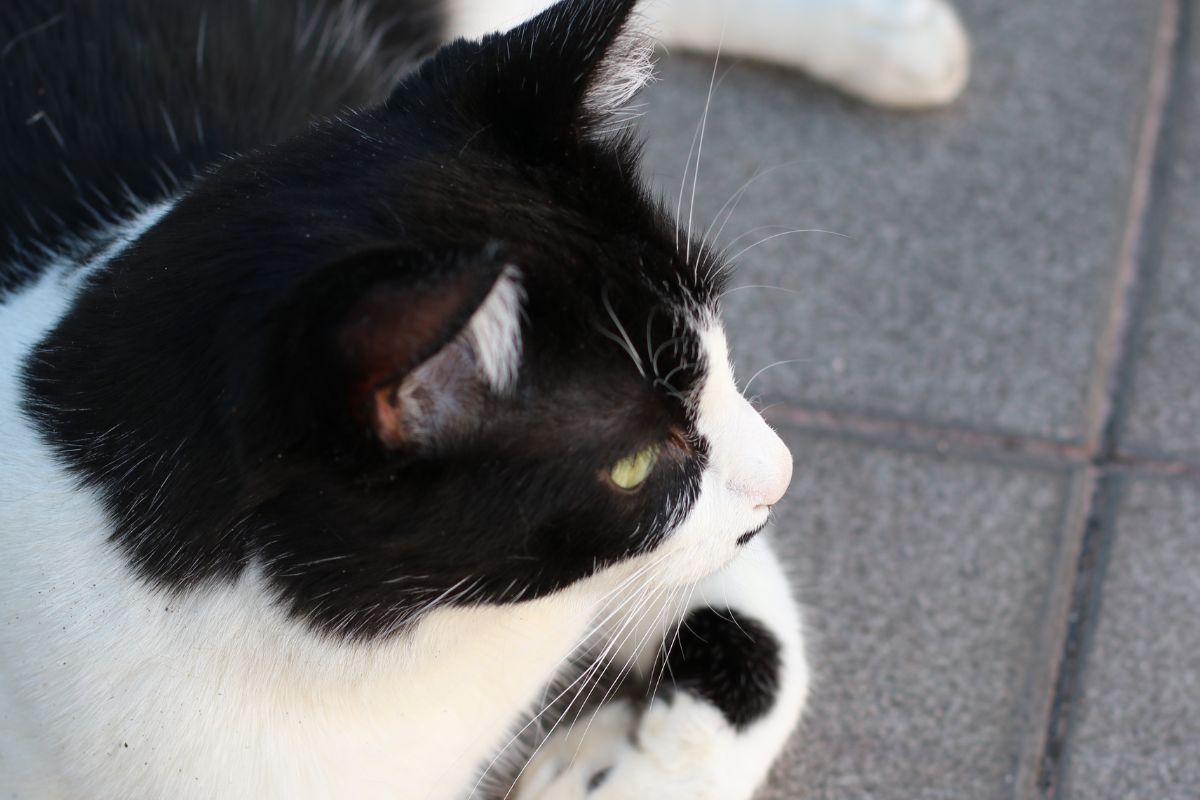
Some black and white cats may appear more jumpy or sensitive to changes in their environment, leading to speculation about whether their distinctive markings influence their behavior. Veterinarian Carlos Gutiérrez has observed that these cats, sometimes referred to as "cow cats" due to their color patterns, may retreat to quieter areas when feeling overwhelmed. However, he emphasizes that various factors, including upbringing, socialization, and past experiences, play a more significant role in a cat's temperament than coat color alone.
Read More
Research from the University of California, Davis, involved an online survey of cat owners that examined associations between coat color and behavioral traits. The study included responses from 1,274 cat owners and indicated that tortoiseshell, calico, black-and-white, and gray-and-white cats had slightly higher reported aggression levels in certain situations. Yet, the study focused on reported aggression rather than general nervousness or anxiety, and the differences between coat-color groups were minimal.
The researchers concluded that coat color does not reliably predict feline behavior since individual cats can show a wide range of temperaments regardless of their coloration. Cultural perceptions about different coat colors can influence how owners interpret their cats' behaviors, further complicating the analysis.
Genetic factors controlling coat color may prompt further inquiry into any associations with other biological traits. However, proving that coat color influences behavior is challenging, as many intertwined factors like breed, health, and environment also influence a cat's demeanor.
Early socialization significantly affects how a cat interacts with people and adapts to new situations. A cat that experiences consistent, positive interactions from a young age is likely to be more confident, whereas one that undergoes trauma or inconsistent handling may develop a more fearful persona.
Rather than attributing behavior to coat color, observing individual cat behaviors is more beneficial. Signals such as posture, ear position, and grooming habits can indicate a cat's comfort level.
If a cat exhibits signs of being easily startled, creating a predictable environment can help. Providing quiet spaces and gradually introducing changes can ease anxiety for sensitive cats. It is important to allow nervous cats to choose their interactions rather than forcing encounters, which can heighten stress.
If a typically confident cat suddenly exhibits signs of withdrawal or heightened reactivity, it is essential to consider potential medical issues rather than attributing changes solely to coat color. Behavioral shifts could indicate pain, illness, or stress from environmental changes that warrant a veterinarian's attention.
While the notion that black and white cats may have unique temperaments is interesting and some behavioral differences have been observed, stronger influences come from genetics, early experiences, socialization, and individual traits. Owners should focus on their cat's behaviors rather than assumptions tied to coat color.