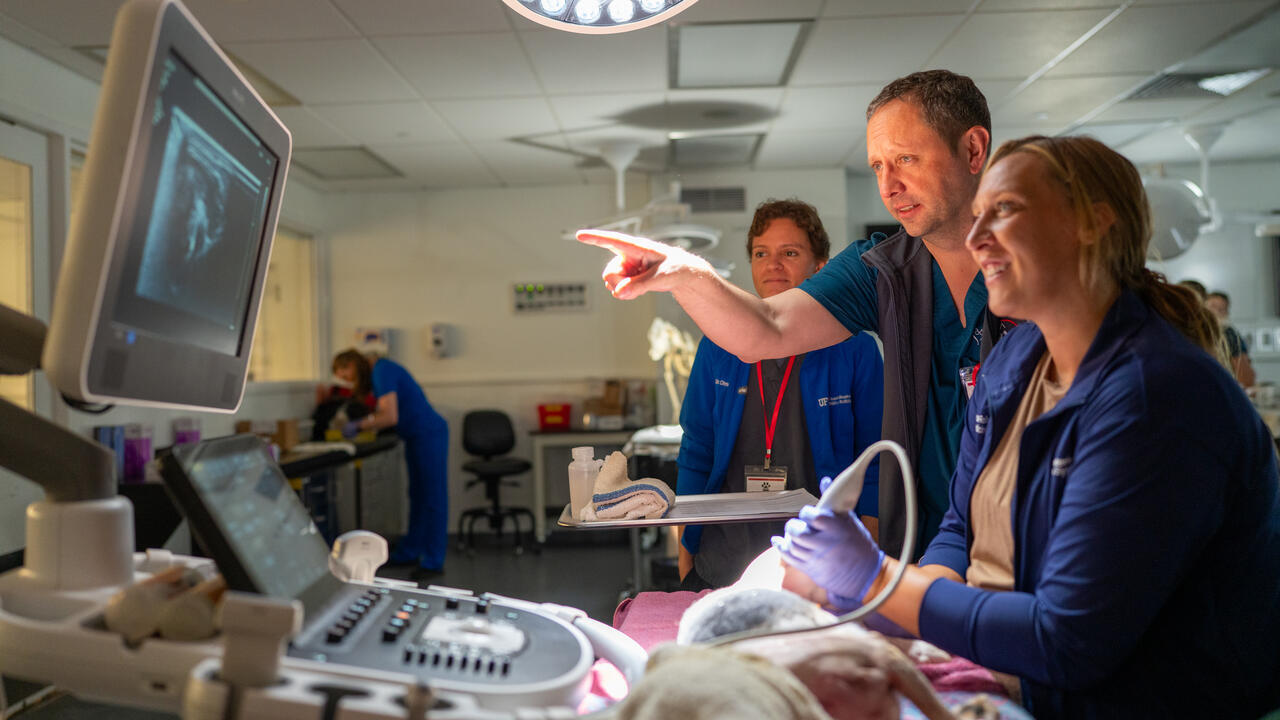
Dr. Margret Lenfest examined an anatomical specimen while reviewing ultrasound data during the June MSKamp training program at Cornell University. She emphasized the importance of advanced training in musculoskeletal (MSK) ultrasounds for veterinary specialists, noting the need for greater accessibility to such skillsets.
Read More
MSKamp is a pioneering national continuing education program focused on veterinary specialists and residents. It provides advanced training in the use of ultrasounds for diagnosing canine injuries and diseases, as well as for guiding pain management procedures like hip and shoulder injections. The program is a collaboration between the Cornell University Hospital for Animals and the Colorado State University Veterinary Teaching Hospital, both of which are leaders in sports medicine and rehabilitation. The course is set to fully launch at the end of June, following its pilot in December 2025.
Lenfest remarked that while musculoskeletal ultrasound is well-established in human sports medicine and equine practice, it is relatively new for canines and companion animals. These ultrasounds utilize sound waves to create images of muscles, joints, and nerves, aiding in the diagnosis of conditions such as arthritis and tears.
The success of MSKamp is attributed to the collaboration between sports medicine specialists and imaging experts. According to Amy Todd-Donato, a D.V.M. and MSKamp instructor, combining these perspectives enhances the effectiveness of MSK ultrasonography for injury diagnosis and monitoring.
The program's curriculum, developed by faculty from both institutions, focuses on high clinical quality standards and encourages collaborative research that advances the field. Dr. Matthew Brunke, a clinician in sports medicine and rehabilitation, emphasized the ongoing need for quality research in veterinary musculoskeletal imaging.
The American Veterinary Medical Association (AVMA) recognized sports medicine and rehabilitation as a specialty in 2010, marking a significant development for this growing field. Christopher Frye, a D.V.M. and associate professor, noted that while MSK ultrasound and imaging-guided interventions are increasingly vital, specialists have limited access to focused, advanced training.
MSKamp has garnered support from Purina, which has provided funding for travel and lodging for attendees, as well as equipment contributions from Samsung to facilitate the training. The June session features 24 registrants and seven returning instructors, along with four new instructors from various institutions.
Lenfest highlighted the program's collaborative nature, stating, “We’re connecting with other colleges and specialists to expand our knowledge base.” The initiative has also attracted participation from the University of Florida and private practitioners.
Upcoming plans for MSKamp may include hosting sessions in other states like Colorado and Florida, making it more accessible for attendees. Todd-Donato praised the talented group involved in the program and reaffirmed the commitment to advancing MSK ultrasonography for the benefit of veterinarians and their patients. Feedback from participants has been positive, indicating a growing body of knowledge within the specialty that will enhance future veterinary care.