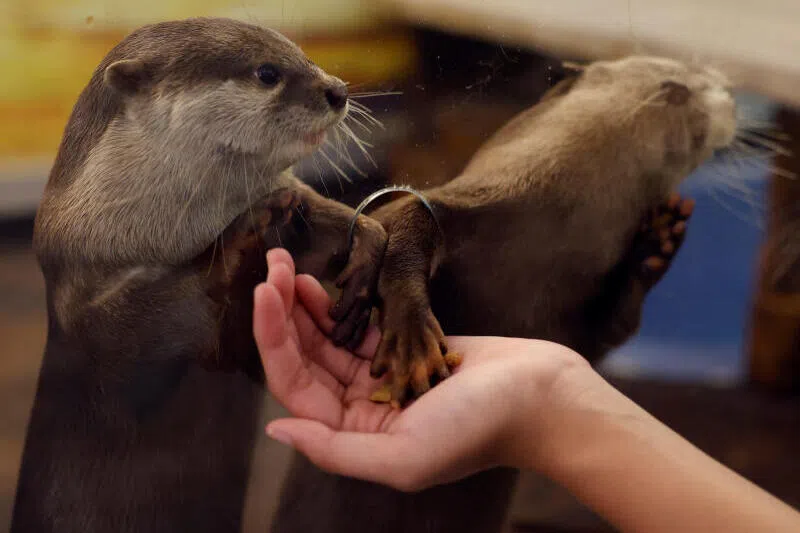
Japan has initiated its first comprehensive survey of animal cafes to address animal welfare, hygiene, and public health concerns, a government official announced. This desktop survey, which started in September, will assess the number of animal cafes, the species housed, their living conditions, and visitor interactions with the animals.
Read More
Animal cafes featuring exotic species like otters, owls, and marmots have surged in popularity among both local and international tourists. However, researchers have raised alarms about some establishments housing threatened species, highlighting potential welfare issues and concerns regarding wildlife trade. Takuya Ishikawa from the Environment Ministry mentioned that Japan lacks specific regulations governing these cafes and the handling of various exotic animals.
Ishikawa noted the increasing public interest, especially from animal welfare organizations, which have been communicating their research findings to the ministry. Experts on a government advisory panel have also frequently discussed the potential problems linked to these cafes.
The survey will include cafes that feature domesticated animals such as cats and dogs. Additionally, the government plans to launch a public awareness campaign, acknowledging its past shortcomings in informing the public about the risks associated with interacting with exotic animals.
Some industry members have welcomed the idea of stricter regulations. Syaina Nozaki, manager of the Owl Otter Cafe in Kamakura, expressed hope that new regulations could differentiate responsible operators from those motivated solely by profits.
In 2024, a report by the World Wildlife Fund (WWF) indicated that Japan, which has a significant domestic pet market, ranked as the world’s second-largest importer of live reptiles and mammals by value. This trend carries risks such as the introduction of invasive species and the spread of zoonotic diseases. According to another report by WWF and Hokkaido University, about 80 registered wildlife cafes in Tokyo and Osaka showed that three-quarters also sold animals. Researchers visiting 25 cafes found over 1,700 animals on display, with 27% identified as threatened species. Notably, over 90% of these cafes exhibited animals considered high-risk for injury through contact, and samples from four cafes tested positive for enterohemorrhagic E. coli (EHEC), which is linked to severe intestinal illness.