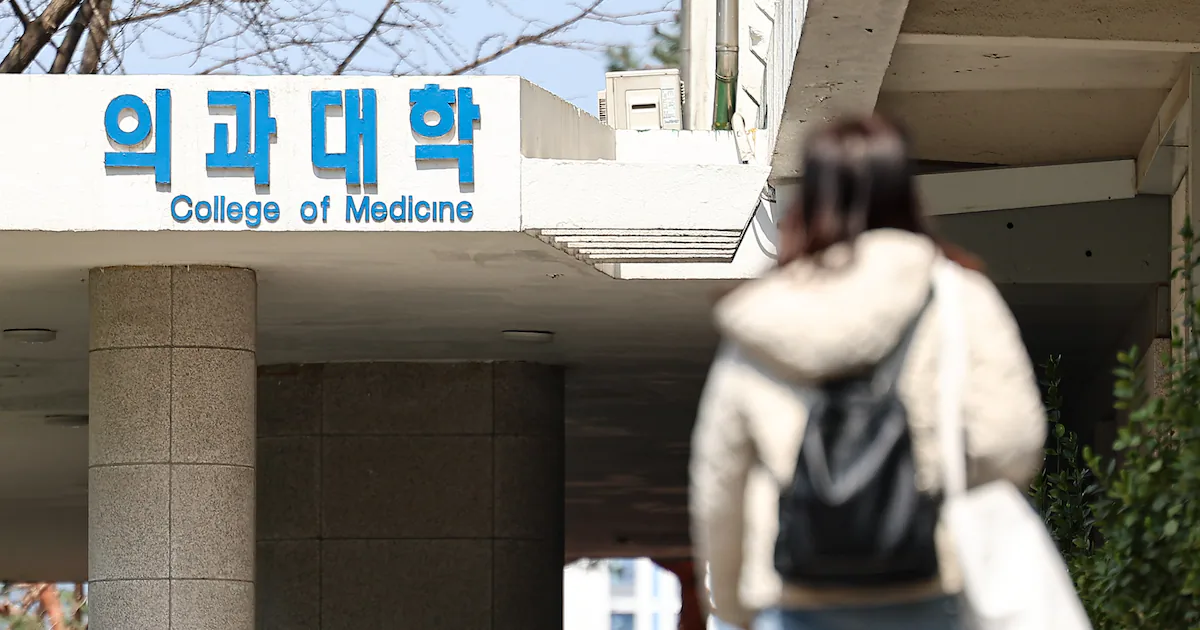
Applications for medical schools in South Korea have surged by 40% for the 2027 academic year due to the introduction of the regional doctor system. This scheme aims to bolster local healthcare by encouraging students to apply to local medical institutions. In contrast, applications to other health-related programs such as dentistry, Korean medicine, pharmacy, and veterinary medicine saw a decline.
Read More
According to Jongno Academy, early applicants for the 2027 academic year rose to 28,270, which is a 10.5% increase from 25,573 the previous year. This figure represents an average of 28.4 applicants per general high school in regional areas. The current numbers are the second highest on record, following a peak of 34,347 applicants in the 2025 academic year, which coincided with expanded medical school capacities.
Among the applications, 15,775 were to 27 local medical schools, while the figures for other programs included 5,523 applicants to 21 pharmacy schools, 3,495 to 10 Korean medicine schools, 2,348 to 8 dental schools, and 1,129 to 8 veterinary schools. Notably, only the regional medical school admissions track saw an increase, with 4,528 more applications (up 40.3%) compared to the previous year, while pharmacy applications declined by 1,162 (17.4%). Other fields such as veterinary, dentistry, and Korean medicine also experienced decreases.
The highest average number of applicants per local high school was observed in Daegu and North Gyeongsang at 34.1, followed by Honam at 33.6 and Chungcheong at 28.1. The lower end of the spectrum included Gangwon at 22.5 and Jeju at 13.6.
Lim Seong-ho, head of Jongno Academy, indicated that the regional doctor system has likely attracted top-performing local test-takers, including many reapplicants with strong academic records. He suggested that as the number of students admitted through this system increases—from 466 in 2027 to a projected 583 in 2028—the concentration on medical schools may rise further.
Additionally, the introduction of a new five-level transcript grading system could influence future application trends, and Lim anticipates that a rise in higher transcript grades may lead to increased competition in regional admissions for medical and other health-related programs.