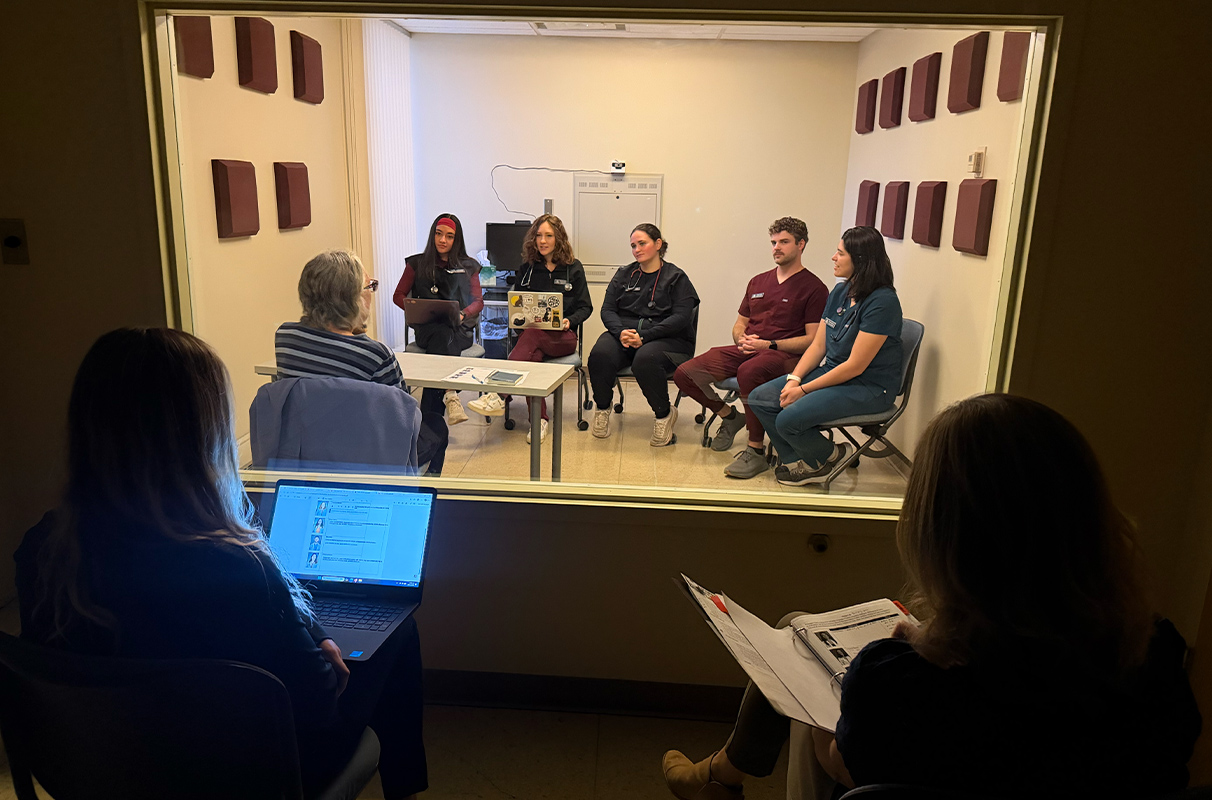
Washington State University (WSU) alumni gathered in Pullman this week to mentor veterinary students in the College of Veterinary Medicine’s longstanding tradition known as the Diagnostic Challenge. Many alumni brought their parents along to role-play as simulated clients during clinical cases, creating a unique opportunity for familial involvement in veterinary education.
Read More
Since its inception in 1991, the weeklong program has presented second-year veterinary students with complex cases requiring interaction with simulated patients and realistic client scenarios. Practicing veterinarians, primarily WSU graduates, mentor small groups of students through cases designed by third-year veterinary students, with guidance from faculty.
Now in its 35th year, this tradition welcomed alumni such as Dr. Brianna Brandt (’18 DVM), Dr. Michelle DeCourcey (’13 DVM), and Dr. Larisa Estrada (’21 DVM), all accompanied by their mothers.
For returning alumni, the experience serves as a chance to reflect on their own educational journeys. Dr. Larisa Estrada, who traveled from New Mexico with her mother, expressed that participating in the Diagnostic Challenge was pivotal in her learning. “It was my first opportunity to act as the doctor, working through cases step by step, which greatly enhanced my communication and diagnostic skills,” she noted.
Veterinarians Dr. Michelle DeCourcey and Dr. Larisa Estrada observed second-year students working on a clinical case, while Alisa Estrada participated as a simulated client for the fifth time. Alisa emphasized her commitment to giving back and supporting the new generation of students.
Kathy Brandt, mother of Brianna, echoed similar sentiments, appreciating the interactive role-playing aspect and the chance to connect with students.
Michelle DeCourcey highlighted how the Diagnostic Challenge helped her develop crucial clinical reasoning and communication skills. She looked forward to sharing this experience with her mother, acknowledging the significance of their collaborative participation.
Reflecting on the program's longevity, Michelle noted the leadership behind it and her investment in ensuring its continuation. She expressed pride in contributing to a program that she believes is integral to the education of future veterinary professionals.