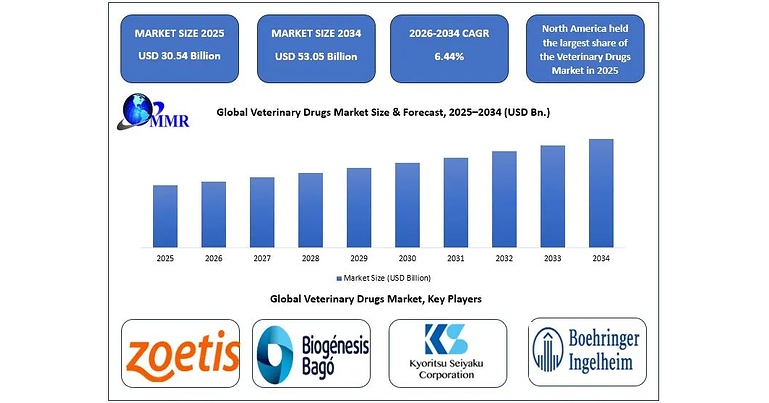
The Global Veterinary Drugs Market, valued at USD 30.54 billion in 2025, is projected to grow at a compound annual growth rate (CAGR) of 6.44% from 2026 to 2034, reaching USD 53.05 billion by 2034, according to an analysis by Maximize Market Research.
Read More
Veterinary drugs are essential for preventing diseases, treating infections, managing pain, controlling parasites, and maintaining animal health across both companion animals and livestock. The market encompasses various products, including anti-infectives, anti-inflammatory drugs, and parasiticides, delivered through oral, injectable, topical, and other methods.
Regulatory support is propelling product development, with the U.S. FDA maintaining the Green Book, which lists approved animal drugs. Ongoing drug approvals prompt pharmaceutical companies to broaden their veterinary portfolios for addressing diverse animal health issues.
The World Organisation for Animal Health (WOAH) indicates that 47% of animal diseases with available data have zoonotic potential, underscoring the importance of disease monitoring and treatment. As animal health needs evolve, veterinary pharmaceutical companies are adapting by developing new products and therapies.
The North American region leads the market due to high spending on companion animal healthcare, advanced veterinary infrastructure, and robust pharmaceutical research. Meanwhile, the Asia Pacific region is witnessing strong demand attributed to large livestock populations, increasing pet ownership, and advancements in veterinary healthcare infrastructure.
Preventive healthcare is gaining significance as stakeholders prioritize early treatments and disease management strategies. Long-acting therapies that reduce dosage frequency are increasingly being developed to enhance treatment convenience. Additionally, antimicrobial resistance concerns are prompting companies to emphasize responsible drug use and explore alternative therapies and vaccines.
The market faces challenges from regulatory compliance and stringent drug approval requirements. In the U.S., the FDA categorizes animal drug applications, impacting development timelines and costs for companies, particularly smaller ones entering the sector.
Despite these challenges, a shift toward preventive healthcare and new treatment modalities creates opportunities for veterinary pharmaceutical firms. Recent FDA approvals exemplify advancements in the field, targeting specific animal health needs across various species.
The competitive landscape features major players like Zoetis, Boehringer Ingelheim, Merck & Co., and Elanco, which are committed to product innovation and expanding their market presence. The emphasis on new product launches, regulatory approvals, and targeted therapies signifies a dynamic market responding to emerging animal health challenges.
Recent developments include FDA approvals for drugs targeting New World screwworm infestations in dogs and guidelines addressing antimicrobial resistance risks. These initiatives reflect the ongoing evolution in veterinary medicine and the industry's role in addressing the health of both companion animals and livestock.