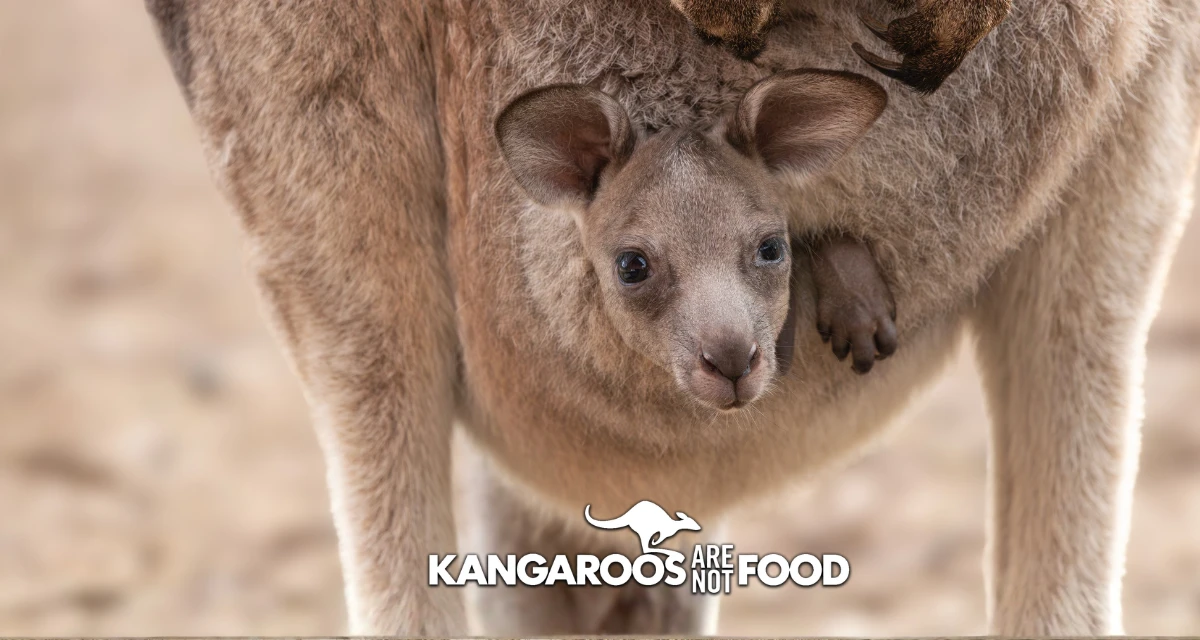
A recent investigation by the Center for a Humane Economy highlights significant food safety failures in Australia's kangaroo meat industry, which has continued to export contaminated products despite failing to meet domestic safety standards. In 2025, testing at an EU-approved export facility revealed bacterial contamination levels up to 340,000 colony-forming units per square centimeter, well above the European Union's threshold. Despite this, the meat was exported and, in cases of failed retesting, was downgraded and sold on the Australian market, including in pet food.
Read More
Wayne Pacelle, president of the Center for a Humane Economy, criticized the Australian government for neglecting food safety standards that endanger both humans and pets. He stated, “No nation should accept meat that fails the European Union’s own safety limits by a factor of 10.”
The report also uncovers a connection between the kangaroo meat sector and the greyhound racing industry, as declining demand for kangaroo meat has resulted in its use as a low-cost feed for racing dogs. Notably, Ray Borda, a leading kangaroo meat exporter, has a history in greyhound ownership and breeding, linking the two sectors.
Christine Dorchak, president of GREY2K USA Worldwide, remarked on the unethical alliance formed due to the economic pressures faced by both industries, stating, “This is another reason why the cruel greyhound racing industry needs to end.”
The kangaroo meat industry has seen an 86% drop in export volume since its peak in the early 2000s, with skin prices plummeting by 98%. Major athletic brands have ceased sourcing kangaroo skins, further affecting the industry's viability. Concerns over food safety persist, with estimates suggesting that 50% of kangaroo carcasses carry Salmonella. Additionally, lead ammunition used in hunting leaves a harmful residue in the environment, affecting other wildlife.
Many kangaroos are not killed humanely, with reports revealing that up to 40% suffer prolonged deaths from improper shooting methods. Dependent joeys often face brutal treatment, including being killed or left to starve.
Belgium is the largest importer of kangaroo meat in the EU, making it essential for the survival of this trade. The Australian kangaroo meat industry claims to be worth between $150 million and $200 million; however, government data indicates a total meat export value of just AUD 10.9 million in 2025.
Georgie Purcell, an Australian Member of Parliament, emphasized the risk this industry poses not only to wildlife but to public health. She urged countries importing kangaroo meat to reconsider their agreements with Australia due to these failures.
The report calls for regulatory bodies in the U.S., EU, and Canada to classify kangaroo meat as unsafe for consumption, urging Belgium to halt imports and Vietnam to withdraw from any recent trade agreements related to kangaroo meat. Additionally, it recommends that major retailers stop selling such products and that Australia implement warning labels on kangaroo meat to inform consumers of potential contamination risks.
Pacelle concluded by stating that the FDA should deem wild-shot kangaroo meat unsafe for both human and pet consumption, emphasizing the widespread failure of food safety norms in this trade. The full report is authored by several experts and is available for further reading.