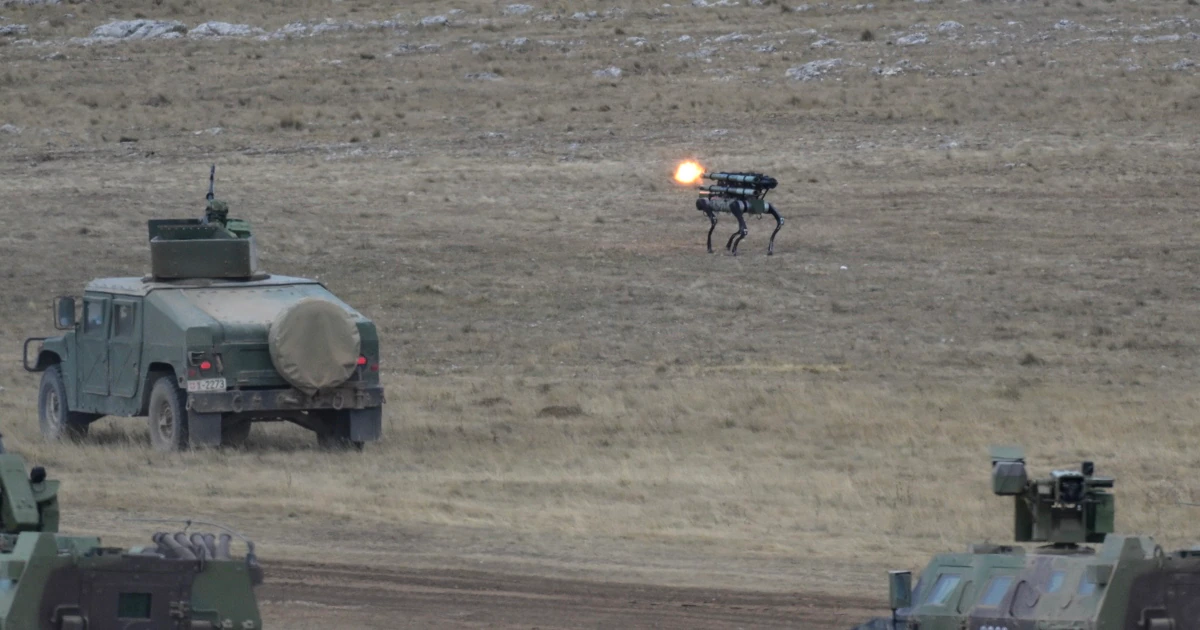
Two weeks after the inauguration of a factory producing Chinese-designed robots, the Serbian military showcased armed quadruped robots during a major military exercise on September 13. Serbian President Aleksandar Vucic had previously promised on August 29 that these armed robots would be deployed within 15 days of the factory opening in Sabac, western Serbia.
Read More
The quadrupeds resemble the D1 Max Pro, an industrial robot created by the Chinese firm AgiBot, which is a partner in the Sabac factory. However, it remains unclear if the robots used in the exercise were manufactured in Serbia, as the military did not respond to an inquiry from RFE/RL regarding their production origin.
During the Victor 2026 military exercise in southwestern Serbia, the robots were reportedly armed with Yugoslav-designed Wasp anti-tank missiles, automatic rifles, and 40mm grenade launchers. Images from the exercise depicted the robots firing automatic weapons and entering a mock building alongside soldiers.
The Sabac factory is designed to produce 3,000 humanoid and quadruped robots annually. Although this potential for mass production raises concerns about the emergence of armed robots in the Balkans, experts suggest that such outcomes are unlikely in the immediate future. Jared Keller, a weapons technology expert in the U.S., noted that quadrupeds face significant challenges regarding reliability and range, which have led militaries to reconsider their adoption of such technology.
Despite Ukraine's military gaining attention for its use of robot dogs in August 2024, these robots have seldom been seen on the battlefield since. Instead, wheeled drones have become the preferred choice among frontline troops due to their superior payload capacity and endurance. A representative from Brave1, an initiative associated with Ukrainian battlefield innovations, remarked that wheeled drones might be more effective for certain missions, even though legged robots could have advantages in challenging terrains.
While a wheeled Ukrainian Spider ground drone weighs 50 kilograms and can carry up to 100 kilograms, advanced quadruped robots have a significantly lower payload capacity. As Serbia integrates more advanced weapon systems from China, nearly 60 percent of its weapons imports from 2020-2024 have originated from that country.
Both the European Union and the United States have expressed concerns regarding Serbia's military partnership with China. A U.S. State Department spokesperson emphasized that Serbia's economic future will likely depend on the partnerships it chooses today. Keller suggested that the display of these robotic technologies could be more about geopolitical posturing than practical military strategy, as advanced weaponry is often showcased without a comprehensive tactical framework.