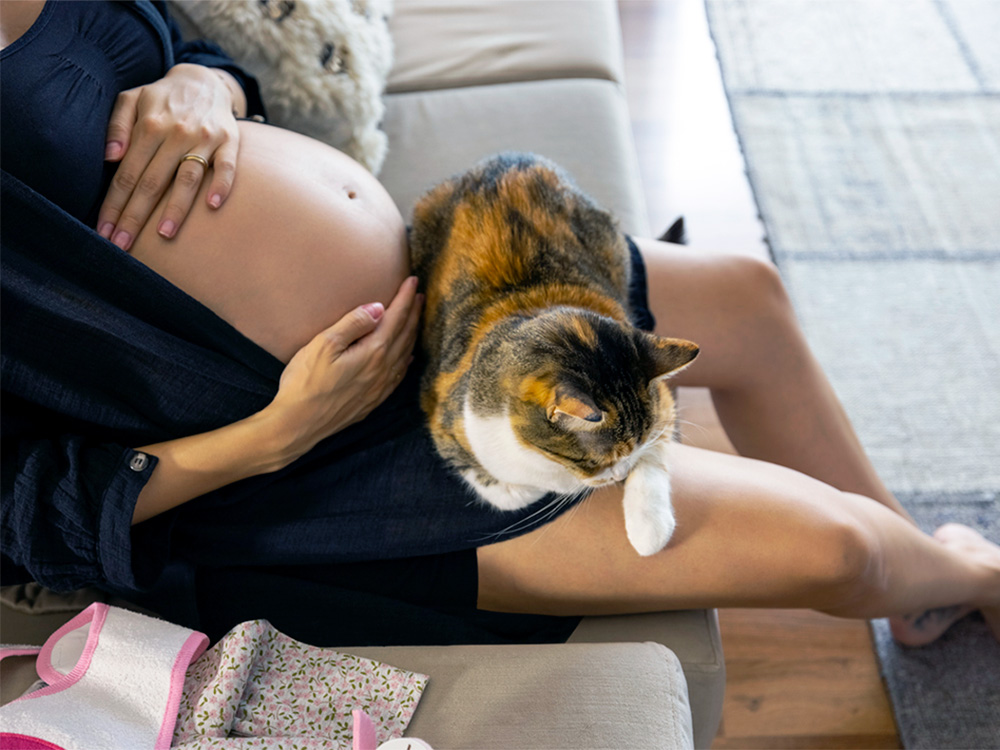
Research suggests that cats may have a certain ability to sense when their owners are pregnant. While scientifically unproven, some veterinarians speculate that a cat’s keen sense of smell could detect subtle changes in body odor associated with pregnancy, which is influenced by hormones.
Read More
Dr. Nicole Savageau, a veterinarian, explains that changes in a pregnant individual's scent, body language, or emotional demeanor could elicit responses from cats. Additionally, cats may notice alterations in their household routine or environment that accompany a pregnancy.
Dr. Preston Turano notes that a cat's remarkable sense of smell—approximately 14 times more powerful than that of humans—might enable them to detect early hormonal changes linked to pregnancy. Hormonal shifts begin soon after ovulation, with signs potentially visible within six to ten days.
Despite anecdotal accounts of cats sensing pregnancy, there is uncertainty surrounding their ability to detect hormonal changes. Alexandra Low, a labor and delivery nurse, points out that alterations in body odor can occur due to hormonal fluctuations, which might be perceptible to cats.
As changes during pregnancy unfold, cats may exhibit a range of behaviors. LeeAnna Buis, a feline training and behavior consultant, emphasizes that each cat's personality will dictate their reaction to these changes. Anxious cats might overgroom or show signs of decreased appetite, while affectionate cats may seek out more physical closeness.
Cats may react variably; some could become clingy or protective, whereas others might show indifference or avoidance. Dr. Savageau cautions that, while affectionate behaviors like kneading are common, expecting individuals should avoid handling cat litter due to the risk of toxoplasmosis.
Cats do not comprehend the concept of pregnancy but may be responsive to changes in their environment and daily routines. Maintaining a calm atmosphere during this time can help ease a cat's transition to the new circumstances. Introducing changes gradually and offering rewards during this period can facilitate adjustment for both the cat and the incoming newborn.
Regarding common queries, Dr. Savageau indicates that factors such as individual temperament and past experiences, rather than gender or breed, typically shape a cat's responses to human pregnancy. Furthermore, while there are no solid findings to confirm that cats can hear a baby's heartbeat, some believe it's possible if the cat is resting on the pregnant individual's abdomen.