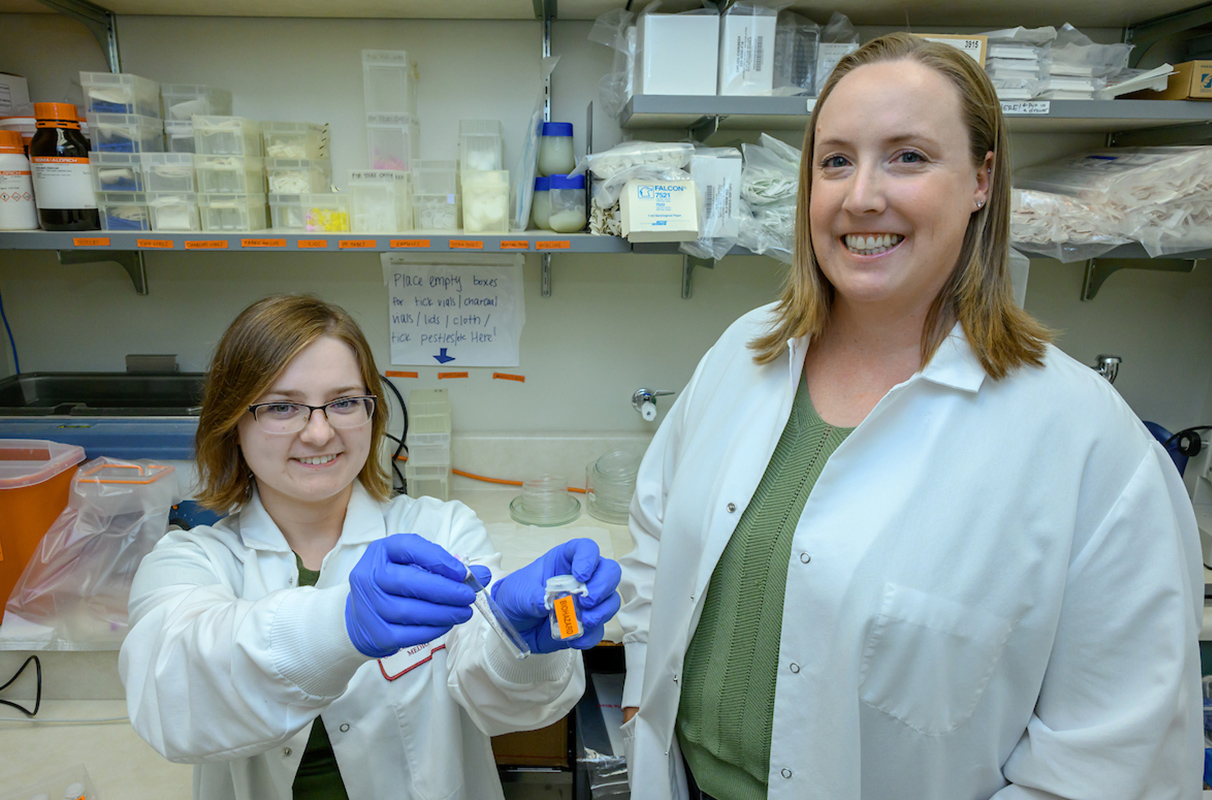
Chelsea Osbron, a postdoctoral researcher at Washington State University (WSU), has been awarded a National Institutes of Health (NIH) fellowship to support her research on tick-borne diseases. This competitive F32 postdoctoral training grant, amounting to $237,708 over three years, is aimed at understanding how the immune system of ticks influences their ability to transmit diseases.
Read More
Osbron, working in Dana Shaw's laboratory within WSU’s College of Veterinary Medicine, received this prestigious fellowship for her project titled “Dissecting the role of IKK-epsilon in tick immunity and vector competence.” The NIH F32 fellowship is one of the top training awards in the biomedical sciences, with only 13 such awards currently held by postdocs statewide, including one at WSU in the College of Nursing.
“These are extremely competitive grant awards, making it a significant achievement when a trainee receives one,” Shaw stated. “This fellowship recognizes both the quality of Chelsea's work and her potential to lead in this field.”
Osbron earned her Ph.D. in molecular biosciences at WSU in 2024, under the mentorship of Alan Goodman. Her research specifically examines how tick immune responses affect their capacity to harbor and transmit pathogens, a phenomenon known as vector competence. She focuses on the blacklegged tick, which is known for spreading diseases such as Lyme disease and anaplasmosis in humans.
“Ticks are the biggest vector of diseases in the U.S.,” Osbron noted, highlighting the significant gap in understanding the intricate interactions within ticks that enable them to transmit pathogens to humans and animals.
Unlike typical strategies that concentrate on preventing tick bites or treating infections after they occur, Osbron’s work aims to understand pathogen survival and replication within ticks before transmission. “We’re trying to prevent the disease before patients get sick, as opposed to trying to play catch-up,” she explained.
The long-term objective of her research is to discover biological mechanisms that could help reduce pathogen levels in ticks, thus lowering the risk of disease transmission. Osbron credited Shaw and the supportive research community at WSU, which collaborates closely with the U.S. Department of Agriculture in tick-borne disease research, for fostering her training.
“It’s been really great working with Dr. Shaw,” Osbron said. “She’s been very supportive of my research interests and helping me become a more independent researcher.”
Osbron will complete the fellowship under the mentorship of Shaw and Dr. Erol Fikrig, chief of infectious disease at Yale School of Medicine. After the fellowship concludes, she intends to pursue a faculty position to continue her research.