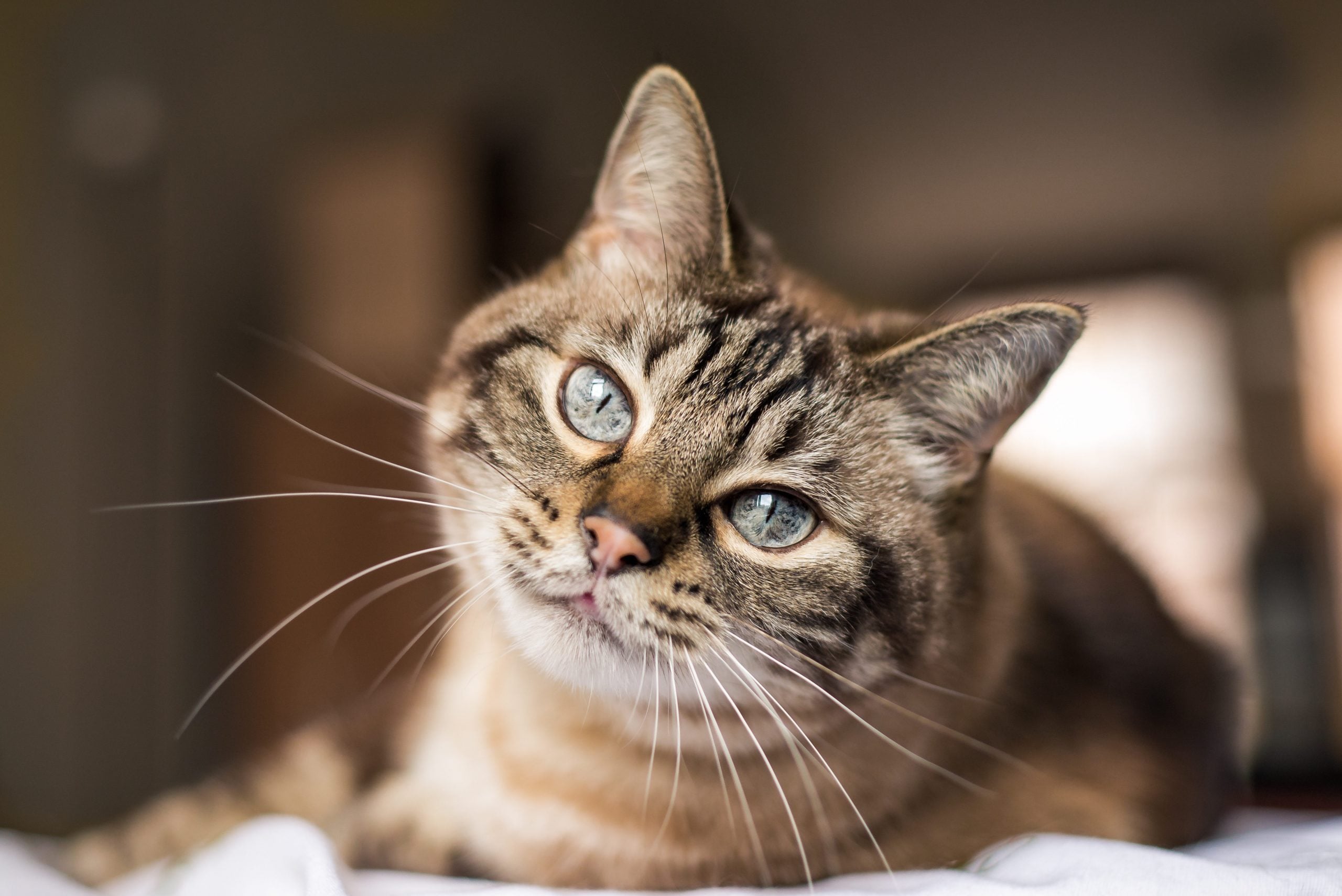
Can your cat respond to its name, differentiate your voice from a stranger's, and locate a toy hidden behind furniture? If so, your cat may exhibit signs of intelligence, according to Kristyn Vitale, PhD, a feline behaviorist at Oregon State University’s Human-Animal Interaction Lab.
Read More
With about 600 million domestic cats worldwide, Felis silvestris catus ranks among the most popular pets. Vitale notes that cats' adaptability, allowing them to thrive in diverse environments, contributes to their popularity. However, compared to the extensive research on dog cognition, relatively few studies have focused on cat intelligence and cognitive processes.
Vitale is addressing this research gap by studying feline cognition, which she defines as how cats think about their surroundings, contrasting it with intelligence, or how they act upon what they think. So far, studies have primarily examined physical cognition—cats' abilities associated with senses like hearing and smell, which are crucial to their survival, especially since kittens are born blind but have functional olfactory senses.
Cats have demonstrated an understanding of object permanence, the concept that objects continue to exist even when not visible. Research indicates that cats can solve visible displacement tests and tend to perform better as they age.
Another area of study is whether cats possess an internal clock. Vitale explains that cats have natural activity cycles, particularly at dawn and dusk, and they can adjust their behaviors to align with their humans’ routines through associative learning.
Vitale’s research also delves into social cognition—how cats interpret and react to social cues. In experiments where a cat owner expresses fear or happiness towards an object, Vitale observes the cat's response, highlighting their capacity to gauge human emotions.
Additionally, she evaluates the attachment bond between cats and their human companions. In her lab, when a cat is reunited with its owner after a brief separation, a securely attached cat may explore the room while others may cling to their owners. This indicates early life experiences significantly influence a cat's social behavior.
Moreover, Vitale’s cats have learned commands such as sit and come, showcasing that they can be trained similarly to dogs. Observations indicate cats can often follow human pointing and voice cues, suggesting a more complex social intelligence than commonly perceived.
To evaluate your own cat's intelligence, consider these simple tests: hide a toy to see if your cat retrieves it, or place treats under cups to check if it can follow your pointing. Other tests can assess problem-solving abilities and responses to social interaction.
If your cat performs well on these tests, it may be a quick learner. For those that do not perform as well, providing enrichments like interactive toys and novel stimuli can help enhance their cognitive development.