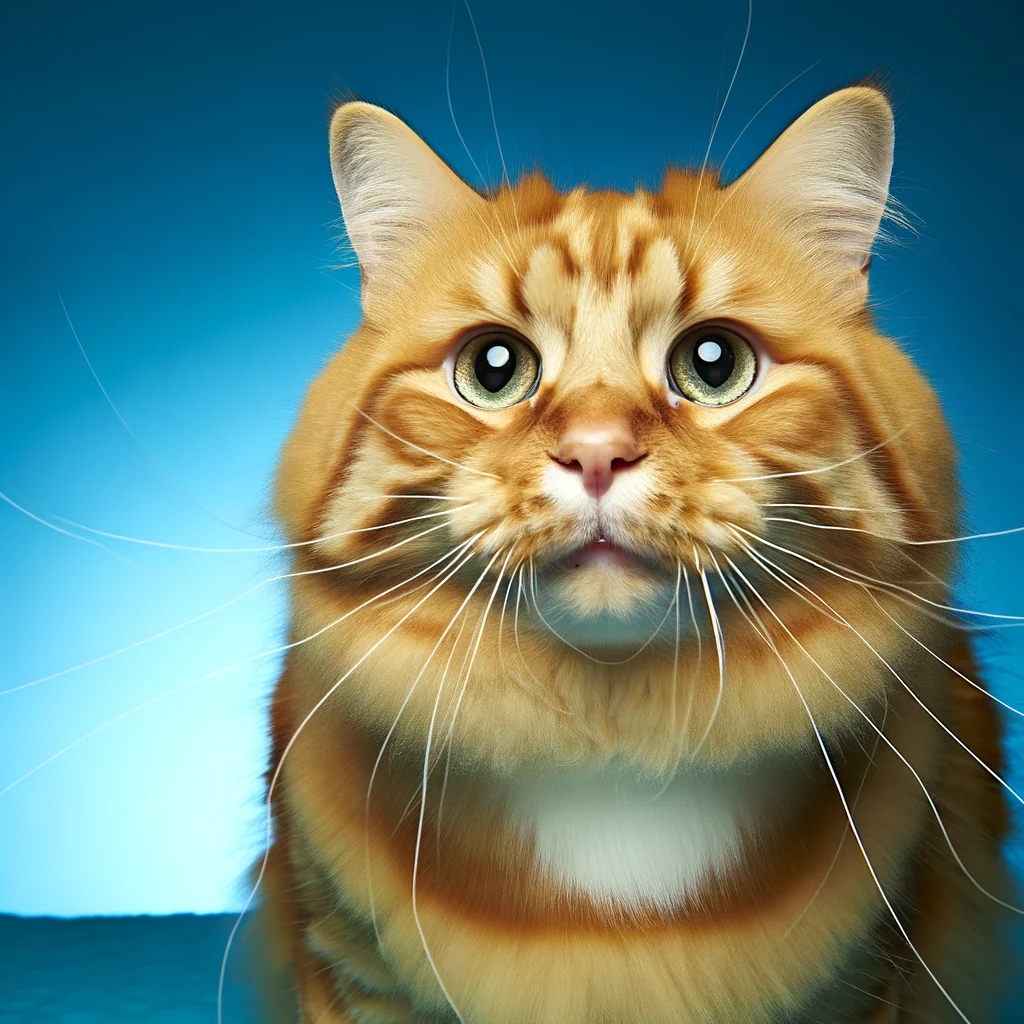
Orange tabbies often stand out for their playful personalities, leading many owners to share anecdotes about their antics—whether it's jumping from counters, pouncing on unsuspecting pets, or playfully attacking human ankles. Videos featuring these so-called “derpy” cats have gained popularity on social media, reinforcing the notion that orange cats possess silly and sociable traits. However, recent studies suggest there may be more to this perception than meets the eye.
Read More
The term “orange cat” describes a fur color rather than a specific breed. This coloration can be found across various breeds, including Maine coons, Siberians, and munchkins. Despite this variation, many pet owners believe these cats exhibit similar behaviors. This raises the question of whether coat color might actually be linked to temperament.
Scientists have identified the ARHGAP36 gene, located on the X chromosome, as responsible for orange fur in cats. This genetic detail explains why most orange cats are male; they possess one X and one Y chromosome, requiring only one copy of the ARHGAP36 gene to display the orange color, whereas females need two copies.
A 2015 study published in the journal Anthrozoös found that people generally describe orange cats as friendlier than cats of other colors. In the same year, the Journal of Veterinary Behavior published a larger study suggesting that while behavioral traits often correlate more with breed than color, some color patterns, including orange, displayed certain tendencies. Carlo Siracusa, a clinical scientist at the University of Pennsylvania and lead author of the study, noted that findings were mixed—orange cats were found to be more likely to exhibit fear-related aggression towards strangers and a heightened interest in prey, contrary to their perceived friendliness.
Siracusa emphasized the study's reliance on owner-reported data, which could lead to biases. Many respondents might have pre-existing beliefs about orange cats being more sociable, potentially influencing their answers. He also pointed out that male cats, generally more outgoing, skew the perception of orange cats due to their predominant male population.
Additionally, research has shown that the ARHGAP36 gene is active in brain and hormonal functions. This sparks curiosity about whether the gene might influence not only fur color but also behavioral traits. Geneticist Hiroyuki Sasaki from Kyushu University suggests that it is plausible for mutations affecting ARHGAP36 to play a role in temperament, although he cautions that this connection is still theoretical.
While the notion that fur color might impact behavior is intriguing, scientists advise against overgeneralizing. Individual variation among cats is significant, and behaviors may differ widely, even among those of the same breed or color. Siracusa noted that owners often anticipate specific traits when adopting a pet, only to encounter surprising behaviors.
Despite the large pet cat population in the United States—around 74 million—funding for research into feline behavior is limited, especially for studies that do not directly relate to health. As Sasaki observes, there remains a wealth of mystery in understanding animal behavior.
Are orange cats truly the silliest? The evidence suggests a complex interplay between genetics and perception. The ARHGAP36 gene might not only affect fur color but could also be linked to behavior. However, as the research is ongoing, much of what we believe about these felines may simply stem from anecdotal evidence and social media portrayals. Ultimately, every cat, regardless of color, brings its own unique personality to the home.