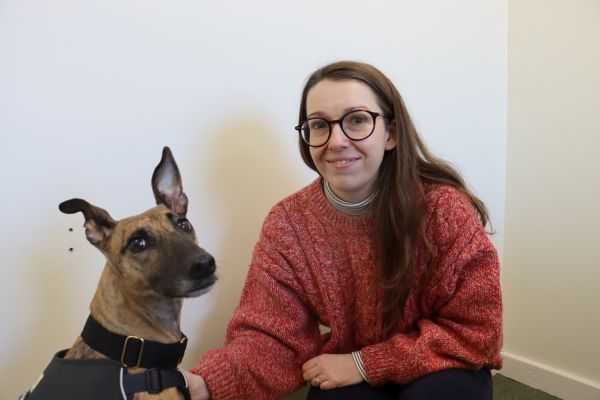
The University of Portsmouth’s Dog Cognition Centre is urging dog owners to enroll their pets in ongoing research, coinciding with World Pet Day on February 20, 2023.
Read More
Since its establishment nearly a decade ago, this facility has focused on understanding dogs' capabilities in comprehending human behavior and their surroundings. Located at the Langstone campus, the centre has engaged hundreds of dogs in tasks and games aimed at revealing how they interact with people and other dogs.
Dr. Juliane Kaminski, the centre’s director, expressed enthusiasm about reaching a ten-year milestone in November. She emphasized gratitude towards dog owners whose involvement has been crucial to their research efforts. To further advancements in canine cognition, the centre is looking to expand its database of participant dogs, encouraging both local owners and those from nearby regions to register.
The research centers on the unique relationship between humans and dogs, who have coexisted for approximately 15,000 to 30,000 years. The insights gained are particularly valuable for professionals working with dogs, including guide dogs for the visually impaired, military and police canine units, and pet owners.
Current studies at the centre explore topics such as:
- Human-dog communication
- Dogs’ awareness of others' perspectives
- Canine facial expressions
- Dogs' understanding of their physical environment
- Self-awareness in dogs
- Cooperation between dogs and humans
The centre’s methodology remains strictly observational, using non-invasive techniques. Dogs receive rewards, either food or play, for participating in experiments. Notably, prior research revealed that dogs have developed new muscles around their eyes, enhancing their ability to communicate with humans. This finding supports the idea that the expression commonly known as ‘puppy dog eyes’ can elicit nurturing responses.
Additionally, the team has identified specific facial movements in dogs, such as the Action Unit (AU) 101 responsible for eyebrow raises.
Amy West, a PhD researcher at the centre, mentioned that registration involves answering a few simple questions about the dog’s characteristics. While the centre primarily seeks participants from the Portsmouth area, there are also online surveys available for owners farther away who wish to contribute.
Interested individuals can register for the dog cognition research studies by filling out an online form.