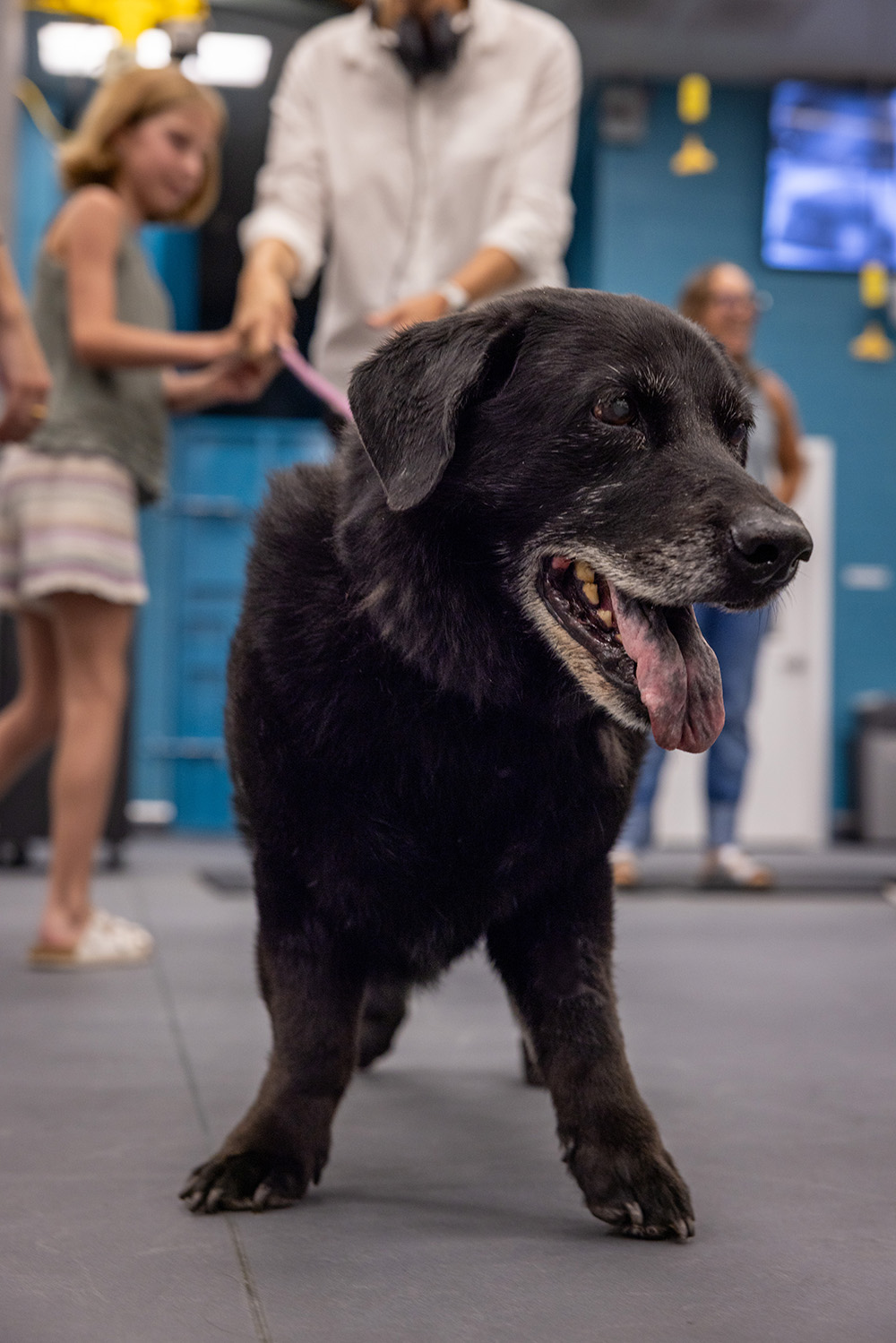
The clinical research team at Colorado State University (CSU) has enrolled over 20 dogs in a study aimed at identifying a safe and effective drug to slow the progression of cognitive dysfunction in dogs. This study focuses on dogs older than eight years who are showing signs of dementia. Throughout the two-year study period, each dog participates in evaluations and blood draws at the Veterinary Hospital every three months. Additionally, annual magnetic resonance imaging (MRI) scans and spinal taps every six months are conducted to monitor changes in the brain.
Read More
For the Rowe family, who have a dog named Ralph in the trial, the experience has been reassuring. They complete surveys, interact with the research team, and hand Ralph over to staff members who are clearly fond of him. Jason Rowe expressed his confidence in the care his dog is receiving, stating, “They care for him; he’s in good hands.” Recently, the Rowes have noticed Ralph appearing brighter, a change they attribute to the trial, though they do not yet know if he is receiving the investigational treatment or a placebo. Tara Rowe remarked that Ralph seems to be having more good days, noting that he is prancing down the street almost daily instead of just once or twice a month as he used to.
The personal stakes in the trial resonate with the Rowes, particularly with Jason, who suffered a brain injury in 2017. Observing Ralph's memory and behavior changes is particularly significant for him, and it also impacts Tara, who has been a caregiver for her partner while helping him regain cognitive strength.
Their daughter, Eloise, has also been included in the experience. Tara noted that the research team has taken the time to explain everything to her, making the process feel personal rather than clinical. The Rowes appreciate that Ralph is contributing to a greater understanding of cognitive issues in aging dogs. As Tara said, “If Ralph can help contribute to human research, how amazing would that be?”