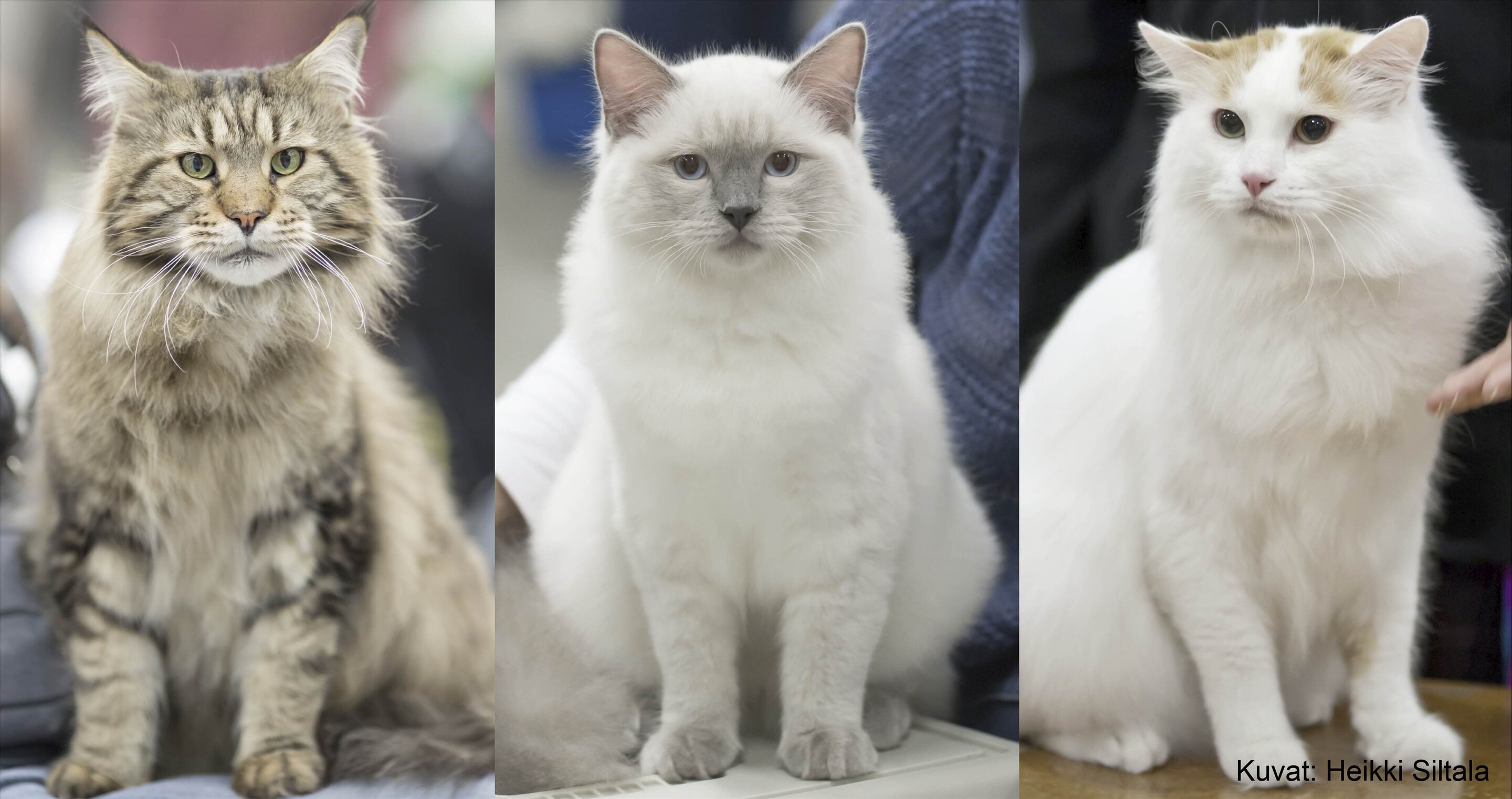
A study from the University of Helsinki has found significant heritable differences in behavior among three cat breeds: Maine Coon, Ragdoll, and Turkish Van. These behavioral traits include activity levels, aggressiveness, shyness, sociability, and stereotypical behaviors, revealing that much of the variation between breeds can be attributed to genetic factors.
Read More
Milla Salonen, a doctoral student at the University, noted that while extensive research has been conducted on dog breeds, this marks the first comprehensive study examining the heritability of behavior traits specifically in cats. The research highlights that all examined traits exhibited notable differences between breeds, with the most significant variations observed in activity levels and smaller differences in stereotypical behaviors.
Professor Hannes Lohi, the principal investigator, explained that behavior traits, particularly activity, tend to be stable from around two weeks of age. In contrast, stereotypical behaviors are influenced more by environmental factors during the cat's early development, which may account for the variations seen.
The researchers selected the Maine Coon, Ragdoll, and Turkish Van breeds due to the availability of sufficient questionnaire responses and parental information. These breeds were chosen for their genetic diversity; the Maine Coon is associated with Nordic cats, while the Ragdoll is linked to Western European and American breeds. Meanwhile, the Turkish Van and Angora have distinct genetic separations from other breeds.
The study estimates that 40% to 50% of behavioral variations are hereditary. This suggests that nearly half of the observed behavioral differences can be explained through genetic inheritance, with estimates being consistent across breeds despite their genetic backgrounds.
Behavioral selection during breeding could influence these traits, as some cats may be bred for higher activity or more docile temperaments. Additionally, genetic factors related to physical traits, such as coat or eye color, might also play a role in behavioral tendencies.
Salonen emphasized that these behavioral differences could arise from both shared ancestry and breeders' preferential selections for specific traits. Further research is required to better understand the evolutionary aspects behind these behavioral differences.
The study utilized a substantial dataset comprising responses from 6,000 cats across 40 different breeds, making it the second largest collection of cat behavior data globally. To expand their research, the team launched an updated feline behavior and personality questionnaire through the Petsofi platform, aiming for over 20,000 responses.
The study was published as Salonen et al. in Scientific Reports on June 14, 2019, with the DOI: 10.1038/s41598-019-44324-x.