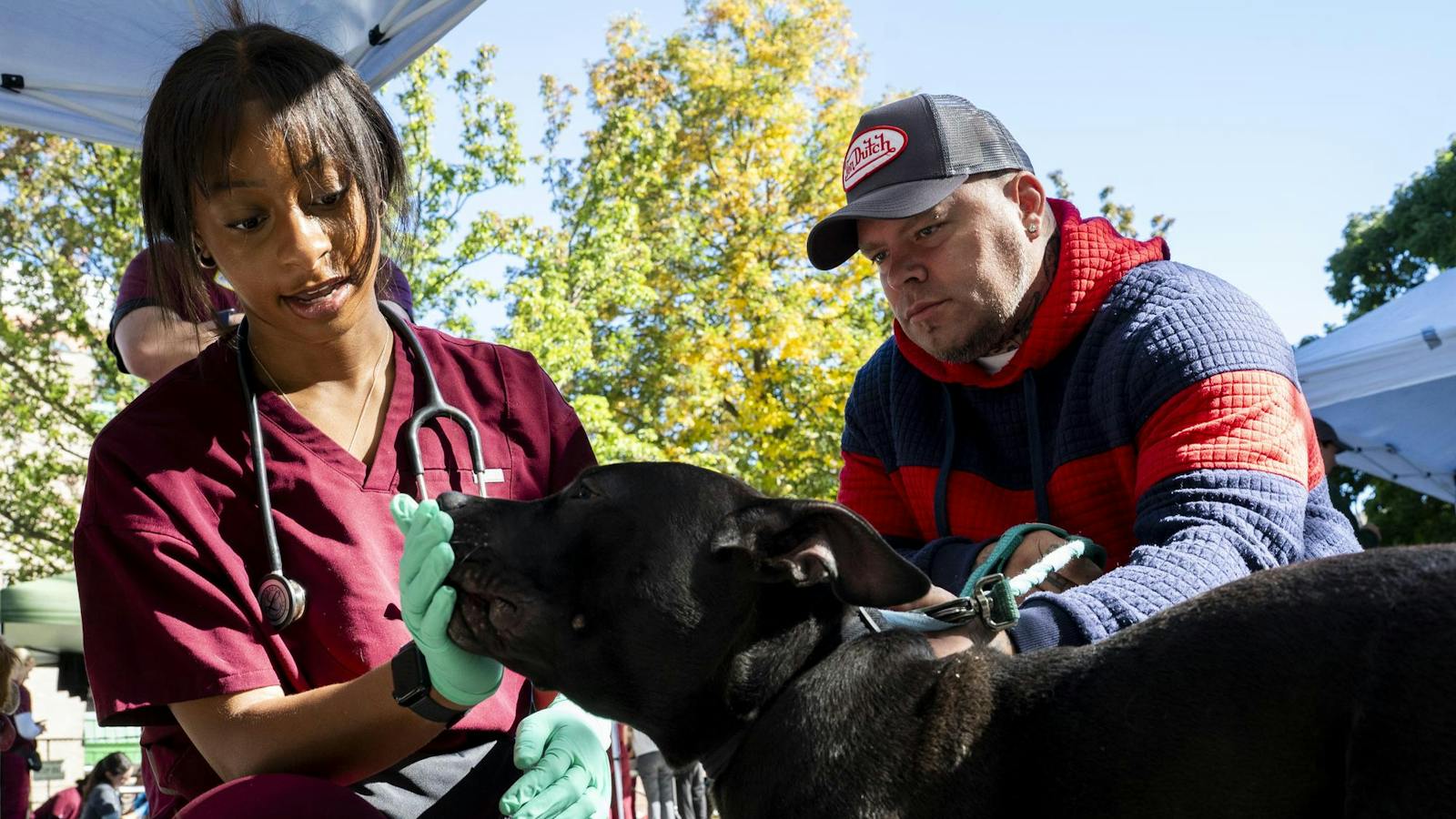
At Michigan State University’s student-run veterinary clinic, a special event took place where pet owners received free veterinary care and supplies. Patrick Stephens brought his nine-month-old dog, Melly, to the clinic after rescuing him from an abandoned home in Ionia where multiple dogs had been kept in poor conditions. Since rescue, Melly had required significant care and attention as he adjusted to his new life.
Read More
Stephens learned about the MSU Street Clinic through the recovery community, understanding the challenges many face in affording regular veterinary care. As a peer recovery coach, he aims to connect those struggling with addiction to essential resources, including veterinary services. He noted that veterinary bills can be daunting, making the clinic's offerings particularly beneficial.
The clinic is primarily staffed by MSU veterinary students, who gain invaluable practical experience through their work with animals and their owners. Kailey Roberts, a second-year veterinary medicine student and president of the Street Clinic, explained the importance of creating a judgment-free space for pet owners. Many clients face barriers such as transportation issues, housing restrictions, and financial difficulties regarding their pets' care.
Paul Miller, director of Homeless Angels, highlighted the collaborative efforts between his organization and the clinic, emphasizing that the need for assistance extends beyond homeless individuals to families who struggle to afford pet care. During the most recent clinic event, veterinary students conducted preventive care for 122 pets, including 76 dogs and 46 cats, while assisting 77 families.
Veterinary students work in teams, providing services that range from physical exams and vaccinations to microchips and preventive medications, depending on the pet's needs. Delani Stull, another second-year DVM student involved in coordinating the event, noted that volunteer veterinarians from across Michigan participate to help gather supplies and provide care.
The partnership with organizations like PetSmart allows additional services, such as grooming, to be offered during clinic events. Students like Katie Jean, a third-year DVM student, enjoy seeing repeat clients and witnessing the positive impact of preventive care on pets over time. She emphasized the trust they have built within the community through these initiatives.
Roberts shared her enthusiasm for the connections formed with clients, stating that their recognition during follow-up visits has deepened her interest in community medicine. Comments from grateful pet owners reinforce the clinic's mission to provide essential care to those who might otherwise lack access.