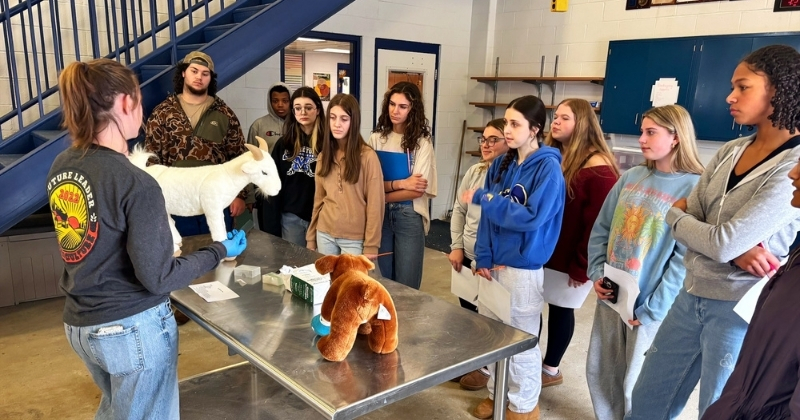
Sarah Wessel, a secondary agriscience teacher in the Appoquinimink School District, credits the University of Delaware’s STEM 4+1 accelerated degree program for solidifying her career choice in STEM education.
Read More
The program allows undergraduate students in various STEM majors to earn a bachelor’s and master’s degree within five years, including a year-long student-teaching residency.
As demand for STEM educators rises, especially in secondary education, the University of Delaware aims to address this shortage. Reports of STEM teacher shortages have increased nationwide since 2020, highlighting the need for qualified instructors.
Emma Carpenter, a senior and pre-veterinary medicine major, recognizes the pivotal role that engaged teachers play in students' lives. Her passion for science education was inspired by her own high school teachers. Carpenter will graduate with a B.S. and use the 4+1 program to obtain an M.S.
Wessel, a 2025 graduate of the same program, emphasizes the need for effective agriculture teachers. Having grown up on a farm, she brings significant experience in livestock management to her role. At the high school where she teaches, she utilizes the on-campus barn for hands-on learning with animals.
Over the summer, Wessel will continue as an FFA advisor, preparing students for livestock shows at county fairs and an FFA convention in Pennsylvania. She believes that if her students learn and enjoy their experiences, she has succeeded as an educator.
Mark Akubo, an assistant professor in the College of Arts and Sciences, notes that the Master’s program focuses on both STEM content and teaching methods, offering students valuable residency experiences. This approach not only develops teaching skills but also aids school districts in accessing a future pool of educators.
Carpenter highlights the mentorship she receives from professors like Stephanie DeMarco, who incorporates practical veterinary experience into her classes. She anticipates that the hands-on experiences from her upcoming residency will further enhance her teaching capabilities.
Ultimately, both Wessel and Carpenter aspire to be role models for students, echoing the idea that teachers significantly influence students’ career paths and interests in STEM fields.