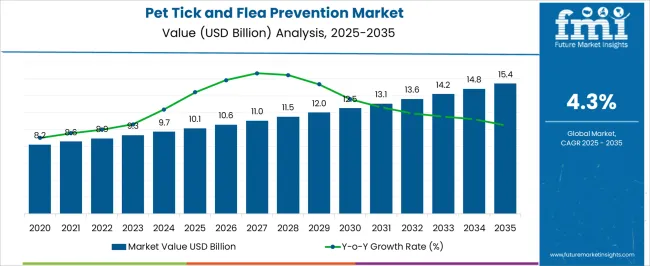
The global pet tick and flea prevention market is on track for significant growth, expected to increase from an estimated value of USD 10.1 billion in 2025 to USD 15.4 billion by 2035, marking a compound annual growth rate (CAGR) of 4.3% over the period.
Read More
This growth is driven by factors such as rising pet ownership, heightened awareness of pet health, and the humanization of pets. Organizations in veterinary medicine and pharmaceuticals stress the necessity of year-round parasite prevention, boosting demand for both systemic and topical products.
Climate change has also extended the seasons for fleas and ticks, leading to prolonged treatment requirements and increased product utilization across various regions. Major companies in animal health are investing in advanced formulation technologies to enhance effectiveness, ease of use, and duration of protection.
Consumers are showing a preference for convenient, veterinarian-recommended products, influencing the development and packaging of these items. Regulatory approvals for new active ingredients and broader product selections have enabled market diversification. The industry outlook remains favorable as preventive health becomes central to pet wellness programs.
The oral pills segment is anticipated to represent 27.4% of total market revenue in 2025, primarily due to the advantages of oral administration over topical treatments. These products provide systemic efficacy and include formulations that facilitate improved compliance among pet owners due to their palatable flavors and convenience.
In 2025, the Dogs segment is expected to capture 54.6% of market revenue as they face higher exposure rates to fleas and ticks. Veterinary practices encourage ongoing preventive care for dogs, particularly in warm and humid regions.
The Pharmacy Stores channel is predicted to account for 33.8% of market revenue, as consumers trust professional pharmacy environments for product guidance and availability. This sector offers a range of both prescription and over-the-counter solutions.
Furthermore, the demand for eco-friendly products is growing, with manufacturers focusing on natural and organic alternatives to address environmental concerns. The industry has also seen the emergence of models designed to alert pet owners about local flea activity, encouraging routine preventive measures.
Despite growth, some challenges persist. Side effects from tick and flea prevention products can result in skin irritations and behavioral changes in pets, impacting adoption rates. Competitive dynamics are shifting, with firms seeking innovations in personalized care and the introduction of safer, effective treatments.
In summary, the pet tick and flea prevention market is set for robust growth due to rising ownership, increased health consciousness, and advances in product formulations, with strong performances forecast across multiple segments.