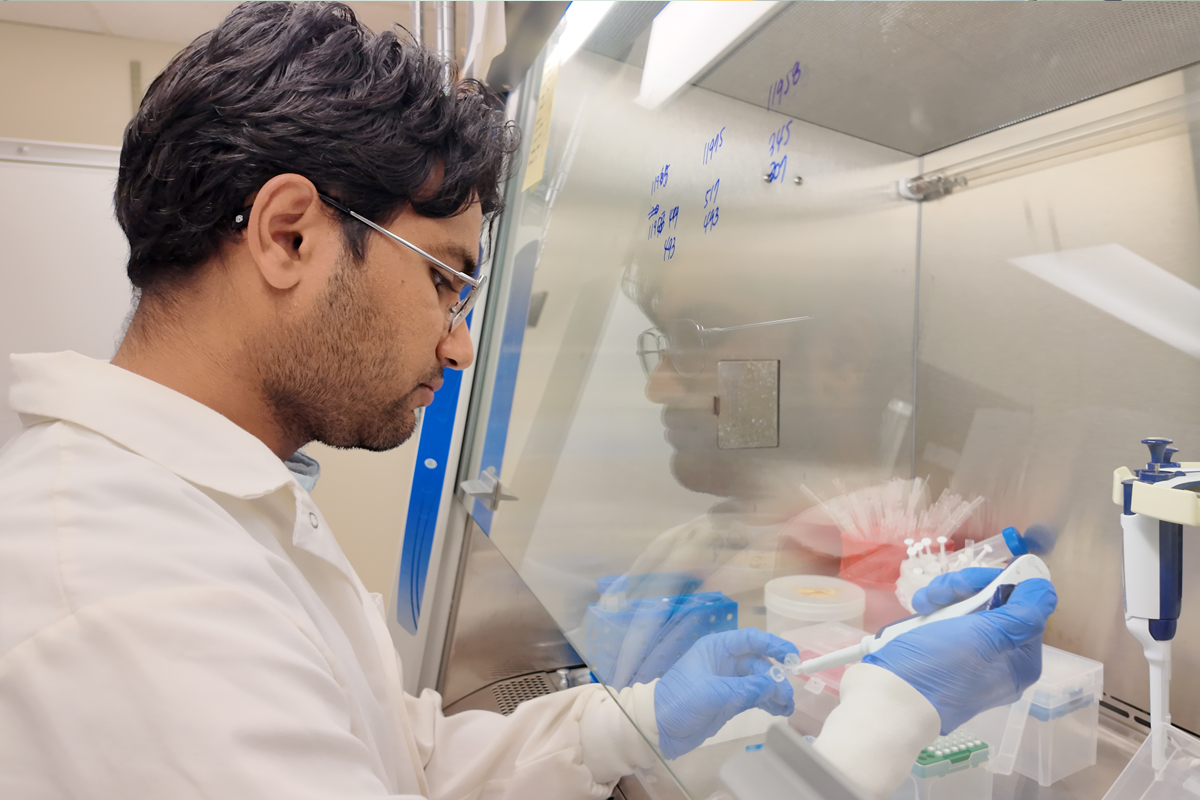
Jyot Patel, a second-year Doctor of Veterinary Medicine student at Washington State University, is conducting research this summer on the communication between the gut and brain in dogs. Originally from Toronto, Canada, he holds a Bachelor of Science in Animal Physiology from the University of Toronto and is working in Dr. Yoko Ambrosini’s laboratory.
Read More
The connection between the gut and brain operates through a complex signaling network that regulates digestion, metabolism, and general health. Disruptions in these signals can lead to chronic gastrointestinal issues and neurological disorders, but many mechanisms remain poorly understood in the context of veterinary medicine.
Patel’s research utilizes canine intestinal organoids, which are lab-grown models of the intestine, to examine how intestinal cells react to hormones that facilitate gut-brain communication. His focus is on two key signaling molecules: serotonin and glucagon-like peptide-1 (GLP-1), both crucial for digestive and nervous system functions.
By assessing the ability of these organoids to produce and respond to hormones similarly to natural intestinal tissue, Patel aims to evaluate their effectiveness in studying gut-brain signaling. This understanding could reveal new biological mechanisms related to various diseases.
Furthermore, his project may promote the use of organoid models in veterinary research, offering an alternative method to investigate complex diseases with less reliance on live animal subjects.
Following veterinary school, Patel is considering advanced training in small animal internal medicine while remaining open to other specialties within veterinary medicine. He sees research as vital to his professional growth, believing it connects scientific inquiry with clinical practice. He stated, "This project allows me to combine my interests in research and clinical medicine while contributing to a growing area of veterinary science."