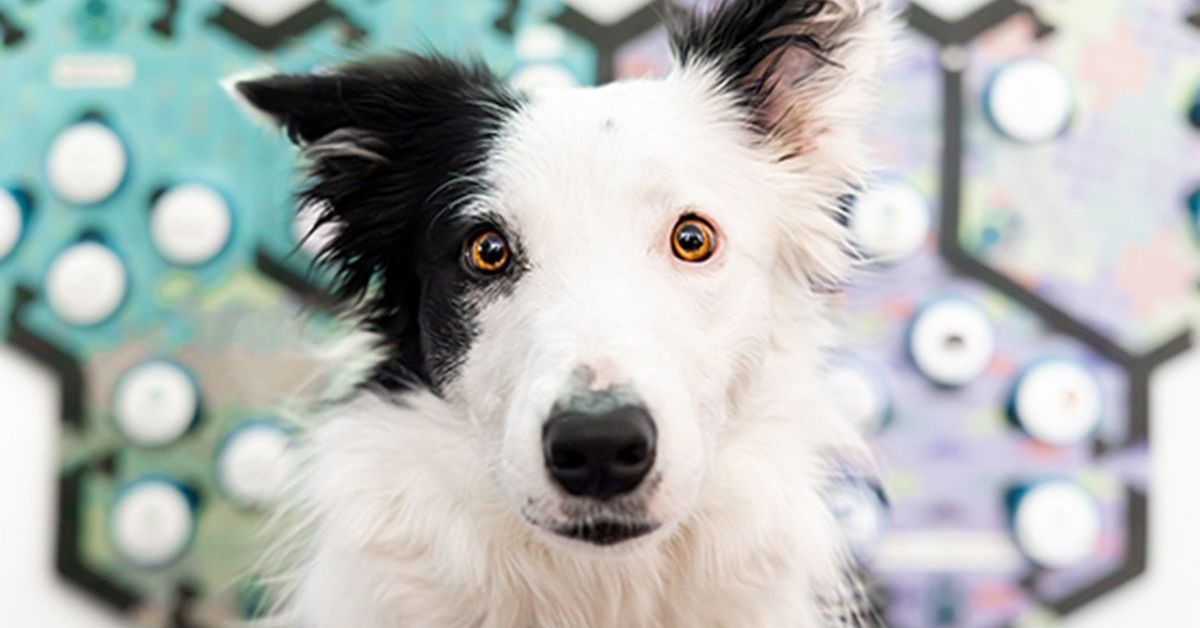
A recent study published in PLOS ONE demonstrates that dogs trained with soundboard buttons can comprehend specific words, responding appropriately in various contexts. This research, part of the world's largest longitudinal project on button-trained pets, was led by Federico Rossano, an associate professor in the Department of Cognitive Science at the University of California, San Diego.
Read More
The study aims to clarify whether dogs are genuinely communicating or merely reacting to their owners' cues. Findings indicate that dogs were able to respond suitably to commands such as “play” and “outside,” regardless of whether the words were spoken by their owners or triggered by button presses, even when initiated by strangers.
Rossano highlighted the significance of these results, stating, “This study addresses public skepticism about whether dogs truly understand what the buttons mean. Our findings are important because they show that words matter to dogs, and that they respond to the words themselves, not just to associated cues.”
The research involved two experiments: the first included in-home assessments with 30 dogs, while the second relied on citizen science where 29 dog owners conducted trials with remote guidance. The study followed a rigorous methodology, having been pre-registered to enhance transparency and accountability.
Future investigations are planned to explore how dogs utilize the buttons and the meanings behind sequences of button presses. This ongoing research project includes thousands of participants worldwide and seeks to deepen the understanding of canine cognition and communication.
The paper's first author is Amalia Bastos, a former postdoc at UC San Diego who is now at Johns Hopkins University. The study also collaborated with researchers from various institutions, including UC Davis and the University of St. Andrews. Data collection occurred in 2022 during the COVID-19 Omicron surge, reflecting public interest in citizen science.
This research received support from a UC San Diego Academic Senate Research Grant.