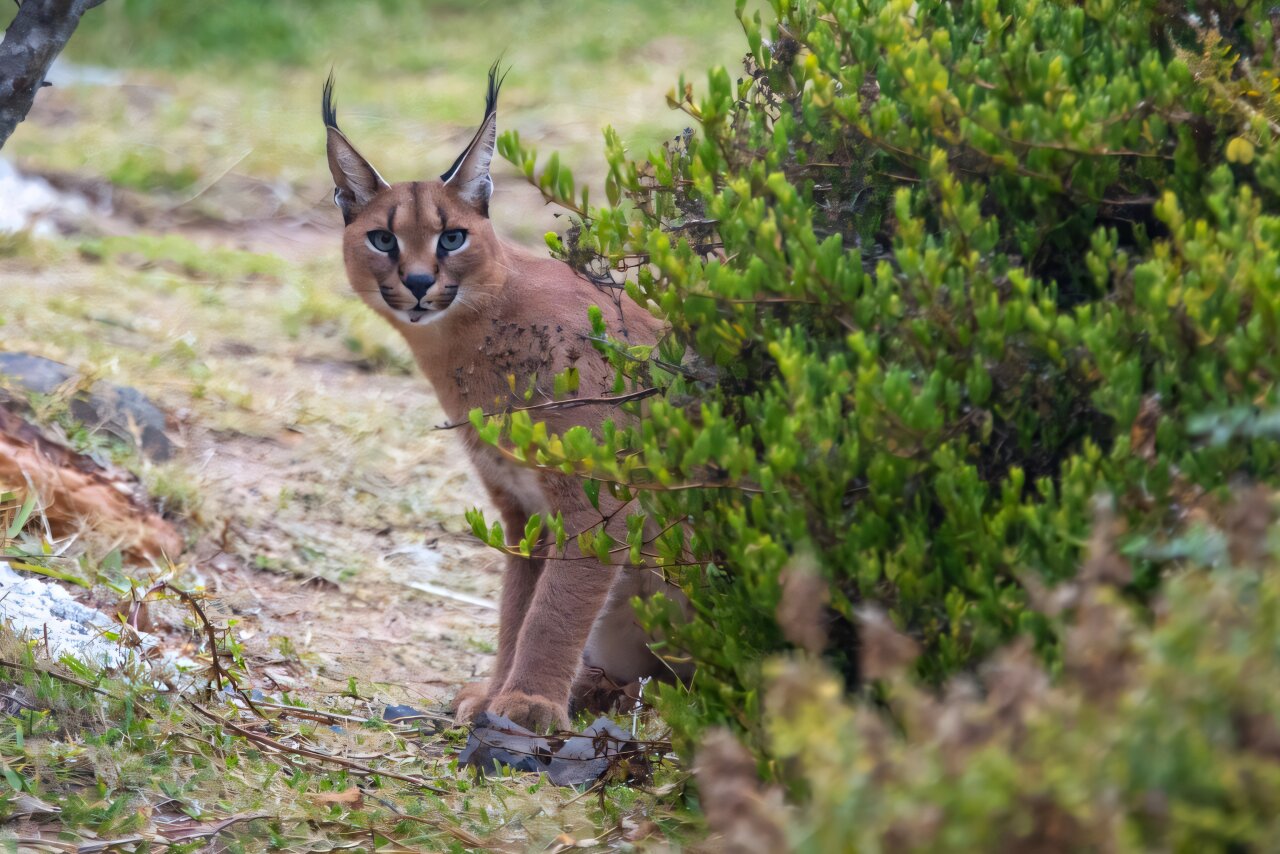
Artificial light is significantly influencing the behavior of caracals on South Africa’s Cape Peninsula, according to a new study published in Science of The Total Environment. The study, led by Christopher Hickling, a Ph.D. student at the University of Rhode Island, reveals how human-introduced night lighting alters foraging, navigation, and risk-avoidance behaviors in wildlife, particularly caracals, which are medium-sized wild cats comparable to bobcats in New England.
Read More
Caracals are primarily active at dawn and dusk and rely on low-light conditions for hunting. Exposure to artificial light disrupts their ambush predator behavior by reducing the cover necessary for stalking prey and making it harder to detect prey in low-light situations. As caracals adjust to urban landscapes, the presence of artificial light limits their hunting movements and opportunities.
The Cape Peninsula is a unique ecological area where caracals function as apex predators, as larger predators such as leopards and lions are absent. This localized study is the first to examine the effects of artificial light at night on a medium-sized carnivore, marking a significant contribution to wildlife research.
Using GPS collars and behavioral observations, the researchers assessed caracal activity in areas with varying levels of artificial light, considering both direct sources like streetlights and indirect sources such as skyglow. Results indicated that caracals tend to move towards darker areas, avoiding brightly lit regions including streetlight zones, despite proximity to vegetation.
The study observed two key behaviors related to survival: movement and foraging. Though caracals continued to utilize habitats near urban areas, they refrained from hunting in well-lit places, reflecting a trade-off between avoiding light and accessing urban prey such as rodents and birds. Additionally, younger caracals displayed more tolerance for illuminated environments than adult caracals, suggesting differing adaptive capabilities based on age.
Hickling emphasizes the need for better management of public lighting to mitigate its impact on wildlife. He suggests potential solutions such as lighting curfews in ecologically sensitive areas and reconsideration of light types and emissions to reduce ecological harm. Small adjustments to public lighting strategies could help balance human safety needs with wildlife protection efforts.
This research highlights the necessity for policymakers to address artificial light pollution to support the survival of species like the caracal.