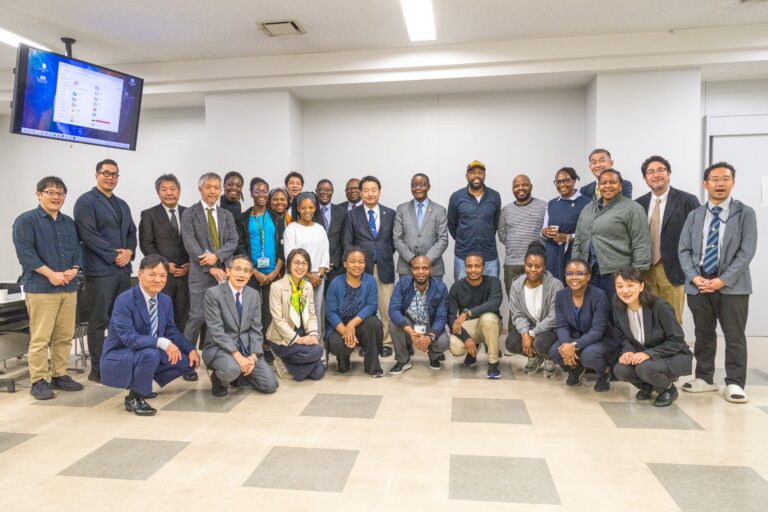
Hokkaido University and the University of Zambia have celebrated over 40 years of collaboration, originally established with the founding of the University of Zambia's School of Veterinary Medicine in 1985. To commemorate Hokkaido University's 150th anniversary, a delegation from Zambia, led by Vice-Chancellor Mundia Muya, visited Hokkaido University.
Read More
An information exchange meeting was held on September 28 to review joint projects and progress in their partnership. Initially focused on veterinary medicine, their collaboration has since expanded to include fields such as infectious diseases, environmental science, agriculture, and mining. This meeting served as a platform to reflect on past successes and to consider future collaborative opportunities.
Attended by around 30 participants, the meeting showcased presentations from various faculty members. Professor Ayato Takada, Director of Hokkaido University's International Institute for Zoonosis Control, opened the session by discussing the institute's history and its collaborations with Zambia, including field research on zoonotic pathogens and technical support for COVID-19 diagnostics.
Professor Shouta Nakayama detailed the KAMPAI Project, which addresses heavy metal pollution and aims to improve environmental health. This initiative has engaged over 200 participants from multiple sectors and will evolve into a new project, ZAZINAMBO, involving Zambia and three neighboring countries in 2025. Nakayama announced an upcoming symposium in Lusaka focused on One Health and student exchange initiatives.
In another presentation, Professor Masahiro Okumura discussed efforts to enhance veterinary clinical research and training in Zambia since 2021, emphasizing the need for skilled veterinarians to support the country's livestock industry.
Professor Hirofumi Sawa outlined the activities of Hokkaido University's Institute for Vaccine Research and Development, which was designated as one of Japan's vaccine research centers in 2022. He highlighted collaborations on COVID-19-related research, including isolation of viruses from local wildlife.
Research efforts also encompass agriculture, with doctoral student Christabell Nachilima presenting the RiceBACS project, which aims to accelerate rice breeding in Zambia using innovative techniques.
Professor Taro Yamauchi, who has been conducting research in Zambia since 2006, addressed issues of child nutrition and food security, while Professor Tsubasa Otake spoke of the importance of sustainable resource management in mining activities.
Vice-Chancellor Mundia Muya remarked on the necessity of documenting collaborative initiatives to enhance visibility and support future projects. Professor Atsuko Ikeda stressed the goal of fostering interdisciplinary collaboration to sustain the partnership long-term.
Prior to the meeting, the Zambian delegation toured Hokkaido University’s research facilities to further discuss and plan ongoing educational and research endeavors. This partnership, which began with a focus on veterinary medicine, has grown to cover a vast array of fields, demonstrating a commitment to nurturing the next generation of researchers and expanding interdisciplinary collaboration.