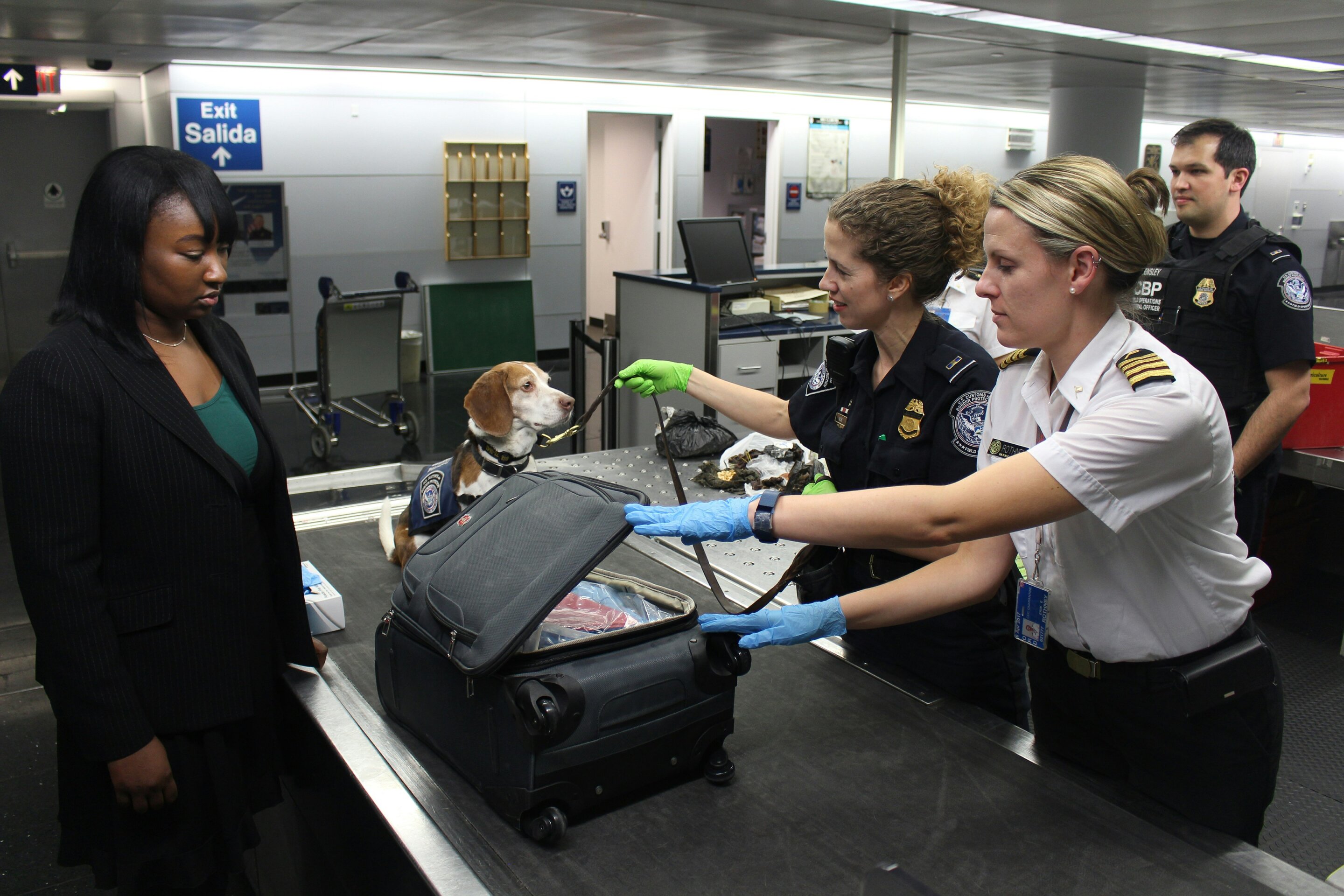
Research by a team of animal behavior experts at the University of Lincoln, UK, has introduced a promising new approach to training sniffer dogs, which could enhance their detection capabilities.
Read More
Detection dogs are essential in identifying various volatile substances, including explosives, drugs, wildlife, and certain diseases. Their reliability and accuracy are crucial for ensuring security and public safety.
Traditionally, sniffer dogs have been trained using a sequential method, where they learn to detect one target odor at a time. While this can be effective for individual scents, it may not adequately prepare dogs to identify target odors mixed with other substances in real-world situations.
The recent study, supported by the Defense Science Technology Laboratory, advocates for a shift from the traditional single-odor training to an "intermixed" approach. In this innovative method, dogs are exposed to multiple target odors within a single training session, allowing them to discern various scents simultaneously.
Professor Anna Wilkinson, an expert in animal cognition, noted that this new training method enhances dogs' ability to recognize slightly different versions of their target odors. This skill is particularly important as working dogs encounter various scent variations in the field.
The study found that the intermixed training group exhibited higher rates of olfactory generalization, suggesting they may be more successful in practical scenarios where diverse odors are present. In contrast, the traditional sequential training may hinder a dog's adaptability to new odor challenges.
The research encourages a reevaluation of training practices to better equip detection dogs for the evolving challenges they face in their roles.
Publication details: Lyn Caldicott et al, The impact of training method on odor learning and generalization in dogs (Canis lupus familiaris), Journal of Comparative Psychology (2024). DOI: 10.1037/com0000390.