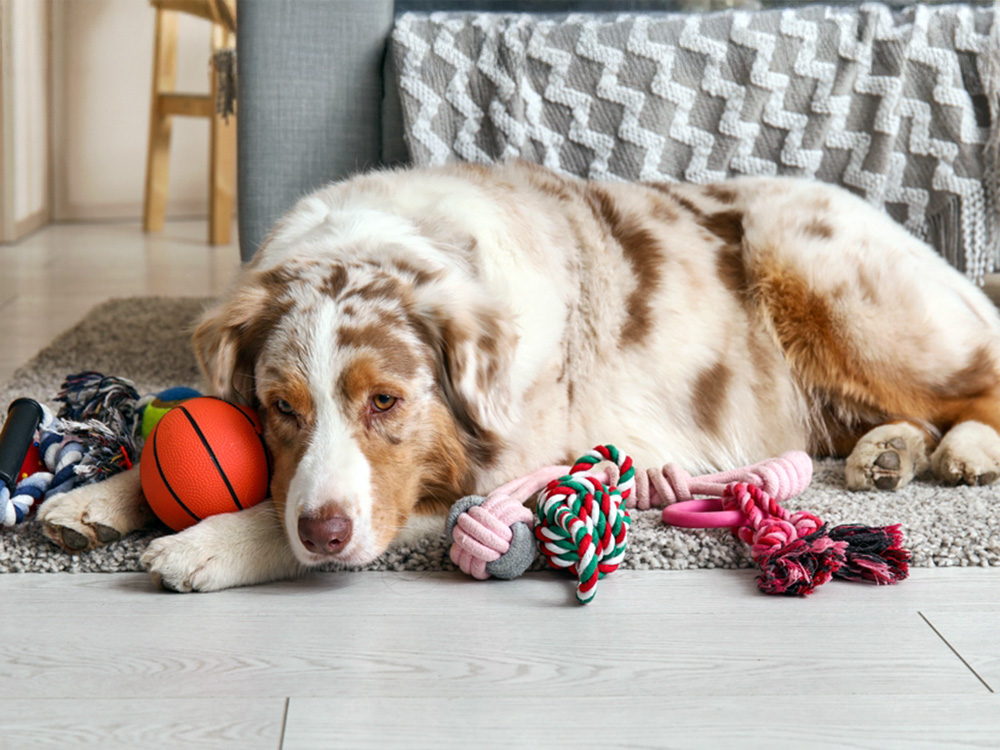
Dogs often display a strong affection for their toys, from their first stuffed animal as puppies to worn-out toys they cling to as seniors. A recent study by researchers at the University of Veterinary Medicine Vienna has examined whether some dogs exhibit addictive behaviors toward their toys. This study raises questions about the extent of dogs' attachments to their toys and whether this can manifest as an obsession or addiction.
Read More
According to the World Health Organization (WHO), addictive behaviors in humans involve distress and disruption of daily life due to repeated actions that were initially rewarding. While WHO recognizes certain behavioral addictions, such as gambling and internet gaming disorders, there is no current classification for dogs' attachment to toys.
The researchers focused on signs of “excessive fixation on toys,” which included a reduced responsiveness to other stimuli and persistent efforts to access toys. Some dogs in the study demonstrated high levels of behavior consistent with addiction, such as whining when toys were unavailable and ignoring food in favor of toys. However, this research does not definitively prove that dogs experience addictions in the same way humans do; further investigation is needed to understand the broader implications.
Veterinarian Dr. Adam Christman has observed how some dogs form extreme attachments to toys, treating them as emotional support objects. He notes that it's concerning when dogs become anxious or aggressive over a toy or show disinterest in food for it. Signs of escalation may include protective behavior over the toy, aggressive outbursts, and physical damage like cracked teeth from chewing.
Certified professional dog trainer Alexandra Bassett states that owners often seek help regarding their pets' obsessive toy behaviors. She indicates that concern is warranted when a dog's reaction to a toy becomes extreme. Owners should temporarily remove the toy to gauge the dog's response, involving professional help if high levels of distress or aggression are evident.
Both Dr. Christman and Bassett emphasize that when a dog's relationship with a toy interferes with day-to-day life, it may signal a deeper issue. Dr. Christman explains that when play becomes a problem, it enters a concerning territory, similar to compulsive behaviors in humans.
To address potential issues, Dr. Christman advises dog owners not to panic. Instead, they should rotate toys and introduce new activities to maintain engagement. Rewarding calm behavior—like walking away from the toy—can also help. Bassett suggests desensitizing dogs to the absence of their favorite toys and preventing access through barriers when necessary. Understanding the emotional basis for such behavior can be crucial; it may stem from stress or a lack of adequate stimulation.
Preventative measures are essential, as managing these behaviors early is easier than trying to change them later. Both experts recommend providing varied stimulation through regular walks, activities, and training. Changing toys frequently can prevent any one toy from becoming overly valuable. Tailoring playtime to a dog's breed instincts can also help prevent obsessive tendencies, ensuring dogs remain happy and engaged.