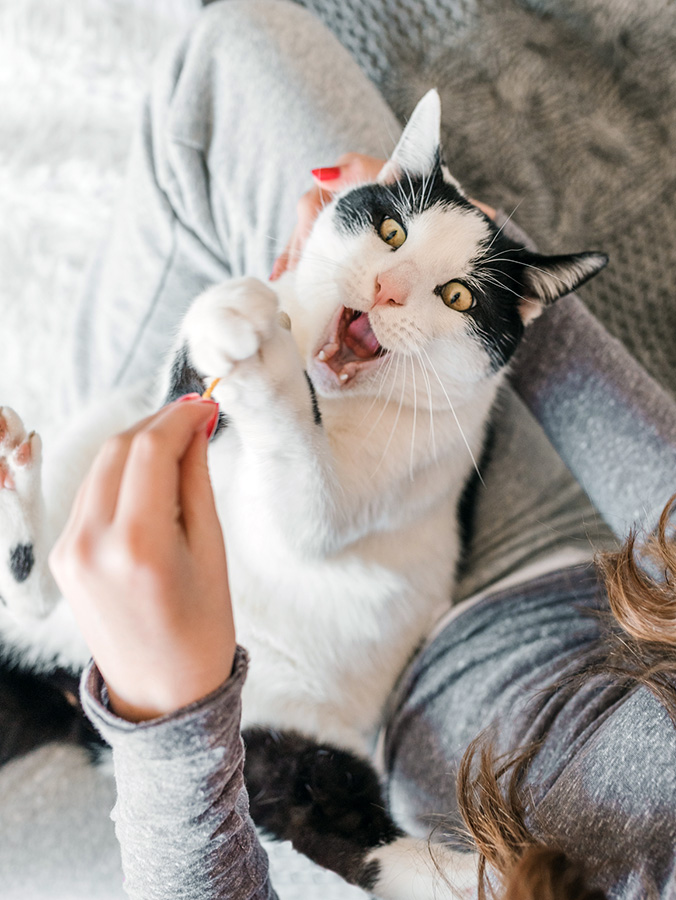
A November 2023 study published in Behavioural Processes has found that cats are capable of making at least 276 unique facial expressions, challenging their reputation for being enigmatic. Researchers Lauren Scott and Dr. Brittany N. Florkiewicz, Ph.D., conducted the study to explore how cats use facial expressions in social interactions.
Read More
Dr. Florkiewicz's interest in animal facial expressions began during her undergraduate studies, where she focused on non-human primates. This fascination led her to delve into comparative psychology, eventually prompting her collaboration with Scott on their research, titled "Feline faces: Unraveling the social function of domestic cat facial signals." They noted a gap in existing research on feline facial expressions, which largely concentrated on pain signaling or communication with humans.
To investigate cats' facial expressions, Scott and Dr. Florkiewicz observed 53 adult domestic shorthair cats at CatCafé Lounge in Los Angeles over the course of a year. The researchers employed Facial Action Coding Systems (FACS), a method to identify facial muscle movements known as Action Units (AUs). The process required a certification test due to the complexity of the movements involved.
Through extensive analysis of recorded footage, the team identified 276 distinct facial expressions. Key elements tracked included whisker movements, blinks, mouth shapes, and ear positions. The findings were surprising; cats demonstrated a level of expressiveness that exceeded other species with documented AU combinations. For comparison, gibbons can produce 80 AU combinations, while chimpanzees can produce 357.
Among the expressions noted was a “common play face” shared with humans, dogs, and monkeys, recognizable by a lowered jaw and drawn-back mouth corners. Additionally, cats exhibited whisker movements indicative of their social interactions: whiskers moved toward one another during friendly exchanges but spaced apart during unfriendly encounters.
Dr. Florkiewicz emphasized the importance of observing a cat's ears, eyes, and whiskers to gauge their mood, revealing that 45 percent of the recorded expressions were classified as friendly, while only 37 percent were aggressive. These results suggest that cats are more sociable than previously believed, offering implications for shelters and cat owners in understanding feline behavior and facilitating smoother interactions among cats during adoption processes.