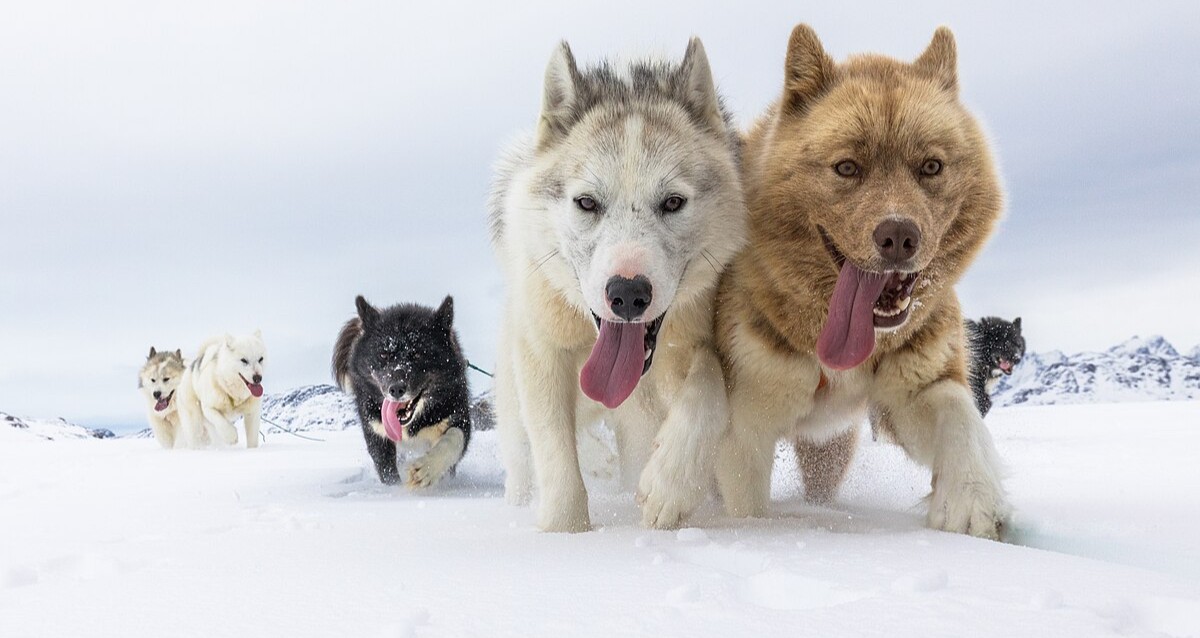
A new study published in the Proceedings of the National Academy of Sciences has revealed that approximately two-thirds of today's domestic dogs possess some degree of wolf DNA. This finding emerged from an analysis of 1,872 specimens across 264 breeds, which suggests that many modern dogs retain genetic traits from their wild ancestors despite domestication occurring roughly 20,000 years ago.
Read More
The research challenges the prevailing belief that breeding between dogs and wolves has been limited since their evolutionary split. By examining nearly 2,700 genomes from both ancient and modern canines, researchers found that most domestic dogs have inherited some wolf DNA more recently than previously thought, with the genetic material entered their genome about 1,000 generations ago.
Audrey Lin, the lead author of the study from the American Museum of Natural History, noted that the study indicates dog genomes can accommodate wolf DNA while maintaining their identity. Lin stated, "Prior to this study, the leading science seemed to suggest that in order for a dog to be a dog, there can’t be very much wolf DNA present, if any. But we found that if you look very closely in modern dog genomes, wolf is there."
The study also included analysis of 146 ancient dogs and wolves, covering a span of about 100,000 years, along with 300 “village dogs,” which live independently yet rely on human proximity for survival. These village dogs exhibited higher levels of wolf DNA compared to fully domesticated breeds.
Among the breeds analyzed, Czechoslovakian and Saarloos wolfdogs were found to contain the highest levels of recent wolf DNA because they were specifically bred with wolves. Non-wolfdog breeds, such as Anglo-French tricolour hounds, displayed significant amounts of wolf DNA, averaging between 4.7 and 5.7 percent. Even smaller dogs like chihuahuas were identified to have around 0.2 percent wolf ancestry.
In contrast, some large breeds known for guarding, including the Neapolitan mastiff and St. Bernard, exhibited no traceable recent wolf DNA. The study raises questions about the role of wolf DNA in the adaptability of certain dog breeds to human environments, suggesting it might offer a genetic advantage, although further research is necessary to establish any definitive connections between wolf ancestry and dog behavior.
Lin and co-author Logan Kistler remarked that as dogs faced environmental challenges, their wolf ancestry may have contributed to their survival strategies. Despite these insights, the relationship between modern dogs and their wolf ancestors remains complex and requires additional investigation.