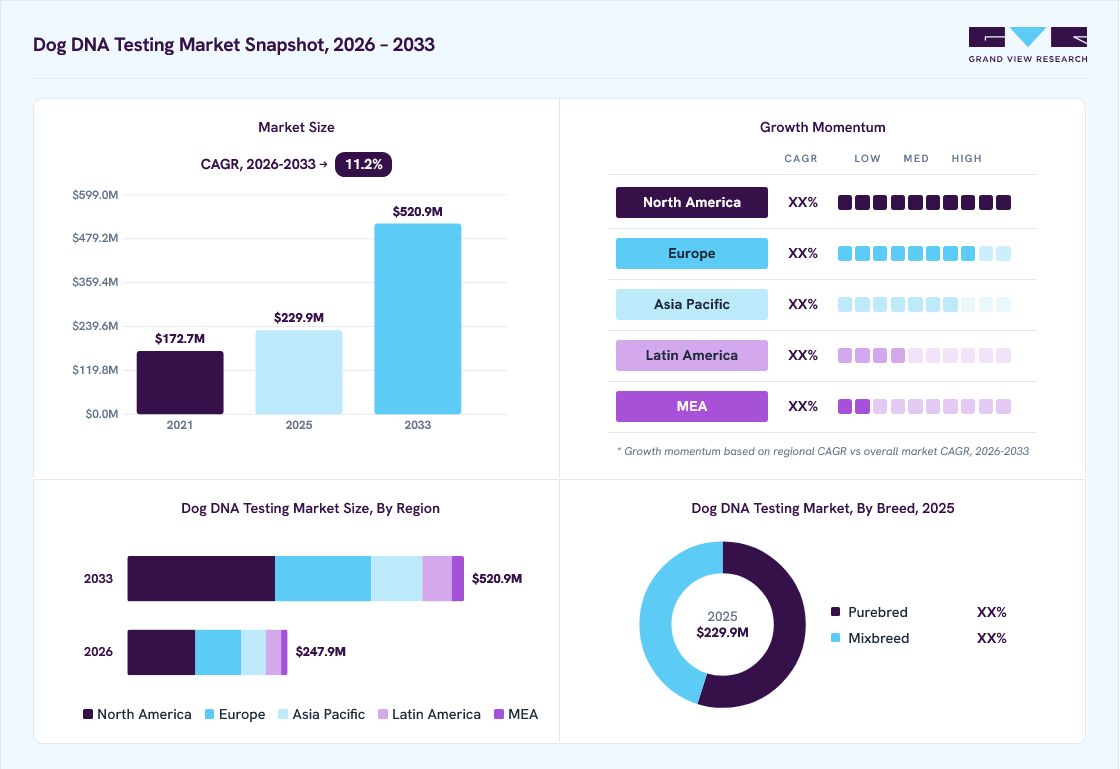
The global dog DNA testing market was valued at USD 229.9 million in 2025, with projections indicating growth to USD 247.9 million in 2026 and reaching USD 520.9 million by 2033. This growth corresponds to a compound annual growth rate (CAGR) of 11.2% from 2026 to 2033. North America held the largest market share of 42.3% in 2025, driven by increasing awareness of preventive pet healthcare, attention to inherited and breed-specific disorders, and the growing importance of genetic data in breeding practices.
Read More
In 2025, the market was primarily led by purebred dogs, which accounted for 54.8% of revenue. Saliva samples dominated testing methods with a 65.3% share, while the breeding and genetic screening segment was the largest application, comprising 55.7% of the market.
Regional insights reveal that the U.S. had the largest market share in North America in 2025, with a significant focus on genetic testing for health screening and pedigree verification. The increasing use of DNA testing among pet owners, breeders, and veterinarians is attributed to advancements in genomic analysis and the growing availability of genetic information related to health risks.
Despite the positive outlook, challenges remain due to the limited standardization of genetic databases and the interpretation of results. Variability in test outcomes can lead to uncertainties in clinical use, hindering broader adoption. However, the integration of DNA testing with veterinary diagnostics and preventive care offers new opportunities, potentially making genetic testing a routine part of veterinary services.
Recent advancements include the development of genetic tests tailored for specific hereditary diseases, indicative of the industry's shift towards more comprehensive screening. Notable contributions from institutions such as Mars Veterinary Health and the University of Cambridge exemplify ongoing research aimed at enhancing canine genomics.
As the market evolves, key players like Mars, Inc. (Wisdom Panel), Embark Veterinary, and Neogen Corporation are positioning themselves with broad product offerings and extensive distribution networks. The competitive landscape suggests a fragmented market, with both established and emerging companies expanding their services to address the growing demand for canine health insights.
The future of dog DNA testing appears promising, with consumers increasingly seeking genetic information to inform pet care decisions, further driven by the rising pet ownership trend and a keen interest in personalized veterinary services.