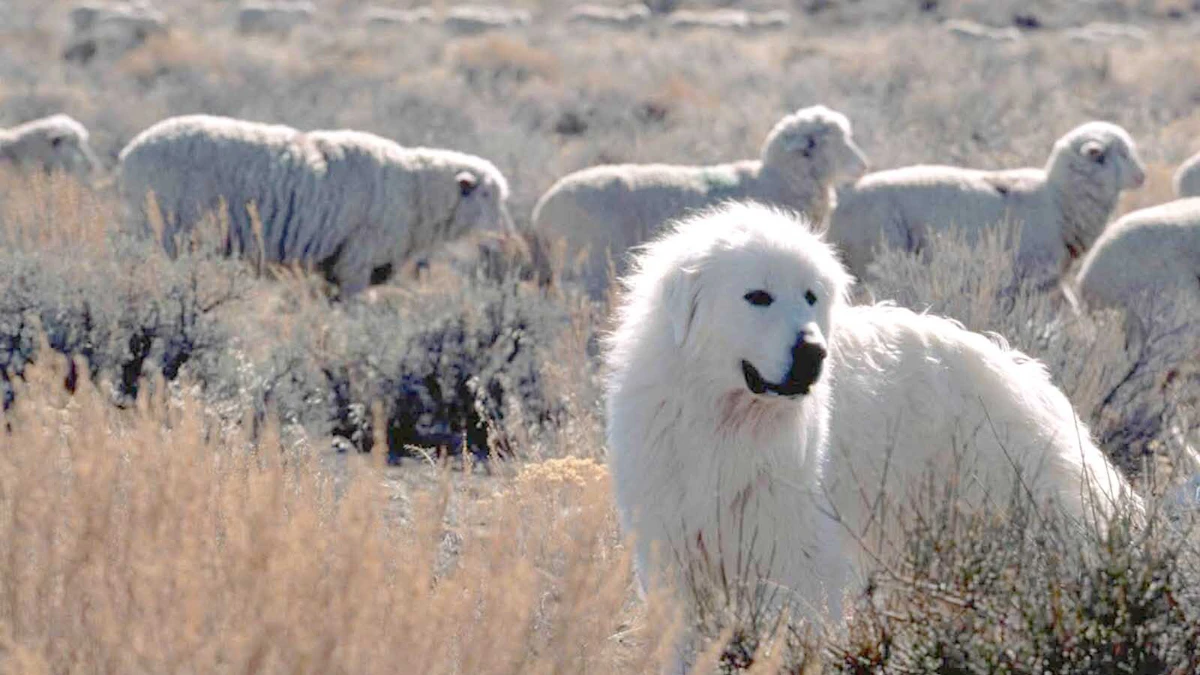
When Martin Wissner's livestock guardian dog, Faith, went missing from his ranch near Carpenter, he was prompted to take action. Faith, an Akbash, was supposed to protect Wissner's sheep but had disappeared without a trace. After calling local animal control, he found out that Faith had been picked up by a neighbor and taken to a shelter, despite wearing a collar with identification that indicated her role on the ranch.
Read More
This incident highlights a growing issue in rural Wyoming: individuals unfamiliar with livestock guardian dogs often mistake them for strays and remove them from their posts. The Fremont County Sheriff's Office has issued reminders urging the public not to pick up these large working dogs, which are accustomed to roaming freely with livestock rather than being confined like typical pets.
Ranchers depend on these dogs to safeguard their animals from predators. Wissner shared that the action of removing one of these dogs can be detrimental, as they serve an essential function 24/7 in protecting livestock. The misunderstanding often stems from people not recognizing that livestock guardian dogs, like the Akbash, may appear leaner than some other breeds and are not strays just because they are outside a fenced area.
Carey Sullivan, the staff manager at Paws for Life Animal League, noted that many well-meaning individuals continue to bring these dogs into shelters with the belief that they are helping. However, this disrupts the dog's work and frustrates ranchers who rely on them for protection. Sullivan advises anyone who encounters a large dog in rural areas not to assume it is abandoned and instead consider contacting local law enforcement.
Jim Magagna, a sheep rancher, emphasized the importance of educating the public about the role of livestock guardian dogs. He urged people to observe their surroundings before determining whether a dog is lost. Often, these dogs might wander while monitoring potential threats but will still be present with their flocks when needed.
As Wyoming’s rural landscape changes, Wissner has noticed a loss of familiarity among neighbors, as properties are subdivided, leading to less understanding of the local agricultural practices and working dogs' roles. He expressed hope that newcomers to rural communities will take the time to learn about livestock guardian dogs before deciding to intervene.