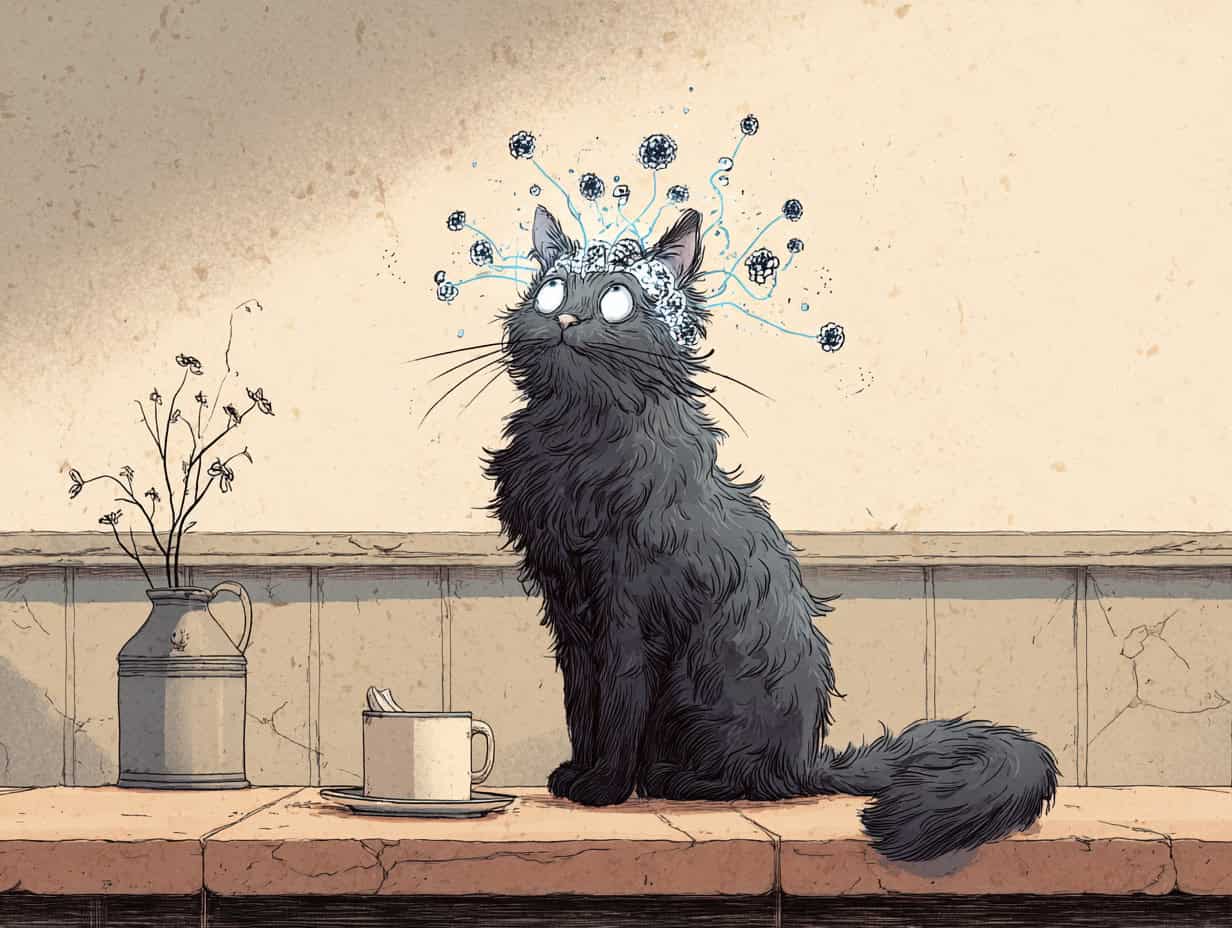
A study from the University of Edinburgh highlights striking parallels between dementia in elderly cats and Alzheimer’s disease in humans. As cats age, behaviors such as wandering at night, increased vocalization, and getting lost in familiar spaces can become apparent, but these changes may indicate cognitive decline rather than just normal aging.
Read More
Dr. Robert McGeachan, the lead author of the study, states, "Dementia is a devastating disease — whether it affects humans, cats, or dogs,” emphasizing the relevance of these findings for both species.
For cat owners, the signs of cognitive decline can often be subtle. For instance, a Swiss cat owner named Kägi shared on Reddit about her neighbor's elderly cat, Maolo, who continued to show up at her door after his family moved. Kägi suspects dementia, as Maolo often forgets that he has eaten and continues to beg for food.
Dr. Melissa Boldan reported that more than a quarter of cats aged 11 to 14 exhibit at least one sign of dementia, with that figure rising to about half for cats over 15. Symptoms include aimless wandering, difficulty navigating familiar environments, increased stress in common areas, and inappropriate elimination.
The Edinburgh research team examined the brains of 25 deceased cats, some of which exhibited signs of cognitive dysfunction while others were cognitively normal. They discovered amyloid-beta, a toxic protein associated with Alzheimer’s, present in higher quantities in the brains of cats with dementia.
The study showed that the presence of amyloid-beta disrupted synaptic connections, potentially leading to cognitive decline, mirroring similar processes observed in human Alzheimer's patients. Additionally, amyloid-beta appeared to activate the brain's immune cells, accelerating cognitive deterioration by engulfing synapses.
Dr. McGeachan noted that cats naturally developing these brain changes may provide a more accurate model for Alzheimer’s research than traditional lab animals, offering benefits to both humans and pets. Professor Danièlle Gunn-Moore, a co-author of the study, expressed hope that understanding feline dementia could lead to better treatments not only for cats but also for people suffering from Alzheimer’s.
The findings, published in the European Journal of Neuroscience, suggest the potential for testing new Alzheimer’s treatments in aging pets, potentially uniting veterinary and human medicine in groundbreaking ways.