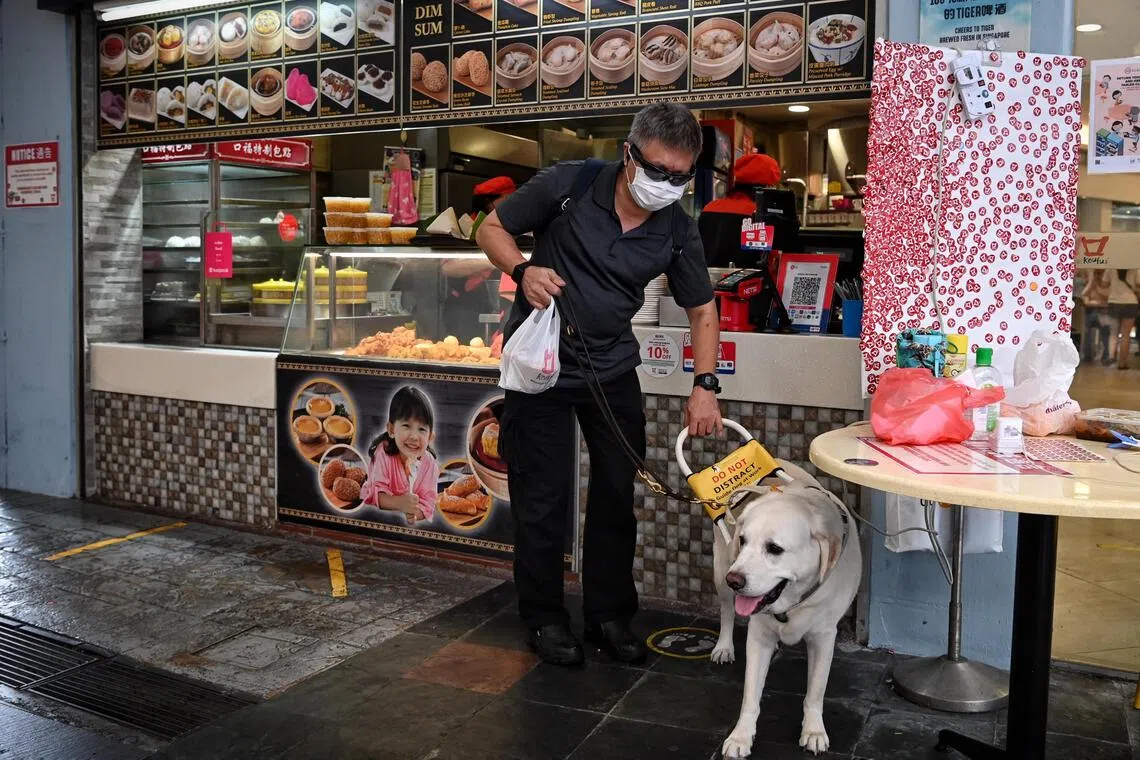
SINGAPORE – Beginning November 1, individuals with physical or hearing impairments will be permitted to bring their assistance dogs into licensed eateries, broadening regulations that previously allowed only guide dogs for the visually impaired. This policy change, announced in a September 28 circular by the Singapore Food Agency (SFA), the Ministry of Social and Family Development (MSF), and SG Enable, Singapore’s focal agency for disability and inclusion, aims to promote inclusivity.
Read More
Under the new guidelines, these trained dogs are permitted in dining and refreshment areas, as well as restrooms, of food establishments. Unlike earlier regulations that restricted entry solely to guide dogs, the updated provisions recognize assistance dogs as working animals, thereby eliminating the need for operators to apply for a separate license for their presence.
Food business operators are encouraged to welcome individuals with disabilities and their assistance dogs to foster an inclusive dining experience. According to the updated regulations, assistance dogs must be kept on a leash, controlled, and prevented from straying or causing disruptions. They should also not be fed inside the premises, with the exception of pet cafes.
Assistance dogs are specifically trained to support individuals with various disabilities, enabling greater independence. In Singapore, these service animals can be identified by their harnesses or vests displaying the phrases "Service Dog" or "Working Dog."
This initiative aligns with the Government's Enabling Masterplan 2030, which aims to enhance accessibility for people with disabilities. Over recent years, Singapore has expanded the public access rights of assistance dogs in various settings, including public transport and housing.
Cassandra Chiu, co-founder and executive director of K9Assistance, expressed that the new provisions will alleviate stress for individuals with disabilities. She emphasized the importance of creating an environment where people can enter food establishments with their assistance dogs confidently. Chiu acknowledged that there may be initial uncertainties regarding the regulations among food and beverage operators and the public, particularly concerning hygiene and the differentiation between assistance dogs and pets.
To address potential confusion, she stressed the need for clear communication about the regulations and the rights of both operators and assistance dog handlers.