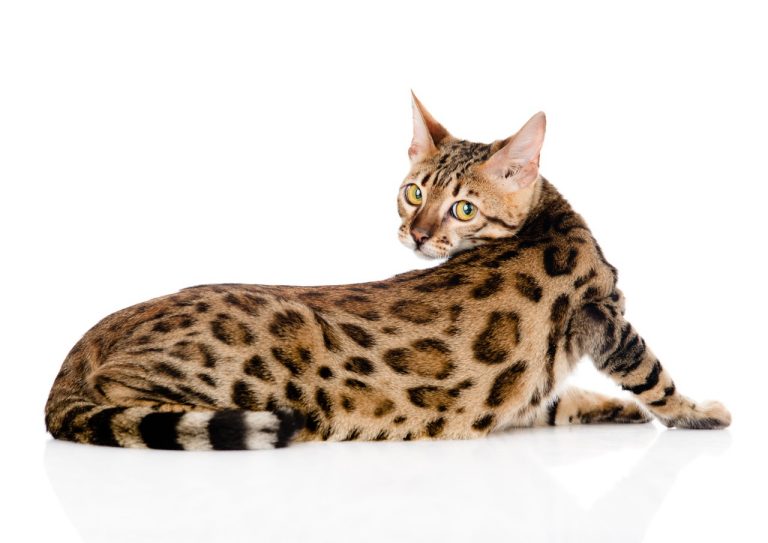
A study conducted by researchers at Stanford Medicine, in collaboration with Bengal cat breeders, has found that the distinctive appearances of Bengal cats—known for their striking marbled and spotted coats—can be traced back to domestic cat genes rather than solely from their wild ancestors, the Asian leopard cats.
Read More
The research, published online on March 25 in Current Biology, analyzed genetic data from nearly 1,000 Bengal cats collected over 15 years. Gregory Barsh, MD, PhD, an emeritus professor of genetics and senior author of the study, noted that most genetic changes responsible for the Bengal coat's unique appearance were already present in domestic cats. Effective breeding practices highlighted these characteristics.
The study's lead author, Christopher Kaelin, PhD, and Barsh sought to explore how genetic variation affects physical characteristics across species. In previous work, the team had identified genes responsible for coat color variations in other breeds, including tabby and Abyssinian cats.
The Bengal breed originated from the 1960s to the 1980s when breeders, led by biologist Jean Mills, crossed Asian leopard cats with domestic cats. This selective breeding aimed to create a visually unique breed, which was recognized by the International Cat Association in 1986.
Upon investigating the genetic makeup of 947 Bengal cats, researchers found no consistent presence of Asian leopard cat genes in all individuals. This was surprising, as many breeders and owners believed the cats inherited their distinct looks from leopard cats.
Instead, the findings suggested the unique appearance of Bengals came from variations in genes already found in domestic cats. Additionally, about 60% of Bengals exhibit a soft, iridescent fur known as "glitter," linked to a mutation in the Fgfr2 gene, which originates from domestic cats rather than leopard cats. This mutation also intriguingly reduces Fgfr2 protein activity, illustrating how subtle genetic variations can impact appearance.
The researchers also examined the "charcoal" Bengals, a rare variety with darker coats. They identified a leopard cat gene associated with charcoal coloring, but it only functions in the presence of domestic cat genes, indicating a genomic incompatibility.
Barsh explained that while hybridization occurs naturally between species, the genetic differences between wild leopard cats and domestic cats are significant. The research results not only enhance understanding of Bengal cats but also assist breeders in refining their breeding strategies to develop new colors and patterns.
Collaboration between the research team and Bengal cat breeders has fostered a passionate community interested in genetic data and breeding techniques. The study emphasizes the potential of artificial selection in animal breeding, suggesting that the desired traits were already present within the domestic cat genome.
Additional contributions to this research were made by scientists from HudsonAlpha Institute of Biotechnology, Gencove Inc., University of Bern, and Texas A&M University. The study was funded by the HudsonAlpha Institute for Biotechnology and the National Institutes of Health.