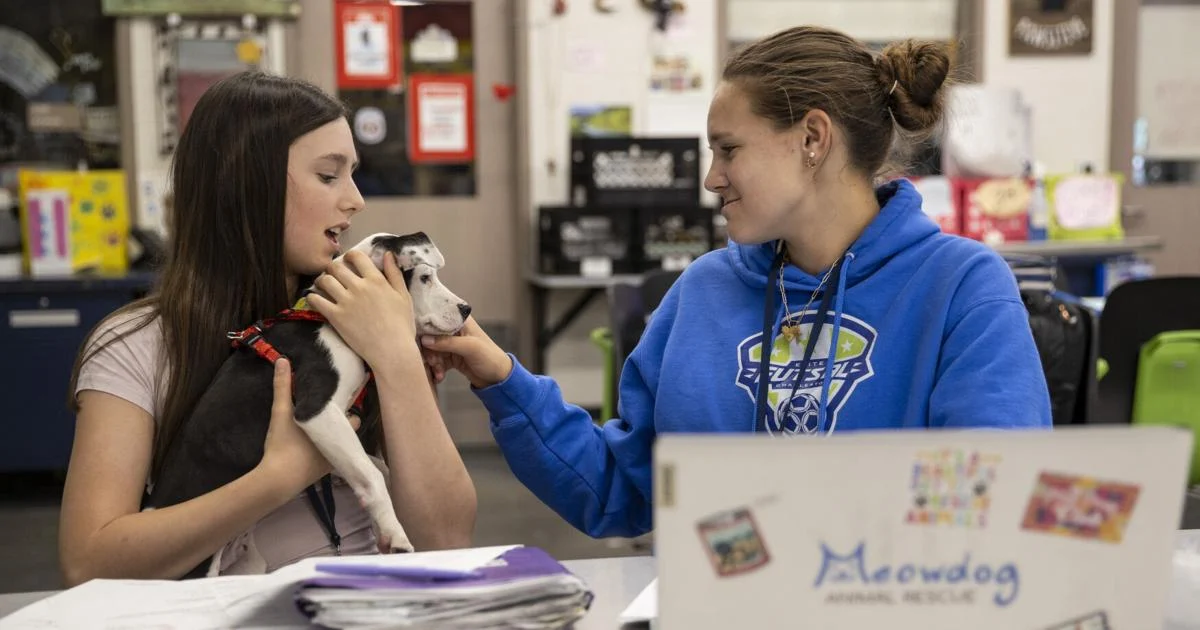
On a sunny afternoon in May, puppies at Lucy Beckham High School were cuddled by students, while older dogs played in the classroom. This scene reflected what teacher Logan McCarrell described as “organized chaos,” creating a unique hands-on experience for students in a veterinary science program that combines classroom learning with animal rescue.
Read More
The program allows high schoolers to work directly with animals while gaining skills in animal care, shelter operations, and veterinary practices. McCarrell established this initiative, which features a leadership class that operates Meowdog Animal Rescue, a student-run nonprofit rescue program. This program is considered unique as it integrates a rescue with veterinary education, contrasting with many others that focus solely on large animal agriculture.
Students in the program can progress through four levels of coursework, starting from an introductory class designed for those interested in veterinary science or animal care. As they advance, they learn more scientific concepts, including veterinary terminology and animal physiology. The leadership class is particularly impactful, as students take on responsibilities such as cleaning, vaccinating animals, managing medical supplies, and handling adoptions.
The program not only prepares aspiring veterinary students but also provides significant emotional support benefits. Principal Anna Dassing noted the positive impact the animals have on student mental health, highlighting how engagement with pets can reduce stress and improve social skills, particularly for students with disabilities.
McCarrell, who has a background in biological sciences and teaching, had the vision for a hands-on veterinary program before joining Lucy Beckham High School. She founded Meowdog Animal Rescue in 2023, and it operates independently but in conjunction with the school’s veterinary program. The rescue focuses on animals from rural shelters, providing care and opportunities for placement in foster or adoptive homes.
Students like Cooper Hanson, a sophomore, find the chance to engage with animal rescue compelling. Hanson’s involvement includes managing the rescue’s website, which aligns with his career aspirations in business innovation. Another student, Scarlett Kingston, shared her experience of fostering a dog named Steven, who was rescued from being euthanized. These experiences instill a sense of accomplishment and highlight the ongoing cycle of animal care and rescue.
Community support plays a critical role in the program’s success, with initiatives relying on donations and fundraising. By the end of the school day, students had arranged for the foster care of animals and finalized adoptions, preparing for the continual influx of animals needing help.