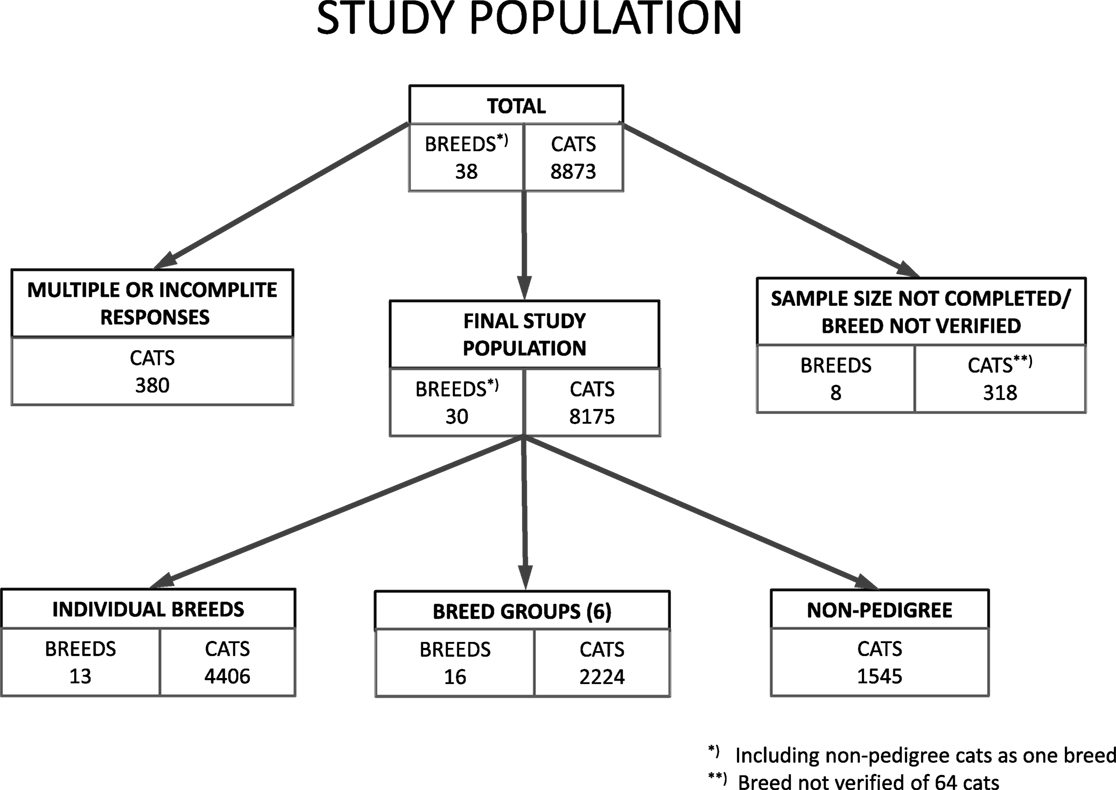
A detailed health survey conducted on Finnish cats assessed the prevalence of inheritable diseases across different breeds, aiming to aid genetic research. The study surveyed 8,175 cats from 30 breeds, identifying 19 disease categories and a total of 227 illnesses. Notably, dental and oral diseases had the highest prevalence at 28%, with specific issues like dental calculus affecting 21% and gingivitis impacting 8% of the surveyed population. Korats were particularly susceptible to respiratory diseases (23%) and asthma (19%). Other significant disease categories included skin disorders (12%), urinary system issues (12%), digestive tract problems (11%), eye conditions (10%), musculoskeletal conditions (10%), and female genital disorders (17%). Reproductive health issues in female cats were documented, with 6% reporting cesarean sections and stillborn kittens. Through analysis, researchers identified 57 breed-specific conditions—32 of which were previously known—while six diseases have associated genetic defects, including polycystic kidney disease and hypertrophic cardiomyopathy.
Read More
This study capitalizes on resources made available since the annotation of the cat genome in 2007, which has improved the study of genetic diseases in feline populations. It’s estimated that 85% of current cat breeds have emerged in the last 75 years, primarily due to selective breeding for aesthetic traits. Within Finland, cats are prevalent, with nearly 600,000 registered in households, led by Ragdolls among pedigree cats.
The survey encompassed a wide range of behavioral traits, revealing breed-specific behaviors such as heightened human avoidance in British Shorthairs and increased aggression in Turkish Vans. This epidemiological study provides crucial insights into the health of Finnish cats, serving as a foundational platform for both genetic research and feline breeding initiatives.
The online survey collected data from cat owners and breeders, targeting both pedigree and non-pedigree cats. Statistical analyses were conducted to ascertain disease prevalence across various categories, groups, and ages. Preliminary results indicated that the majority of surveyed cats (66%) had been diagnosed with at least one disease. Among these, 63% of pedigree cats and 78% of non-pedigree cats reported health issues. Comparatively, dental diseases appeared most commonly in both groups.
The findings demonstrate significant age, gender, and breed-related trends in disease prevalence, highlighting a greater vulnerability in older cats and distinguishing differences between male and female cats across categories. The implications of this research not only enhance genetic understanding but will also inform future breeding standards and veterinary practices aimed at reducing the prevalence of breed-specific health issues.