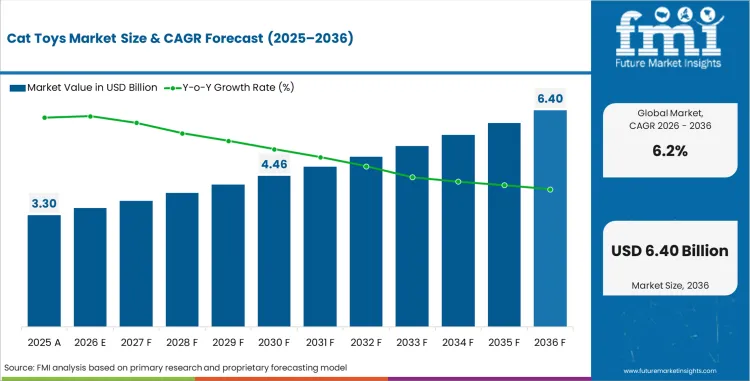
The global cat toys market was valued at USD 3.3 billion in 2025, and it is projected to reach USD 3.5 billion by the end of 2026. The market is expected to grow at a compound annual growth rate (CAGR) of 6.2% from 2026 to 2036, ultimately reaching USD 6.4 billion by 2036. By then, interactive toys are predicted to hold a dominant 29.0% market share, while plastic materials will account for 34.0% of the market.
Read More
Demand for cat toys is driven by the increasing number of cat owners, particularly in urban areas where indoor cats require structured play for physical and mental health. The shift from impulse buying to planned procurement of toys is also fueled by rising awareness among pet owners regarding the needs of sedentary indoor cats, as veterinarians emphasize the importance of regular play to combat obesity and behavioral issues. This has led to a trend of premiumization, with consumers showing a willingness to invest in high-quality, multi-functional play systems.
The product segmentation indicates that interactive toys are estimated to capture 29.0% of the market in 2026, as they provide essential mental stimulation for indoor cats through puzzle and motion-activated designs. Plastic toys maintain the largest share due to their durability and suitability for various play mechanisms. The adult cat segment represents 52.0% of the end-user demographic, confirming that the majority of toy purchases come from this age group, while kittens and senior cats exhibit specific needs.
Geographically, China is the fastest-growing market, expected to expand at 7.6% annually through 2036, driven by urban cat ownership and increasing investment in pet enrichment products. South Korea follows closely at 7.2%, with an emphasis on interactive play's role in feline wellbeing.
Companies that effectively combine innovative design, quality, and broad distribution channels are likely to thrive in this evolving market. The ongoing transition to evidence-based purchasing reflects a broader understanding of indoor cat welfare, highlighting the significance of structured play in maintaining health and reducing stress. Subscription services for monthly toy deliveries are emerging, aligning with the novelty-seeking behavior of cats and providing a steady revenue stream for companies.
In summary, the cat toys market is not only responding to increased ownership but also adapting to more informed consumer behavior and preferences, which emphasizes quality and functionality.