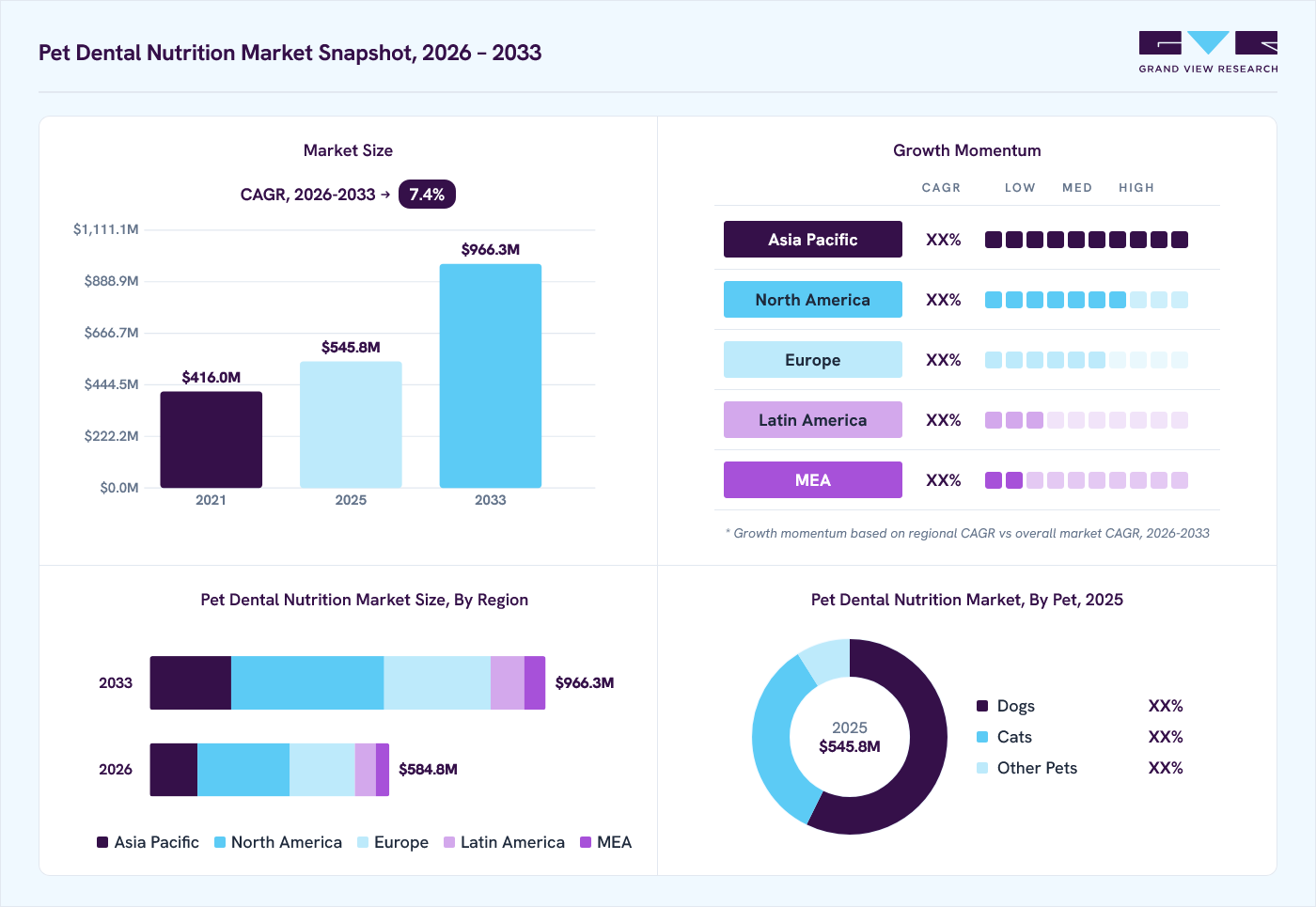
The global pet dental nutrition market was valued at approximately $545.8 million in 2025 and is anticipated to increase to around $584.8 million in 2026, ultimately reaching an estimated $966.3 million by 2033. This growth represents a compound annual growth rate (CAGR) of 7.4% during the period from 2026 to 2033. In 2025, North America was the leading market, commanding a revenue share of 38.6%. Key drivers of this market growth include the increasing prevalence of periodontal disease among pets, advancements in the Veterinary Oral Health Council (VOHC) clinical validation process, enhancement of e-commerce distribution networks, and a variety of delivery formats that go beyond traditional chews.
Read More
In terms of pet type, dogs hold the largest market share, contributing 57.2% of total revenue in 2025, while the dental chews and treats segment was the most significant product category, constituting 45.4% of the market. Additionally, the breath freshening segment is expected to witness the highest growth rate in the coming years, as is the water/liquid administration route.
Geographically, North America remains the largest market, but the Asia Pacific region is projected to grow the fastest, driven by increasing pet ownership and awareness of oral health issues. As of 2025, the U.S. held the largest market share within North America.
The market dynamics indicate a shift toward preventive dental care as awareness of periodontal disease rises, leading to changes in purchasing behavior. Notably, innovation in product formats has opened up opportunities for cats and smaller pets, which have historically been underserved in this segment. While traditional chews remain dominant, formulations such as water additives are emerging as crucial alternatives due to their ease of administration.
Despite the growth landscape, challenges remain. The design of products specifically for cats poses constraints due to their unique jaw structure and palatability preferences, impacting the success of chew formats for this demographic.
Additionally, the expanding pipeline of clinically validated products represents both an opportunity and a competitive differentiator in the market. Companies making significant investments in research and clinical trials are expected to benefit from increased trust and endorsement within the veterinary community.
The competitive environment consists of a mix of established animal health companies and newer challengers focusing on specialized products. Companies such as Boehringer Ingelheim Animal Health, Virbac, and Mars Petcare are significant players, with ongoing product innovations catering to evolving consumer demands.
As the market matures, retail continues to be the primary sales channel, accounting for 78.3% of the market, but e-commerce is rising rapidly as a key growth avenue. The trend toward pet humanization and the incorporation of dental nutrition into routine care reflects a significant shift in consumer behavior, with a growing focus on proactive rather than reactive dental health management.